



How to Manage Thrips in Field-Grown Specialty Cut Flowers
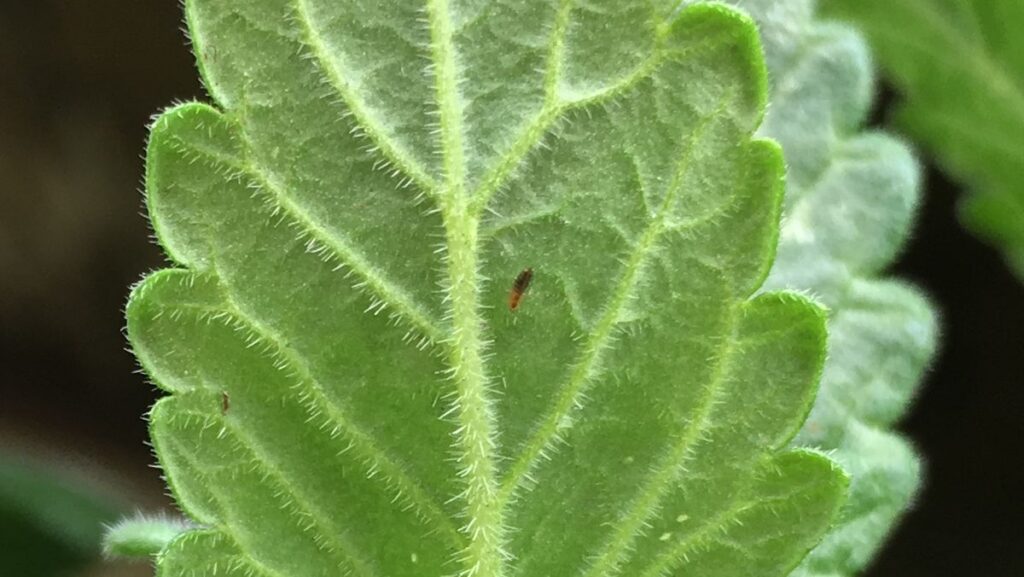
Western flower thrips is a common pest species and can be difficult to spot during routine scouting. The adult on the underside of this verbena leaf shows the characteristic tiny, slender body of a thrips and provides a sense of its small size. | Jeremy Jubenville, MSU Extension
Managing thrips in field-grown specialty cut flowers is an exercise in risk management. Growers must weigh the risk of crop loss against the potential impacts of different management approaches on pollinators, beneficial insects, production costs, and long-term sustainability. The goal is to minimize the risk of economically significant damage while producing high-quality, marketable flowers.
Although not the most consistent annual pest problem, thrips are among the most challenging insect pests of specialty cut flowers. Unlike greenhouse and high tunnel production, where thrips often require season-long attention, field populations are influenced by weather, surrounding vegetation, nearby crops, and natural enemies. In any given year, there will be some outdoor production areas that experience little to no economically important damage, while others may suffer major losses due to outbreaks. This variability makes routine scouting and informed decision-making especially important.
Managing thrips in cut flowers is challenging because the crop also attracts beneficial insects that growers are trying to protect. Flower farmers must balance two important objectives: producing high-quality, marketable stems while conserving pollinators and other beneficial organisms whenever possible. Flowering crops provide valuable forage for bees, butterflies, and many beneficial insects that contribute to pollination and natural pest suppression. At the same time, the market value of cut flowers depends almost entirely on the crop’s appearance. Even relatively minor feeding injury can reduce stem quality and marketability.
Understanding the Challenge
One of the greatest challenges in managing thrips is finding them before they cause widespread damage. Adult and immature thrips are tiny and often feed deep within flowers, developing buds, and other protected plant parts where they are difficult to detect during routine scouting. Some species also pupate in the soil, placing another life stage out of sight during the scouting process. By the time feeding injury becomes apparent, populations may already be well established.
To complicate matters further, their protected feeding and pupation sites can also make thrips difficult to reach with insecticide applications. For these reasons, careful scouting and thorough spray coverage are essential components of any thrips management strategy.
Small infestations rarely stay small for long. In mild temperature environments, thrips often complete their development in two to three weeks. However, during warmer weather, they can complete multiple overlapping generations in a much shorter period, allowing populations to increase rapidly. Early intervention is more effective than waiting until feeding injury becomes apparent, particularly when using biopesticides and other reduced-risk products. Even so, a successful treatment does not necessarily mean the problem is over.
Adult thrips readily move among flowering crops, weeds, and surrounding vegetation. They can also be carried considerable distances by wind, allowing thrips from surrounding agricultural fields and natural areas to move into cut flower plantings. Once they arrive, their attraction to pollen and nectar increases the likelihood that they will settle on flowering crops rather than surrounding foliage and other vegetation.
As a result, even well-managed fields can experience repeated infestations throughout the growing season as new thrips continually move into the production space from surrounding areas. Regular scouting and consistent management are therefore more reliable than assuming a single treatment will provide season-long control.
Additionally, the products are not always to blame when insecticide applications produce disappointing results. While some thrips species have developed resistance to numerous insecticide groups, poor spray coverage, delayed applications, and the insects’ concealed feeding habits can also reduce control. Successful insecticide programs depend on selecting appropriate products and integrating them with prevention, regular scouting, and timely intervention.
Building a Thrips Management Program
Successful thrips management begins long before insecticide applications become necessary. No single practice will prevent every outbreak, but combining complementary management strategies can reduce pest pressure, improve crop resilience, and provide more options if thrips populations begin to increase.
An effective insect pest management (IPM) program begins with healthy plants. Vigorous plants are generally better able to tolerate environmental stress and recover from minor pest injury than plants weakened by poor nutrition, drought stress, or other production challenges. Maintaining appropriate fertility, irrigation, drainage, and plant spacing supports crop vigor and helps plants withstand pest pressure. Ideally, growers should design their fertility program to meet the needs of the crop without exceeding them, because excessive fertility can increase plant attractiveness and suitability for insect pests while adding unnecessary production costs.
Weed management is important for more than reducing competition. Many weeds serve as alternate hosts for thrips and other insect pests, allowing populations to build up before migrating into flowering crops. Weedy field borders and unmanaged vegetation also provide pollen and shelter that help sustain thrips populations throughout the growing season. Regularly mowing turf grass borders and keeping production areas as weed-free as possible reduces these resources while improving overall field sanitation.
Sanitation should continue throughout the growing season and after harvest. Crop residues, volunteer plants, and heavily infested plant material can harbor insects and pathogens, thus contributing to future pest and disease problems. Removing crop debris, destroying heavily infested plant material (when practical), and cleaning production areas after harvest can significantly reduce potential sources of reinfestation.
Beneficial insects are an important part of outdoor production systems. Predatory insects, spiders, and other naturally occurring biological control agents often help suppress developing pest populations. Augmentative releases of commercially produced natural enemies have become a cornerstone of greenhouse thrips management, but their use in open-field production is generally less predictable and may not always be economically practical. In most field situations, conserving naturally occurring beneficial organisms offers the greatest opportunity to benefit from biological control.
Thoughtful pesticide use can reduce harm to these organisms, while habitat management can provide resources such as pollen, nectar, alternative prey, and shelter. Intentionally planted flower strips or other managed non-crop habitat can provide these resources without relying on unmanaged weeds, although their effectiveness will depend on the plants, beneficial organisms, pests, and surrounding landscape.
Many growers observe that certain flower species or cultivars consistently attract thrips earlier or show feeding injury sooner than others. These crops can serve as useful indicators during routine scouting. Highly attractive non-crop plants placed near production areas may serve a similar purpose, providing another location to watch for incoming thrips before populations become established in the crop. Paying closer attention to indicator plants and historically troublesome crops may provide an early warning that thrips activity is increasing elsewhere in the field. This early detection allows growers to respond before damage becomes widespread.

For additional information on thrips management and prevention in field-grown specialty cut flowers, including looks at effective scouting practices and how to protect pollinators without sacrificing crop quality, read the original article from Jeremy Jubenville on the Michigan State University Extension website.
Subscribe to eNewsletter