First Read Gut Check: Is Your Operation Ready for the Next Disruption? By Brian D. Sparks|September 20, 2026
First Read What the American Dream Warning Means for the Green Industry By Chris Cimaglio|September 19, 2026
First Read Grower to Grower Podcast: Cover Stories, Trials Travels, and More By Brian D. Sparks|September 18, 2026
BASF Pillar SC Intrinsic Fungicide Now Available in California By Greenhouse Grower staff|March 26, 2026 Protecting against more than 26 diseases, Pillar® SC Intrinsic® can be incorporated into production ornamental programs with ease.
Take This Greenhouse Industry Research Needs Assessment Survey By Greenhouse Grower staff|March 26, 2026 A team of researchers at Virginia Tech is looking to gather insights that will help shape future research and development efforts.
Don’t Miss Greenhouse Grower’s Digital Deep Dive on Disease Control By Greenhouse Grower staff|March 25, 2026 This March 2026 Digital Deep Dive downloadable report covers some of the latest news on disease control.
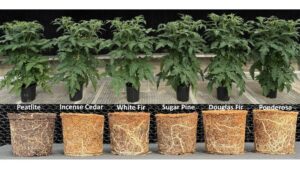
A Guide to Wood Substrates: Western U.S. Tree Species By Brian E. Jackson|March 24, 2026 The fifth article in a six-part series looks at expanding the use of western tree species to improve wood substrate supply and production.
2026 Greenhouse Training Online Continues with “Climate Management” By UF/IFAS News|March 23, 2026 The next course from the 2026 Greenhouse Training Online series is “Climate Management,” beginning on April 13, 2026.
New Solutions for Battling Basil Downy Mildew By All-America Selections | National Garden Bureau|March 19, 2026 All-America Selections shares its strategies for preventing and combating basil downy mildew, in addition to its disease-resistant varieties.
Learning Opportunity: How Sustainability Shows Up in Floral Operations By Sustainabloom|March 18, 2026 A new Sustainabloom webinar focusing on sustainability decisions made by floral operations is set for Wednesday, March 25, 2026.
How Middle East Tensions Are Creating Fertilizer Market Volatility By Greenhouse Grower staff|March 17, 2026 The current geopolitical situation is affecting key shipping routes, adding uncertainty to global fertilizer supply and prices.
Troubleshooting Greenhouse Crops That Fall Behind By Brandan A. Shur | CEAg World|March 16, 2026 Brandan Shur looks at how growers can help crops that are lagging behind their expected production timeline.
How PCR and DNA Sequencing Are Improving Pathogen Diagnosis in Greenhouses By Andy Wilcox|March 12, 2026 Modern diagnostic methods allow growers to detect pathogens earlier and identify disease pressure with far greater precision than traditional testing methods.
Costa Farms Debuts Twist.Lift.Water. System for Easy Houseplant Care By Costa Farms|March 12, 2026 The self-watering design of the Twist.Lift.Water. system helps houseplant owners overcome the issue of inconsistent watering.
University of Tennessee Hosting Meeting on Culinary Herbs Research By Greenhouse Grower staff|March 11, 2026 At the meeting, a research team will share results of recent experiments and outreach efforts, and seek feedback and input for future work.
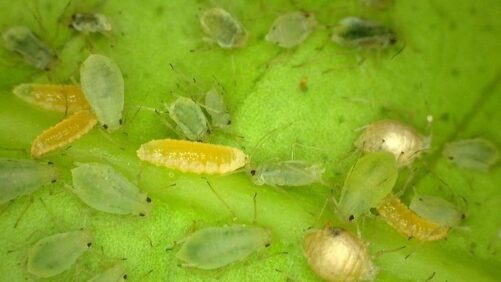
Greenhouse IPM Strategies Coming Into Focus By Brian D. Sparks|March 10, 2026 Hear from one industry insider on the key challenges growers face as they look to evolve their IPM programs, and why the future also looks bright.