



How You Can Educate Your Plant-Buying Consumers About Biologicals
 October 4, 2021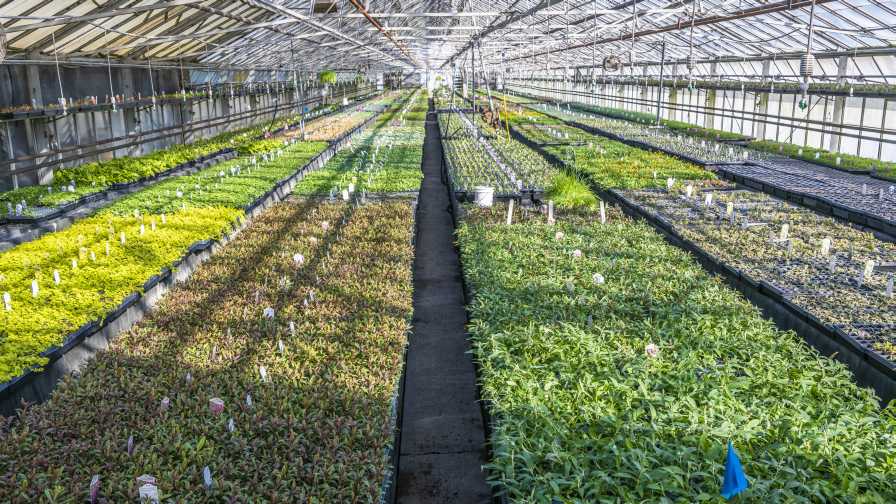
Creek Hill Nursery offers a broad range of both genera and cultivars, which means greenhouses are full to the brim during the winter in preparation for spring sales. The company ships perennials coast to coast in the U.S. and Canada.
Photo by Eric Forberger
Creek Hill Nursery in Leola, PA, seeks to grow plants in the safest way for its team and its customers. When the company first started using biologicals to replace or reduce their use of broad-spectrum chemicals, it was a daunting process. However, the staff’s determination to master biologicals has resulted in the program evolving to get better and more effective every year.
A rigorous scouting regime is at the foundation of the biological program. The company also uses banker plants and has learned the value of providing a good habitat for beneficials to encourage them to remain in the greenhouse.
In a recent Biological Crop Protection and Plant Health Annual Report, the editors of Greenhouse Grower connected with Ross Strasko, Vice President of Creek Hill Nursery, who says he believes the end consumer, and others in the supply chain, care about the use of biologicals. He also says many of Creek Hill’s customers choose the company as a preferred source from among several analogous suppliers simply because of knowing about its biological program.
Creek Hill’s latest attempt to educate its customers is a full-page spread in its new 2022 catalog that it debuted during Cultivate’21 event in Columbus, OH, in July. The diagram was Strasko’s brainchild, with photography from Creek Hill supplemented with information from Koppert Biological Systems and layout by Creek Hill’s marketing expert, Lowell Halvorson.
Click here to learn more about what Creek Hill and other operations are doing when it comes to educating consumers about biologicals.
Check out the full report here.
Subscribe to eNewsletter