



Finding the Right Size for Your Next Greenhouse Structure
 August 18, 2025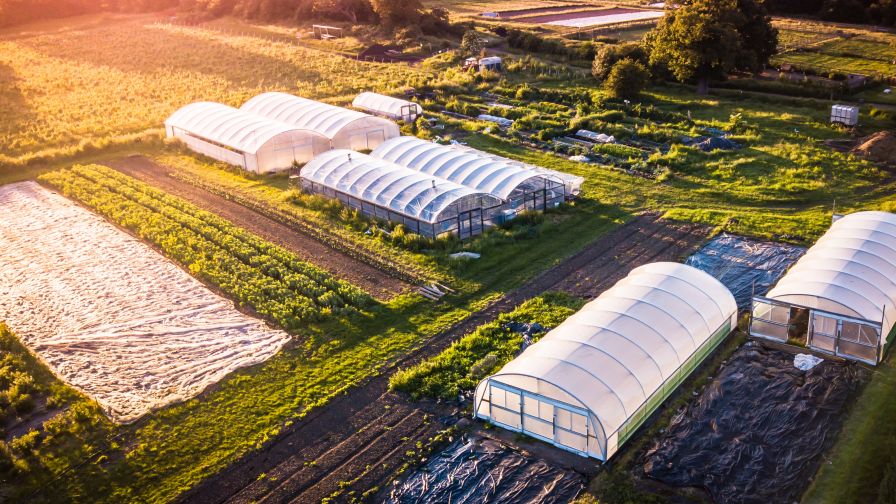
Drone aerial photography of polytunnel greenhouses on a farm. | K303 via Shutterstock
There are a lot of newbies in the greenhouse business who believe the only way to grow a high-quality crop is by precisely controlling every variable and input, like so many have attempted to do in vertical farms.
It’s understandable; operators want to grow a high-quality crop consistently and predictably. They’re looking for solutions that reduce the cost of labor and energy. They want to supply their region with locally grown food that doesn’t have to travel 3,000 miles or across borders.
To grow locally means operating in areas that are not necessarily ideal for the crops we want to grow. There’s too much or not enough light. It’s extremely cold in the winter or oppressively hot and humid in the summer. The neighboring farms spray pesticides in the summer and breed botrytis in the fall, both of which can drift into the greenhouse.
So what do we do? We seal them up! We air-condition them. We install electric lighting. We do everything we did indoors and then some to protect our crops and protect our fears of failure.

But is a sealed greenhouse necessary? Do growers really need a high-tech greenhouse to produce a high-quality, highly predictable crop using less labor? Maybe not.
Where to Begin
There are many different greenhouse types and options to choose from, such as low-tech, high-tech, hybrid, and high tunnel. How do you know which is the “right” greenhouse for you? Ultimately, it comes down to two primary factors:
- Crop
- Climate
Assuming the crop is known, the greenhouse design and its choice of systems really depend on the climate. When reviewing greenhouse quotes and proposed designs, it’s important to consider the following five climate-related attributes.
1. Greenhouse Height
There’s a reason why greenhouses seem to be getting taller and taller: They create a space above the canopy where heat and humidity can escape. Shorter greenhouses tend to trap heat and humidity around the canopy, especially without adequate ventilation or air circulation.
The optimal gutter height will depend on the crop and its canopy height. If you’re growing lettuce or strawberries at bench height (approximately 4 feet above ground), then look for a minimum 14-foot gutter height. If growing a vining crop 8 to 10 feet above ground, then consider an 18- to 20-foot gutter height. There’s one potential downside to a tall greenhouse: There’s more volume of air to heat, ventilate, and condition. But typically, the benefits outweigh these concerns.
2. Glazing and Cover
- Glass
- Polycarbonate
- Polyethylene
- Acrylic
- ETFE
All these materials have unique properties that affect what happens inside the greenhouse. If you’re in a cold, northern climate, think about investing in higher-cost glass. Glass is opaque to longwave radiation, making it the ideal candidate to reduce heating needs due to the “greenhouse effect.” On the other hand, if you’re located in the Sunbelt, glass can increase your cooling needs, so picking a plastic option — polycarbonate or polyethylene — might be better because plastic is generally transparent to longwave radiation.
Other local factors to consider when choosing a glazing system are hail, earthquakes, and local energy codes.
3. Supplemental Lighting
The need for and use of supplemental lighting is highly dependent on how much natural sunlight is available in the area. Clemson University has a great online tool that shows a U.S. map of the average daily light integral (DLI) for every month of the year. This map can be used to determine how much supplemental lighting is needed in the winter, when sunlight levels are expected to be lowest.
If you’re growing lettuce in the Sunbelt or sunny Colorado, you may not need any supplemental lighting to achieve lettuce’s relatively low target DLI. But if you’re growing strawberries in cloudy Michigan or tomatoes in Portland, you may need a lot of supplemental lighting to hit the crop’s relatively high DLI needs year-round.
For the final two attributes to consider from Dr. Nadia Sabeh of Dr. Greenhouse Inc., please read the original article found on our sister site, CEAg World.
Subscribe to eNewsletter
