



Water Management Challenges from a Supplier Perspective
 December 16, 2025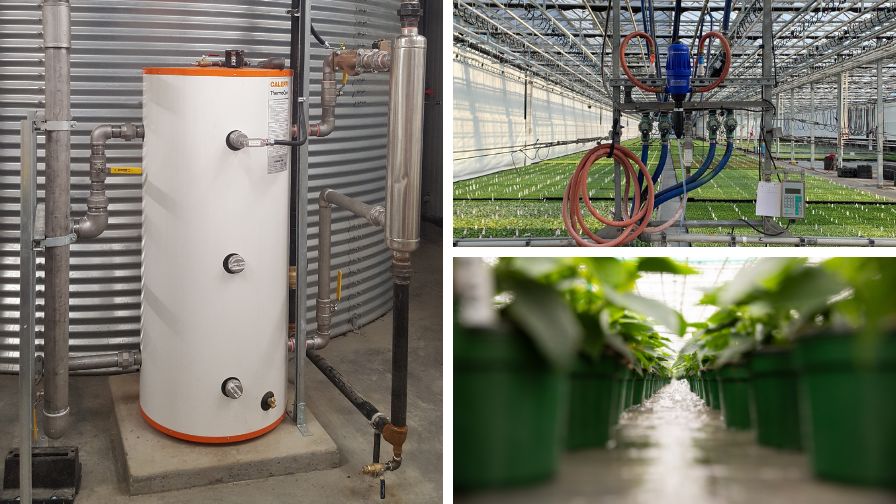
(Clockwise from left) BioTherm’s pre-engineered Irrigation Tempering Skid, boom in propagation with a D14MZ2 injector, and BioTherm Flood Floors. | BioTherm Solutions, Jose Rodriguez, Dosatron
Water management used to seem simple. But today, it sits high on nearly every grower’s list of concerns. Will there be enough? Is the quality good enough? And how can it be delivered to plants more efficiently? Those questions are being asked by growers more often than ever before.
To find out what’s driving those conversations, we spoke with experts from three leading water management suppliers. They shared what growers are talking about most, what solutions are already available, and where innovation is headed next.
Top Challenges Growers Are Facing
To understand which water management challenges are most common, we asked each supplier what topics they hear about most from growers.
Water Quality
Water quality is a hot topic, whether it is sanitation, pH, iron, or effluent management. “Your water source determines what your water problems will be,” says Jose Rodriguez, Business Development Manager at Dosatron. Those problems vary by region and by source:
- Well water is more likely to have chemical issues, such as high alkalinity or high EC.
- Pond or surface water is more likely to carry biological problems, including water molds like Pythium and Phytophthora.
Water quality is also one of the top reasons growers call Dramm, says Kurt Becker, Executive Vice President. “Larger growers are needing to sanitize, properly filter, and recirculate their water. We’re seeing that start to impact smaller growers, too.”
At Dosatron, many questions center on whether a grower’s water is suitable for injectors. “We sell injectors, so most of the time, people call us wondering if their water has the quality to be able to run through the injector,” says Rodriguez. “One of the most important parts is the physical properties of water. Water has suspended particles that could damage our injector, and therefore, the type of filter that they need to use is a common question.”
Growers also call with chemical property questions, including acid injection to lower pH, sanitation chemicals, and how to handle high iron levels. Iron, Rodriguez notes, rarely has a simple fix. Growers want to know if it’s a filtration issue or a chemical issue,” he says. “It’s not an easy answer. You can oxidize the iron using a chemical like chlorine and make the iron precipitate, but then you need to filter it.”
Dissolved Oxygen
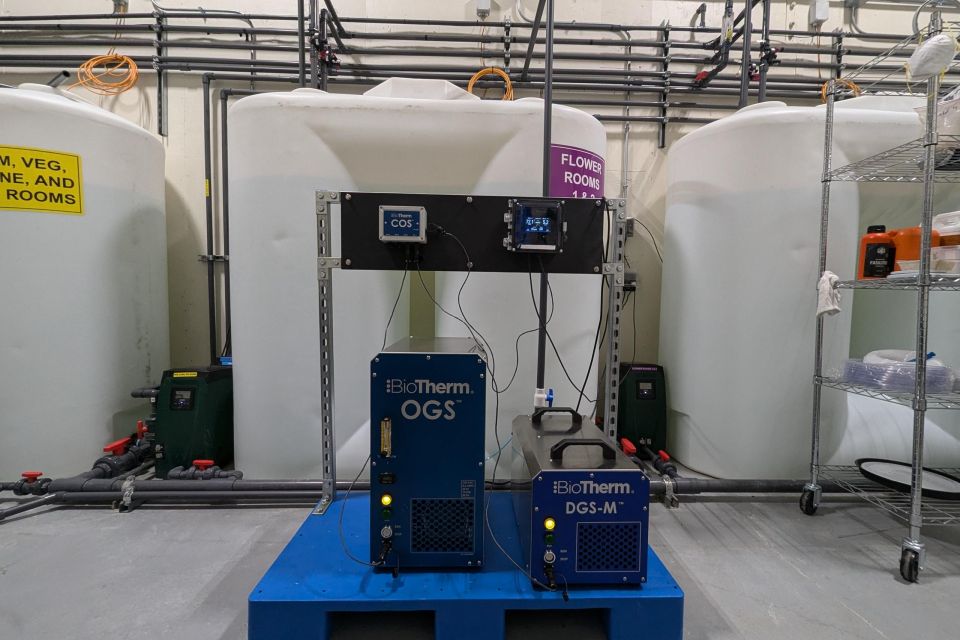
BioTherm’s DGS™ Dissolved Gas System elevates irrigation water with optimized oxygen levels, supporting vigorous root development and maximizing crop quality. Engineered for precision dosing and seamless integration into modern fertigation setups. | BioTherm Solutions
Dissolved oxygen (DO) has been getting more attention lately, and for good reasons. Low DO levels can stunt plant growth and increase the risk of disease. It’s a topic that Jim Rearden, CEO at BioTherm Solutions, says he’s hearing about more frequently from growers.
Even with rising interest, Rearden estimates that fewer than 10% of growers are actively monitoring DO levels. He expects that number to grow soon.
“There’s been a lot of interest the last four or five years regarding the benefits of having high amounts of available oxygen in the irrigation water,” Rearden says. “I’ve been around the industry long enough (to remember) people weren’t even measuring EC or pH in their irrigation. Now, everybody knows their EC and their pH. And I believe down the road we’re going to see the same thing with dissolved oxygen.”
Labor
Labor continues to be one of the biggest challenges growers face, and one of the main reasons they reach out for help. “We’re hearing more from growers that labor is an issue,” Becker says. “It’s not only labor costs at this point, but also accessibility or availability of labor.”
Larger growers have widely adopted automated irrigation systems to help offset labor shortages, but smaller operations often remain hesitant. “We get a lot of growers that don’t want a computer to turn on the water,” Becker says. “But we can still semi-automate using simple systems that have been around for a long time, like hanging basket systems, which have about a 50-day payback. At the same time, you are reducing labor but also ensuring even watering from plant to plant, and eliminating waste caused by overfilling baskets with wands.”
For growers who prefer to keep control manual, Becker suggests a simple hybrid approach: combining an irrigation system with a basic controller and a solenoid valve. The grower can activate the controller to begin watering, and the solenoid automatically shuts off the supply valve after a set time, preventing overwatering when distractions arise. On the weekend, he says growers can let the controller handle the watering. It can help with labor issues and solves the problem of finding someone to come in on a Sunday in February to water.
Water Temperature
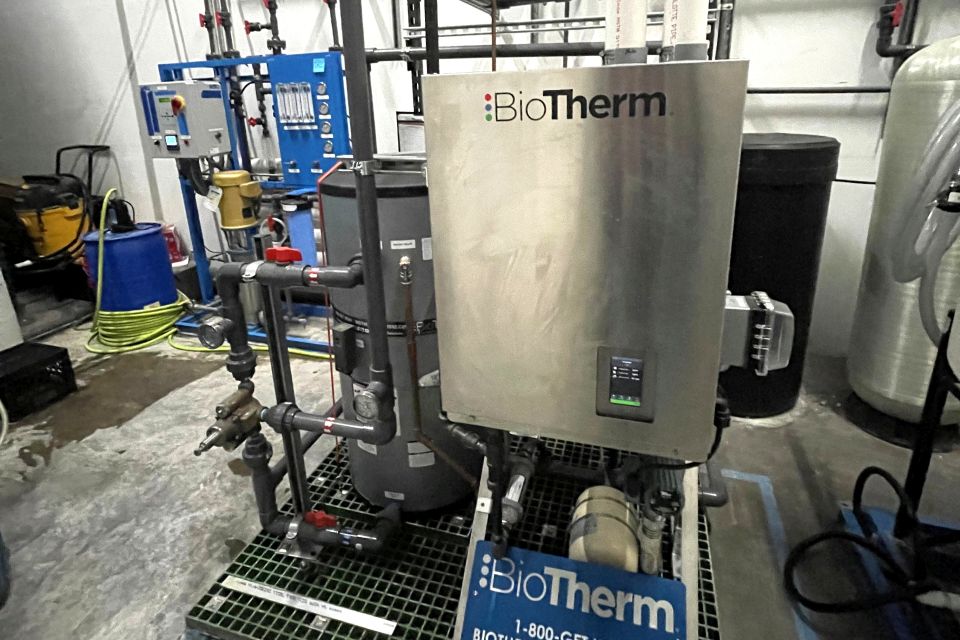
Engineered for reliability, BioTherm’s Irrigation Tempering System ensures growers deliver perfectly tempered water to their crops—improving root health, nutrient uptake, and overall plant vigor across every season. | BioTherm Solutions
Water temperature is another topic gaining attention among growers, says Rearden. Both high water temperatures in summer and cold irrigation water in the winter can cause problems, yet for years, most growers simply used whatever water temperature they had on hand. That’s beginning to change.
“Part of optimizing any greenhouse or cultivation environment is to make sure that your irrigation water is dialed into the optimum temperature to keep the plants moving along and avoid shocking them,” Rearden explains. BioTherm’s systems can be integrated or used as stand-alone units to heat or cool water as needed.
“You can’t carry appropriate amounts of dissolved oxygen if your water is too hot,” he points out. “Cold water can slow plant metabolism down and even encourage fungal issues in the substrate.”
Water Scarcity
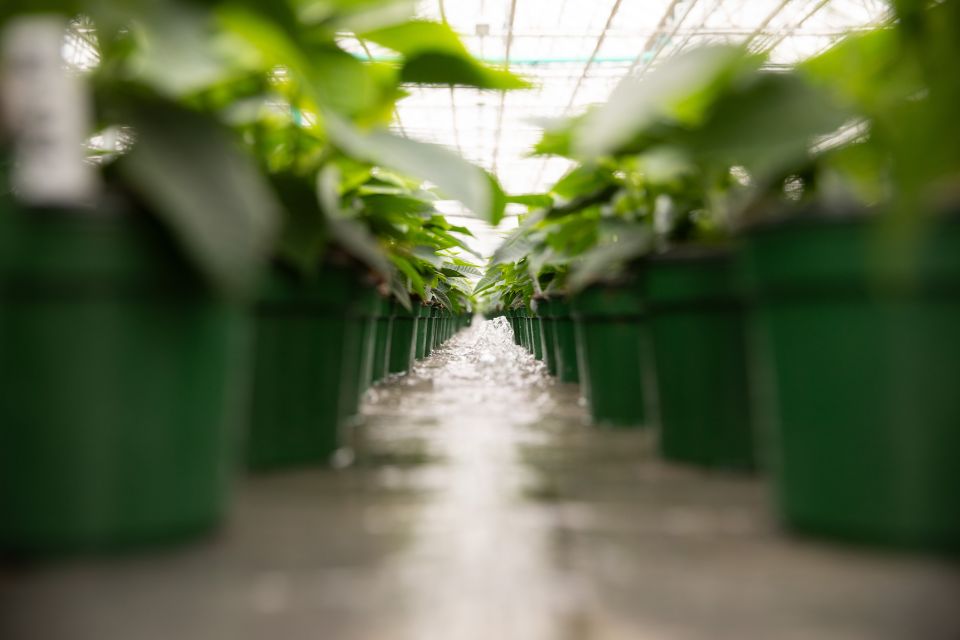
BioTherm Flood Floors provide uniform subirrigation with remarkable efficiency. Water is delivered evenly across the growing surface, reducing labor while promoting healthier, more resilient root systems. | BioTherm Solutions
Water scarcity continues to be a growing concern, and one that’s shaping how growers think about irrigation and regulation. Becker says the issue is becoming more visible in drought-prone regions. “Where there’s drought issues, wells are being monitored,” he says. “Some growers are already facing restrictions on how much water they can draw, so they’re turning to alternative sources like ponds and other surface water.”
Water scarcity is driving the adoption of water-capture and storage systems, along with new treatment and filtration technologies to ensure that stored or recycled water meets quality standards. It’s a full-circle challenge, one that connects back to the ongoing concerns about water quality and sanitation.
Better Filtration
Traditional filtration requires frequent cleaning, which produces backwash water (the rinse water used to flush out trapped debris). This backwash can be highly contaminated, and discharging it is becoming an increasing concern as regulations tighten.
New regenerative filtration systems are helping growers reduce both water waste and contamination.
“Oftentimes, the problem is the water growers are allowed to discharge,” explains Becker. “We started working with a technology called regenerative filters, which are a combination of media filters and screen systems. They use perlite or diatomaceous earth as a media.”
Here’s how it works: The regenerative filter traps particles until the differential pressure reaches the set point. Then, a pneumatic cell initiates a regeneration cycle, shaking the filter to release sediment. The cleaned perlite floats back up and recoats the filtration straws for reuse. “It’s allowing us to basically eliminate backwash water,” says Becker.
Acid-Resistant Components and Microdosing
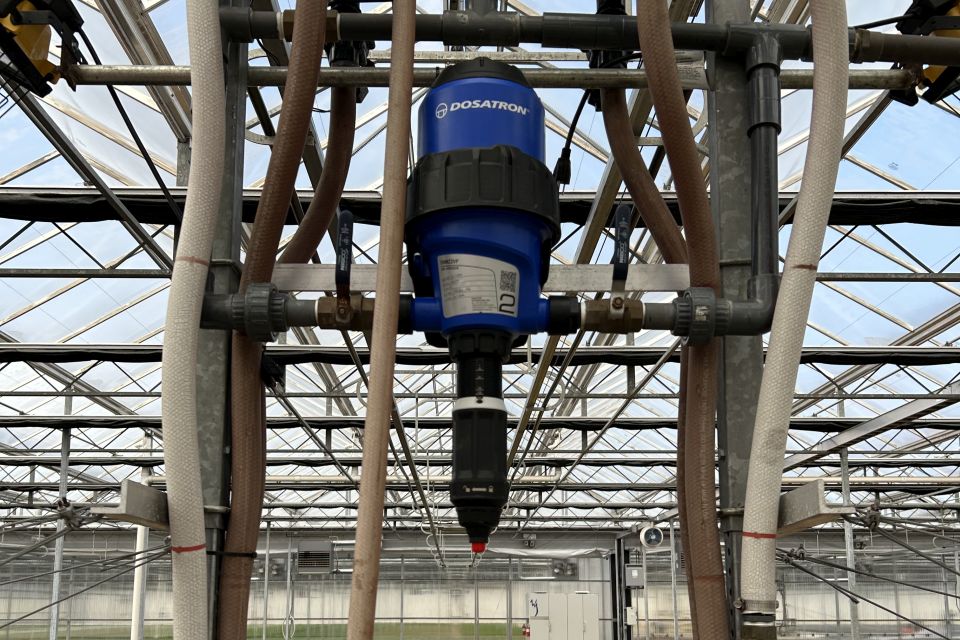
Our newest D6MZ2 (26 GPM) injector in irrigation boom application – fully chemical compatible. Commonwealth Growers, VA. | Jose Rodriguez, Dosatron
Sanitation often involves using harsh or caustic chemicals, and in the past, those weren’t always compatible with all parts of an irrigation system. Rodriguez says Dosatron has been developing products specifically designed for acid injection in recent years.
“One of the issues with sanitation is using harsh chemicals that can be hard on plastic irrigation components,” Rodriguez explains. “A few years ago, most injectors were not compatible with those types of chemicals. Now, almost 90% of our injectors are rated for use with those chemicals.”
This expanded compatibility allows growers to maintain cleaner systems without damaging critical equipment.
Looking ahead, microdosing (applying chemicals or nutrients at extremely precise rates) is the next frontier.
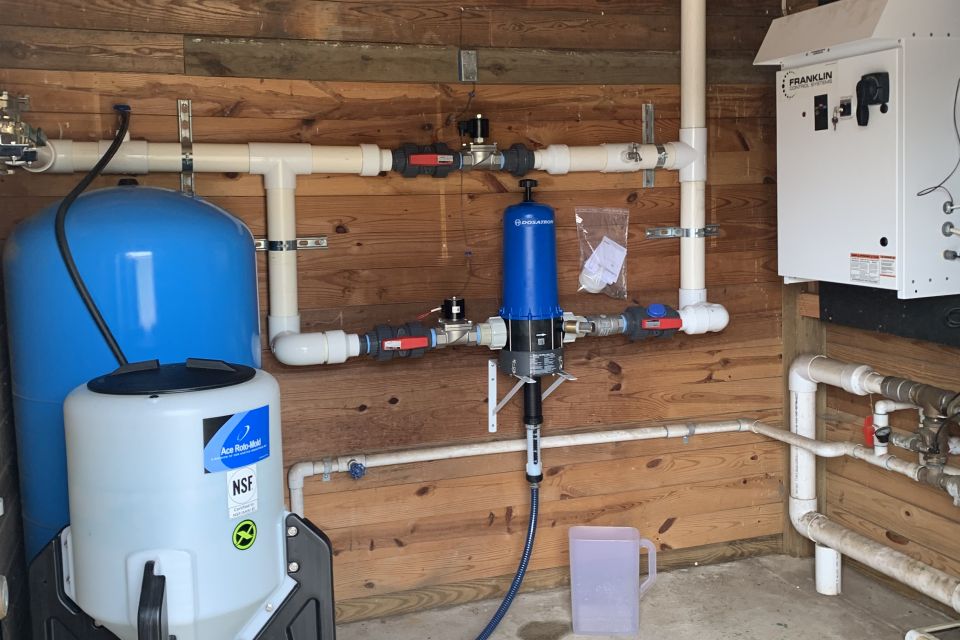
A 100 GPM injector for dosing fertilizer to native plants production. Pinelands Nursery, NJ. | Jose Rodriguez, Dosatron
“Normally, when you’re doing fertilizers, a ratio of 1:100 is easy to set and dial in,” Rodriguez says. “You use it for everything you do. But for some other chemicals, you must use ratios that are much lower, dosing in a very small amount. Our new injectors can provide very low injection rates.”
He says their engineers are currently finalizing injectors capable of applying chemicals at parts-per-million (PPM) rates. Once testing is complete, these next-generation injectors are expected to reach the market as soon as next year.
Subscribe to eNewsletter