




How Color Orchids Is Rethinking the Orchid Business
 April 11, 2026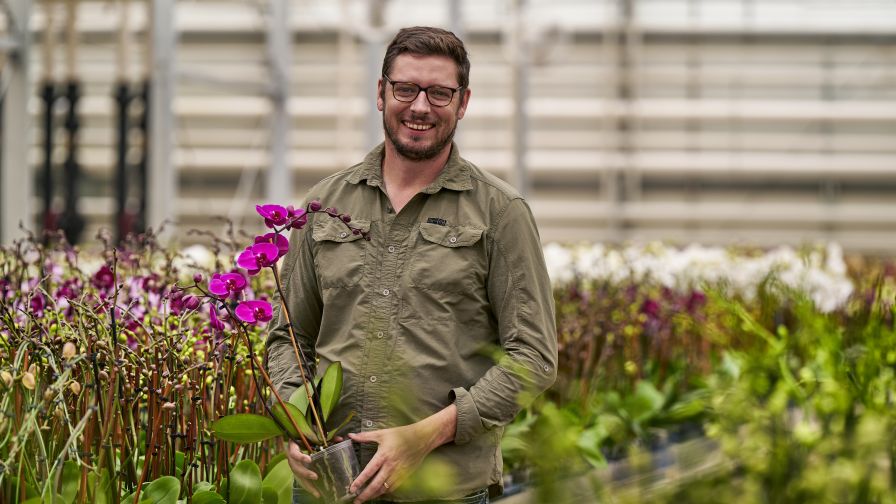
Ben Van Wingerden’s strategic approach to growing the Color Orchids business has helped the company become a true market innovator. | Color Orchids
Color Orchids has grown into a national orchid business with production across California, Texas, and Virginia, but scale alone is not what sets the company apart. What makes Color Orchids distinctive is the way it has built its business around consistency, flexibility, and a disciplined approach to timing, product strategy, and production. In a crop where mistakes are expensive and market signals can be difficult to read far in advance, that balance has helped shape a model that looks different from many other floriculture operations.
Why Seasonality Matters
Like many young companies, Color Orchids initially focused on growing quickly and building market share. Over time, however, that strategy gave way to a more disciplined question: how to make orchids more profitable within the space the company already had. For owner Ben Van Wingerden, that meant rethinking not just volume, but timing.
Because orchids are such a high-cost crop, the margin for error is small. Too much discounting or dump can quickly erode profitability, which led Color Orchids to make a decision that runs counter to how some growers think about expansion. Rather than trying to stretch production evenly across the calendar, the company became more seasonal.
“To get the highest price possible, we had to become hyper-focused on spring and back off in the second half of the year,” Van Wingerden says. “Once we became focused on growing more units in the first half of the year, we were able to discount less and dump less. That strategy has been a huge profit driver.”
In practice, that means accepting a looser production rhythm at certain points in the year if it results in stronger pricing and better alignment with demand. Van Wingerden says that approach has reduced pressure on the business while helping the company move the same number of units more profitably. He also sees it as part of a broader shift in the orchid market, one that may continue to influence U.S. production in the years ahead.
Building Consistency Across Three States
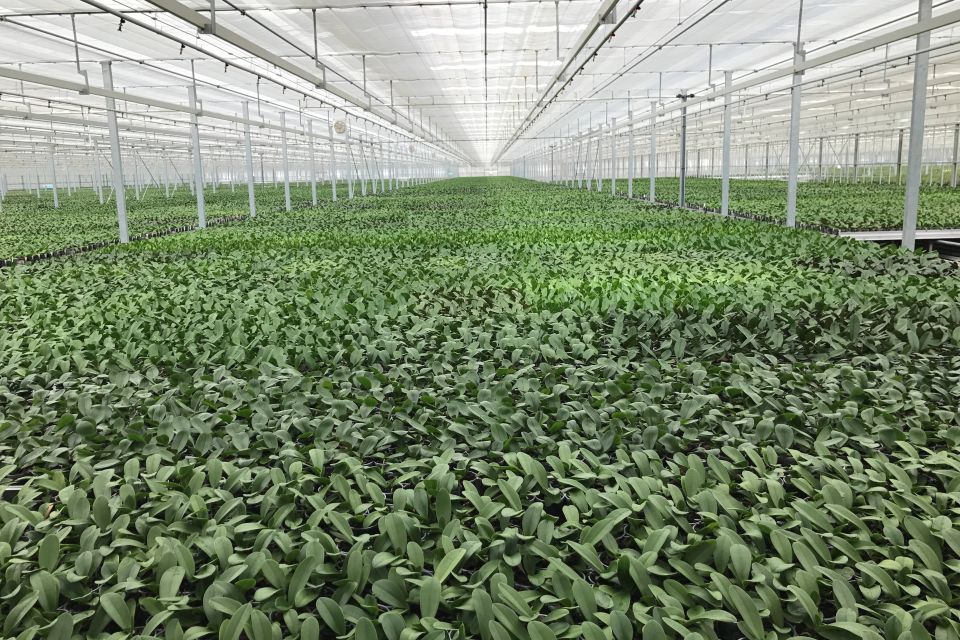
By the time Color Orchids plants reach a finishing facility, they have already been in production for more than a year. | Color Orchids
For Color Orchids, consistency is not just a production goal; it is built into the company’s operating model. As the business expanded into Texas and Virginia, it did not design each facility around local differences. Instead, it replicated the same infrastructure across locations to create a more uniform system for growing, managing, and evaluating crop quality.
That process begins in California, where starter plant production take places. By the time these starter plants reach a finishing facility, where they spend another four months, they have already been growing for more than a year. Starting with the same growing material and moving it through standardized environments across three finished plant locations gives the company a more consistent quality baseline across all three sites.
That level of standardization also supports a leaner management structure. “We have one head grower that travels around the country, but because every facility is identical, a manager from any location can go from site to site and know exactly what to expect,” Van Wingerden says. “Or we can simply watch from a camera and see what’s happening.”
Why Flexibility Comes First
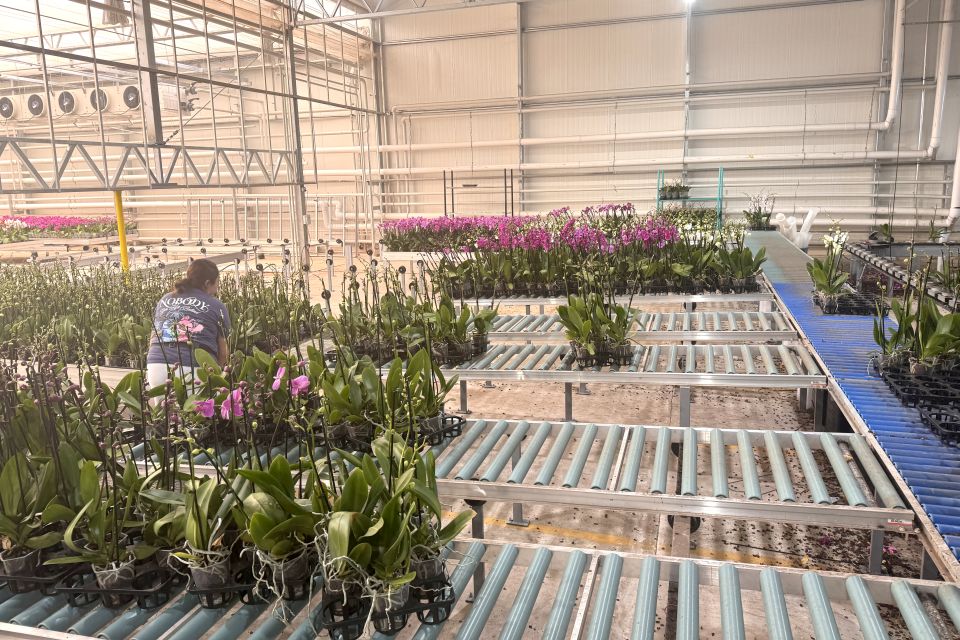
Automation investment at Color Orchids only makes sense if it helps the business without locking it into rigid production or packing decisions. | Color Orchids
Color Orchids takes a selective approach to automation. For Van Wingerden, new equipment needs to pay off quickly — ideally within one to two years — to be worth the investment. That reflects both the economics of the crop and the limited automation options available for orchids.
“It can get very expensive, and there’s not always proof it will work,” he says. But for Color Orchids, the bigger issue is flexibility. Automation only makes sense if it supports the business without locking the company into rigid production or packing decisions. “One of our missions is to stay flexible and have the ability to pivot to our customers’ needs,” Van Wingerden says. “If they want to change a pack size, I never want to be stuck having to say no because of my automation.”
A Wide Talent Pool
Color Orchids has taken a different approach to staffing, too. Because its systems and logistics are standardized across locations, the company has been able to build a largely remote support team and recruit talent from well beyond the area surrounding any one greenhouse.
That broader reach has strengthened both the company’s staffing options and its perspective. “Working remote actually helps us be more innovative because we can see what’s happening across much of the U.S.,” says Lauren Milleson, Vice President of Sales, who is based in Michigan. “It’s helped us build a great team.”
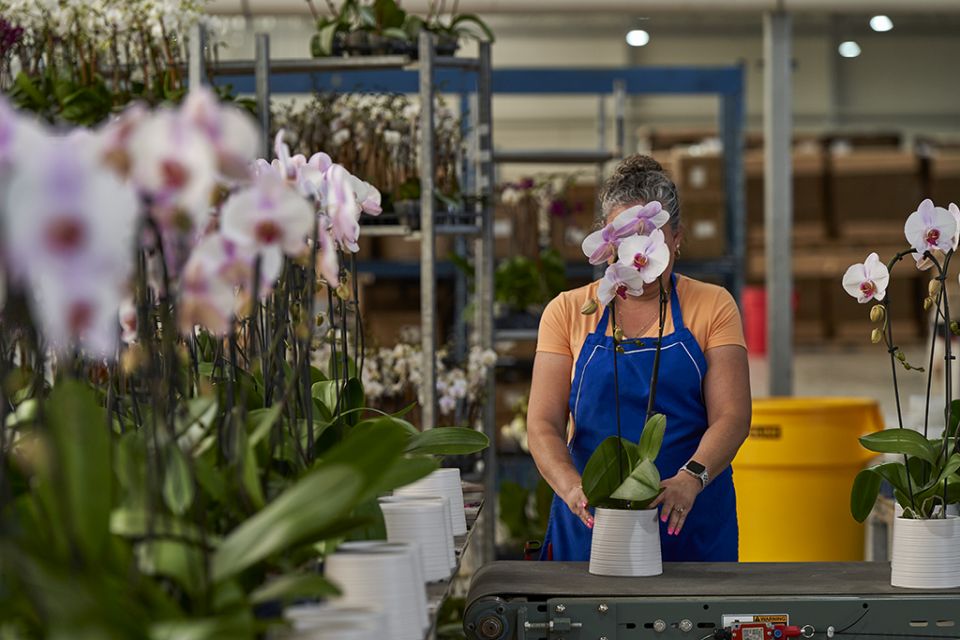
For Color Orchids, tracking consumer trends often comes down to color. Note: This can perhaps run with the sidebar on tracking trends. | Color Orchids
For Van Wingerden, that shift reflects a broader change in how greenhouse businesses can think about oversight and decision-making. Technology has made it easier to stay connected across locations without always being on-site, shaping both how Color Orchids organizes its team and how it plans for growth. Still, he is careful not to present the company’s model as the right fit for everyone.
“I would never tell others they have to do things the same way we do,” he says. “You have to do what works for you, and in our case, this approach made the most sense.”
Beyond Orchids
Color Orchids sees future growth as likely coming from crops beyond orchids, even if the next move has not yet been fully defined. Van Wingerden says any expansion would likely stay within crops that share similar production and market characteristics, rather than branching into something entirely different.
Subscribe to eNewsletter