


Family Succession Lessons from Hornbaker Gardens
 October 17, 2026
 Nestled in a picturesque forest and country setting in Central Illinois, south of Princeton and near the Illinois River, Hornbaker Gardens is a family-owned nursery, destination garden center, arboretum, and botanic garden that draws customers from Chicagoland and throughout the Midwest. Richard “Rich” and Kathy Hornbaker founded the business in 1987. In 2015, the family added The Barn, a rustic wedding and events venue that operates year-round, while the gardens are open from April through October.
Today, Rich and his daughter, Molly Blogg, co-own the company. Molly serves as CEO and is the majority owner.
My colleague Ken Lane and I were introduced to Rich and Molly in 2025 by John Kennedy of BoomerWrangle, a mutual friend and advisor, who described them as “friends and a family business navigating the choppy waters of transition and financial planning.” Over the past year, Rich and Molly have worked through a business valuation, filling readiness gaps, growth planning, legal restructuring, and an ownership transfer plan. Their experience offers four lessons for any family-owned horticulture business considering what comes next.
Lesson 1: Don’t Wait for “Someday”
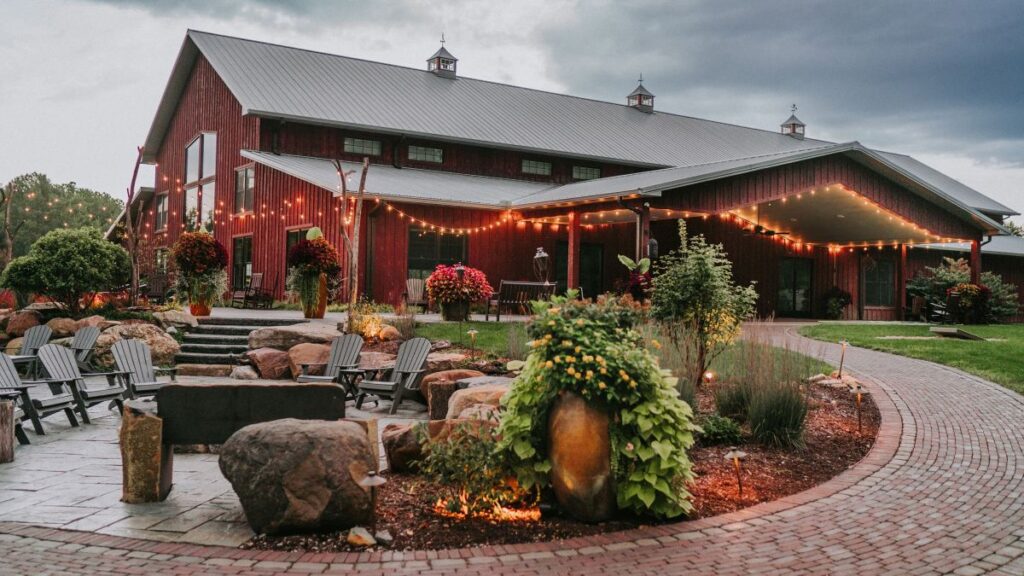
The Barn, opened in 2015, added counter-seasonal revenue to support the family’s next generation. | Katelyn Turner Photography
Like many family businesses, the Hornbakers rarely discussed succession. “We didn’t talk about it much,” Rich says. “But I knew we needed to do it.”
For Molly, the turning point came when ownership entered the conversation. “It became clear there were differing opinions at the table, and it felt important to bring in outside help for a broader perspective,” she says. “It was hard to understand, so we wanted to see how this worked for other businesses like ours.”
Two experiences moved her to act. At her first Cultivate, she heard Kennedy speak and reached out to him for help defining succession roles and responsibilities. As the family became more involved with The Garden Center Group, conversations with other owners revealed gaps. “We learned that other operations had things in place we didn’t, like a buy-sell agreement, insurance to back it up, and a succession plan,” Molly says. “A year ago, I didn’t know what that was.”
Ironically, the Hornbakers had already made one of their most important succession moves without calling it that. As the second generation entered the business, Rich faced a practical question: “Going from one owner to supporting multiple families, what are we going to do?” Growing the landscaping side of the business drew little enthusiasm. However, customers kept asking whether they could get married in the gardens, and in 2008, Molly and her sister, Sara, both did. That set the gears turning. The Barn opened in 2015, adding a counter-seasonal revenue stream that also helps offset the labor-intensive display gardens and arboretum.
What the family hadn’t built was the legal and ownership structure supporting that growth. When asked what surprised him most, Rich didn’t hesitate: “How little I had been prepared for succession.”
Lesson 2: Make the Business Less Dependent on Its Owners
When we looked honestly at how tied each owner was to the business, the answers were revealing. Molly is deeply involved, day-to-day and emotionally, and she is now navigating the shift so many owners struggle with.
“I was more of a manager, handling day-to-day tasks. Now that my role has broadened and become more big-picture, I need those on the bench to take on more responsibility,” she says. “I’ve heard many owners say it is a difficult transition from hands-on, day-to-day tasks to vision and trusting your people to carry it forward, and now I am experiencing that.”
Her focus now is on hiring the right people and cross-training them across every phase of the business. That work has already begun. When their 23-year Office Manager announced plans to retire, Molly hired a new one. “I learned a lot in the interview process about what behaviors to look for,” she says. “We don’t often hire for that type of critical position, as we’re mostly concerned with seasonal labor.”
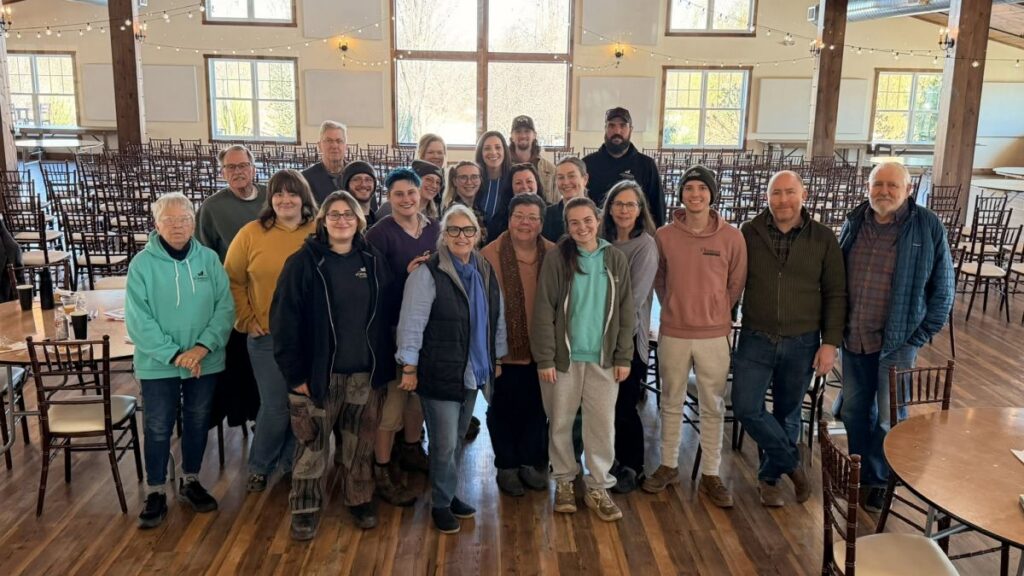
Rich Hornbaker (far right), Molly Blogg (second row far right), and the Team at Hornbaker Gardens in Princeton, IL. | Hornbaker Gardens
Rich, meanwhile, is stepping back gracefully. “I’m emotionally tied to the business, and when I’m here, I try to be useful,” he says. “I want to be there to help Molly whenever she needs help, advice, or a sounding board.”
Molly values that balance. “I have never felt that he should get out of the way,” she says. “He has been really good at stepping back and letting me take the reins without being critical, while always being there to help fill the gaps.”
The takeaway: a business that depends on one person is harder to transfer and worth less to any buyer or successor. Building a strong bench is succession planning.
Lesson 3: Build Your Team and a Fair Structure
The Hornbaker advisory team grew in stages. After working with advisors at BEST-PivotPoint on business valuation, personal and business readiness, financial readiness, customer surveys, and growth planning, they added a business attorney and estate planner, an insurance advisor, and HR support, while continuing to work with their longtime accountant.
Molly says that bringing in outside voices changed her perspective. “I assumed Dad had all the answers, and that wasn’t necessarily true,” she says. “Realizing that makes outside assistance and the need for advisors important.”
The team helped the family navigate one of the hardest questions in any family transition: how to be fair to children who aren’t in the business. Rich put the land in an LLC that leases it to the business. As the only sibling in the business, Molly now owns a majority and is receiving the rest of the business primarily through gifting. The land will pass equally to all three of Rich’s children.
“The biggest asset I own is the land, and they will share it equally,” Rich says. “Molly will own the business. She deserves that.”
Rich’s estate plan and an insurance-backed buy-sell agreement protect Rich, Molly, the business, and Molly’s siblings by preventing anyone from forcing a division or sale of the property. Rich is gifting his remaining shares over several years while retaining a small stake in case anything happens. The family also amended its bylaws to create a Board of Directors that can expand as needed. The result: Rich says he feels “very financially secure,” and the business has a clear path forward.
Lesson 4: Keep the Conversation Open

The Hornbaker display gardens and arboretum draw visitors from Chicagoland and across the Midwest. | Hornbaker Gardens
Molly wasn’t groomed to take over. “Our parents didn’t talk much about the business when we were growing up,” she says. “They wanted us to find our own passions. It wasn’t until later in college that I considered the family business as an option.”
Rich saw the signs early. He recalls a young Molly helping her grandparents with their iris business, explaining to a customer exactly how to handle iris borers. “She has always been interested in how things work and what needs to be done,” Rich says. “Molly has a strong business sense and will lead the business successfully going forward.”
Early on, Molly spent a year away, working at a garden center in Georgia, where a different hardiness zone exposed her to plant material she had never encountered. “I know some owners require that their kids go outside the family business for a while,” she says. “It turned out to be a good experience for me.”
Today, the two rarely disagree. “If Dad feels very strongly about something, I will defer to him, but he doesn’t do that often,” Molly says. “After all these years, his knowledge and wisdom are worth listening to,” and Rich “trusts her thought process and decision-making.”
What Rich most wants to carry forward is the gardens’ role as an educational destination. “I want the place to continue to be known as an arboretum and a display garden, not just a garden center,” he says. “We’re not near a major population center, so we need something to draw people here beyond selling plants.”
Molly’s advice to the next generation: “Make sure you’re having the hard conversations. Have clear, honest conversations about expectations, ask the questions, and bring in advisors as soon as possible to help with the process.”
What’s Next
For Hornbaker Gardens, the next milestone is to grow and place the right people in the right seats. Looking back, both owners wish they had started earlier.
“You don’t have to wait until you’re 75 to start thinking about it,” Rich says. “You should have succession in place now, no matter what stage your business is at.” Molly agrees, with a note of reality: “It’s easy to say in hindsight. There are many pieces I wouldn’t have been ready for 20 years ago.”
That may be the most important lesson of all. Succession isn’t a single event. It is a series of conversations, decisions, and structures built over time. The best time to start is before you need to.
Hornbaker Gardens’ Succession Toolkit
- Business Valuation: Established a baseline for planning and gifting.
- Readiness Assessments: Personal, business, and financial readiness for both owners.
- Land Held in an LLC: Provides rental income for Rich and keeps real estate separate from the operating business.
- Gifting Plan: Ownership moves to Molly over several years, with Rich keeping a small stake.
- Buy-Sell Agreement and Insurance: Protects Molly, the business, and her siblings.
- Board of Directors: Bylaws amended to create a board that can expand as needed.
- Estate Planning: Land passes equally to all three children. The business passes to Molly.
Subscribe to eNewsletter