


Before the Storm: Is Your Business Ready for the Day You Can’t Show Up?
 June 12, 2026
 It’s the spring shipping season. Trucks are rolling, crews are under pressure, and the sales team is handling a dozen account issues. Then the call comes. The owner had a heart attack and may not be coming back. Will the business survive the next 30 days? Will it survive at all?
Most growers have disaster plans for weather events and infrastructure failures. But far fewer have a plan for the disruption that is statistically more likely: the sudden absence of the owner.
Working with a potential client several years ago underscored the importance of planning for such a reality. The owner was the management team, and everything in his entire operation ran through him. Before we could begin our work together, a drunk driver tragically killed him. We will never forget the tearful call from his wife, who was not involved in the business, asking whether we had any information about how to continue. We connected her with a trusted advisor who helped stabilize the operation amid the shock and grief.
The business eventually sold, but for far less than it could have if the owner had a Business Continuity Plan (BCP) to keep the business running without him and a separate plan for his eventual exit. Bottom line, a BCP protects daily operations while an exit plan prepares for what comes next.
We need to understand what the data shows, the 5 Ds that can force an exit, why horticultural operations are uniquely vulnerable, and how to learn more as we prepare for the unthinkable.
Data Reality: The Survey Says
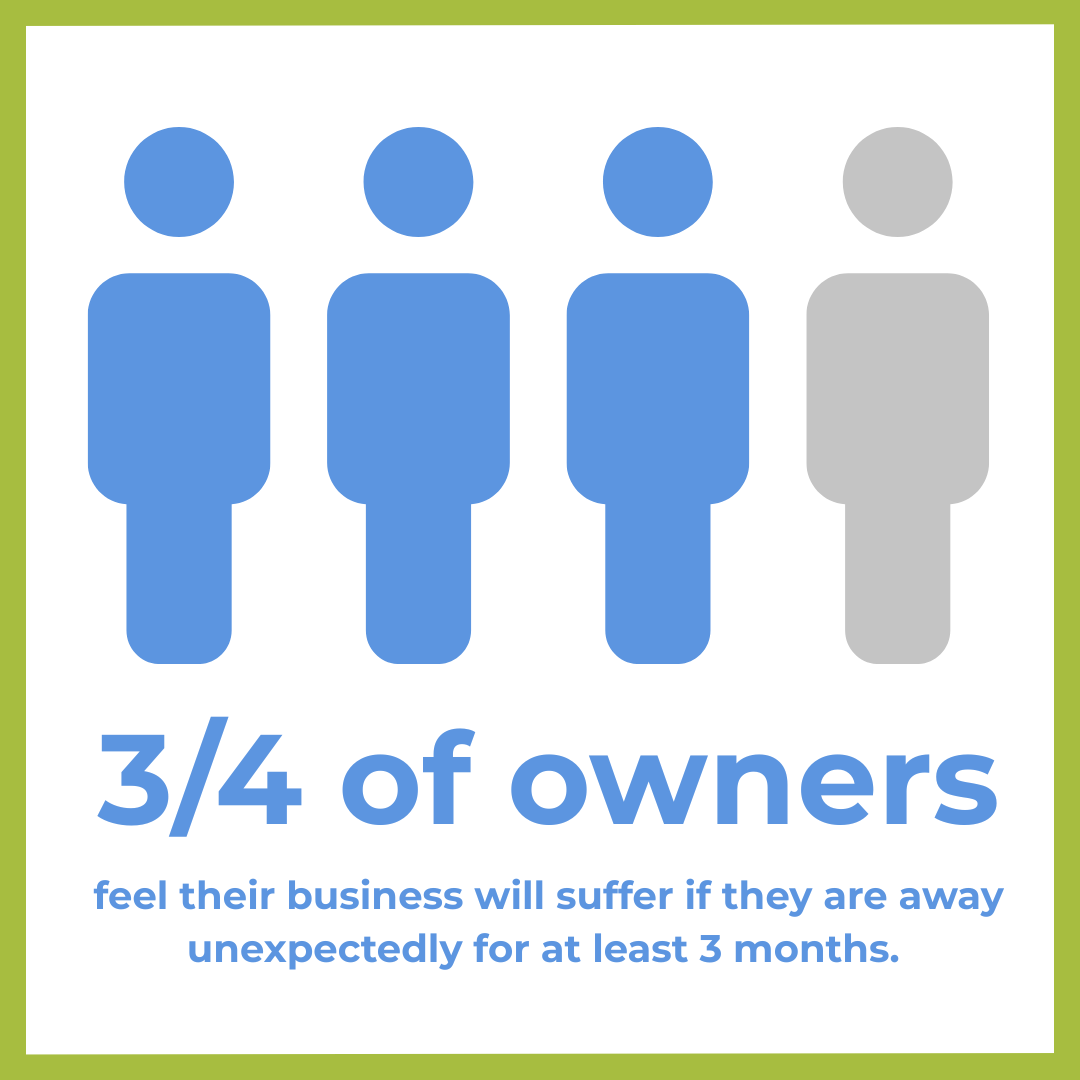
Three-quarters say their business would suffer if they were unexpectedly absent for three months, and only 20% say it would “hardly suffer.”
Data from the 2025 State of Succession and Exit Planning in the Horticulture Industry survey, conducted by BEST PivotPoint, reveal that most owners aren’t prepared for the unexpected, and in a seasonal business, the stakes are high.
- 52% of horticulture owners have no exit strategy.
- 47% have never had a business valuation or land appraisal.
- Three-quarters say their business would suffer if they were unexpectedly absent for three months, and only 20% say it would “hardly suffer.”
- 63% cite an unplanned offer or personal health crisis as their top trigger for an unexpected exit.
- 91% are family-owned and operated; 60% are aged 60 or older.
The generation that built this industry is reaching transition age, and many haven’t documented what happens if they’re gone tomorrow.
THE 5 Ds: Why This Isn’t Just About Weather
Every owner will leave their business, either by choice or by chance. According to the Exit Planning Institute (EPI), five common triggers can force that transition without warning:
- Death: Sudden loss without a plan or clear authority.
- Disability: Illness or injury removing the owner from operations.
- Disagreement: Partner or family conflicts impacting decision-making.
- Divorce: Ownership restructuring, valuation disputes, or asset division.
- Distress: Financial crisis, market disruption, or environmental events.
We often add a sixth: “Dumb Stuff,” covering the unexpected issues no one plans for.
These events don’t just trigger ownership change. They disrupt operations immediately.
While most owners plan for weather or fire disruptions, far fewer are prepared for the events that are statistically more likely to take them out of the day-to-day.
Why Horticulture is Uniquely Vulnerable
“I’m not worried. I have insurance.” That’s a good start. Key Person Insurance can provide critical financial support after the loss of an owner or top employee.
But our industry operates differently from many businesses.
Perishable inventory can’t wait. Seasonal cash flow is heavily concentrated in the spring. Relationships with brokers and buyers are often tied to the owner. Pesticide applicator licenses, permits, and certificates may sit in the owner’s name.
Disruption during peak season doesn’t just hurt. It can wipe out an entire year’s revenue.
The Good News: Progress is Happening
Our survey showed meaningful year-over-year movement:
- Business readiness scores improved from 3 to 5 out of 10 (a 67% improvement).
- Personal readiness to exit more than doubled from 4% to 9% (though still very low when compared to other industries).
- Owners taking a two-week vacation increased from 15% to 28%.
- 58% now prioritize building a team that can function without them.
The industry is starting to move. The question is whether your business is moving with it.
How Do You Prepare for the Unthinkable?
Business Continuity Planning prepares your team to operate without you and is usually divided into two parts:
- “The Battle Box”: Immediate, critical information needed in the first hours or days (passwords, contacts, authorities, key decisions).
- Operational Continuity Guidance: Clear direction on how the business continues to function without the owner in the near term.
This is different from an exit plan, which prepares the business for an eventual change in ownership. An exit plan determines what happens to the business. A BCP determines whether the business can function at all.
We’ll be hosting a special educational session at Cultivate’26 where we will dive into what, why, who, and how of Business Continuity Planning:
Before the Storm: Common Sense Business Continuity Planning for Horticulture Business Owners
Tuesday, July 14, at 10:30 a.m. (Room A113)
Attendees will walk through a practical framework for keeping the lights on during a disruption, whether that disruption is a weather event or one of the 5 Ds. You’ll leave with a ready-to-use Business Continuity Instructions Worksheet, strategies for short-term crisis response and long-term business stability, and steps to maintain operations beyond the initial shock.
When it comes to a Business Continuity Plan, we hope no one ever needs it. But hope is not a strategy. A BCP will protect your operations in the moment, while exit planning prepares you for eventual transition. If the plan is ever needed, it may be the most important work you’ve done for your business and your family.
Get the Survey

2025 State of Succession and Exit Planning in the Horticulture Industry Report QR Code
View and download your complimentary digital copy of the 2025 State of Succession and Exit Planning in the Horticulture Industry report by clicking HERE or scanning the QR code above.
Also, ask about PeerReview, a customized report comparing your responses to the full 2025 survey data — highlighting where you’re ahead and where to focus next.
Subscribe to eNewsletter