



125 Years and Counting at Smith Gardens
 August 16, 2026
 It’s extremely rare for a family-run business to make it to the fourth generation of ownership; in fact, the Harvard Business Review puts the number at roughly 3% to 5%. The reasons are many, including a lack of succession planning, family conflicts, and financial challenges.
One floriculture company that has beaten those odds is Smith Gardens, a Greenhouse Grower Top 100 company ranked No. 11 on the 2026 list. The company operates five growing facilities across Washington, Oregon, and California. Smith Gardens is celebrating its 125th anniversary in 2026, and siblings Eric and Mark Smith became the fourth generation of owners when they purchased the company from their parents in 2004.
There are many reasons Smith Gardens has enjoyed long-term success and growth within the greenhouse market. But they can all perhaps be boiled down to one: Amid constant change, the Smith Gardens team has always had an eye on the future and continues to evolve with the industry.
Generations of Experience
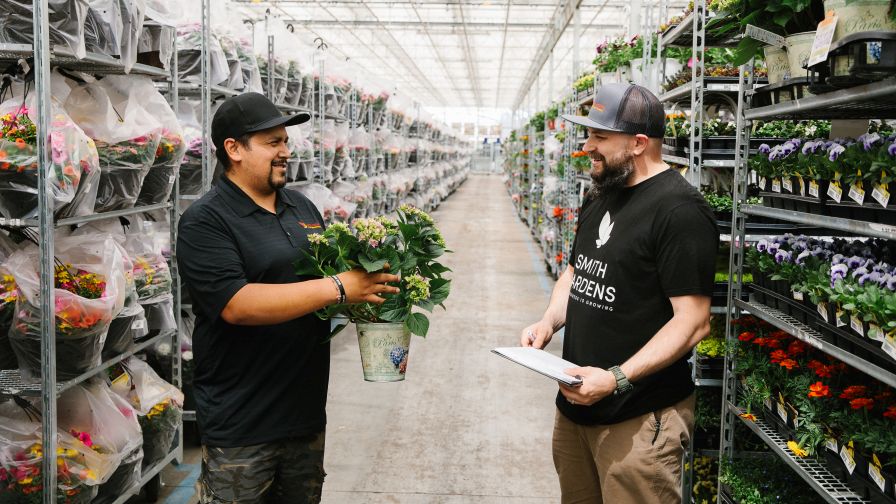
Smith Gardens encourages employees to take a more active role in problem-solving and decision-making. | Smith Gardens
For many years, Smith Gardens has provided annuals, perennials, and other plants to big-box retailers in the Pacific Northwest and Alaska. Perhaps the company’s greatest period of expansion has taken place over the past 30 years.
In 1997, Smith Gardens expanded beyond its two Washington sites when it began renting a small greenhouse in Aurora, OR. The company later purchased and developed a modern greenhouse spanning more than 40 acres. Two years later, Smith Gardens purchased a rose farm in Watsonville, CA, that would become Pacific Plug & Liner, a young plant grower for both Smith Gardens and its broker network.
From an ownership standpoint, the early 2000s transition from Terry and Carolyn Smith to their sons, Eric and Mark, was not done in haste.
“Our parents formed an advisory board that tackled the hard questions of business transition, leadership development, and estate planning right from the beginning,” Eric Smith says.
The advisory board initially included three individuals, with a fourth added later. Each brought experience from family businesses and public companies in other industries.
“They brought some important, unique perspectives that were critical to the transition process,” Eric Smith says.
Eric also credits his parents for their own preparation.
“They came to the table with 25 years of financial statements and legal documents,” he says. “The work we did with our outside advisors was important, but our parents had also led the business for years and were able to walk through some of the more challenging issues that my brother and I would be facing.”
In 2024, Smith Gardens added 24 acres of greenhouse space in Mt. Vernon, WA, when it acquired facilities previously owned by Skagit Horticulture. That purchase, coupled with a 6-acre expansion in Oregon, has helped the company grow its finished business and move some of its internal young plant production to Washington. In turn, it has also allowed Pacific Plug & Liner to grow its rose and perennial business and expand to the East Coast.
The single-biggest change at Smith Gardens took place earlier this year, when Eric and Mark joined Hoffmann Family of Companies to create a holding company that purchased Smith Gardens and its real estate LLCs.
“Our long-term goal was to diversify and de-risk the future of the business for our family, and our partnership with Hoffmann Family has allowed us to do this while providing the same service and experience to our customers,” Mark Smith says. “It’s also allowed us to maintain continuity in the workplace culture we try to provide to our team. While the ownership structure has changed, we remain invested in the future of Smith Gardens, our team, and our customers.”
A Smith Gardens Timeline
1897: Brothers David and Harry Smith emigrate from Scotland, traveling through New Zealand, South Africa, and Nova Scotia before arriving in Bellingham Bay, WA. There, they begin working with their brother John Smith on a bulb farm.
1901: David, Harry, and Nettie Smith purchase 40 acres on Bellingham Bay and establish the original Smith Gardens, producing vegetable starts and produce.
1950s: The second generation of Smiths — Andy, Nellie, and Russ — takes over the business. Smith Gardens shifts its focus to flowers, bedding plants, and potted crops.
1980s: Terry Smith becomes the third generation to lead Smith Gardens.
1988: Terry acquires 60 acres of a former dairy farm in Marysville, WA, and established the company’s second site.
1997: Expansion continues to a third, 2-acre site in Aurora, OR.
1999: The company acquires a former rose farm in Watsonville, CA, and launches Pacific Plug & Liner.
2004: Brothers Mark and Eric Smith purchase the family business from their parents, Terry and Carolyn.
2024: Smith Gardens expands again with the purchase of Skagit Horticulture’s Riverbend facility in Mount Vernon, WA.
2026: Eric and Mark join with the Hoffmann Family of Companies to create a holding company that purchases Smith Gardens.
Innovation Is Tied to Customer Success
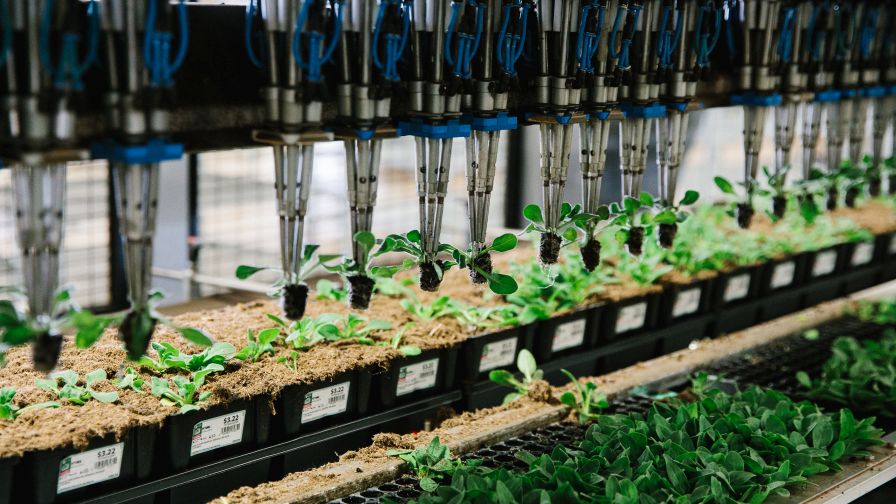
“We still look at new technology that helps us improve labor efficiency, but we also want to be smarter in deciding what we grow and how we’re going to grow it,” says Mark Smith. | Smith Gardens
The acquisition of Skagit Horticulture properties in 2024 created a need for efficiency upgrades through new automation systems. Fortunately, being smart about technology investments is nothing new to the Smith Gardens team.
In 2024, Smith Gardens completed an enterprise resource planning (ERP) system project that continues to be refined. The system has also helped the team prioritize its next steps for improving efficiency. The improved data aggregation has made it easier for Smith Gardens to understand the connection between space utilization in the greenhouse and sell-through to the end consumer.
“In the past, we may have considered ourselves to be a sales-driven or production-driven company,” Eric Smith says. “But once we started getting back improved data, we became more of a consumer-focused company where the data we collect on what consumers are buying helps shape every decision we make.”
That enhanced focus has helped reduce waste on the retail shelf and in the greenhouse.
“Reducing waste and shrink was already a big deal for us, and it’s become even better with the ERP system implementation,” Mark Smith says. “We still look at new technology that helps us improve labor efficiency, but we also want to be smarter in deciding what we grow and how we’re going to grow it.”
As Smith Gardens invests in technology, it is also investing resources in building and retaining its team.
“Our core values are all based on empowering our employees to become more directly invested in our company,” Eric Smith says. “We want to give them the chance to grow, which is why, if they come to us with a question, we don’t always give them an answer right away. There’s a respect that comes from allowing them to solve problems on their own.”
Eric points to a recent experience as an example. “Earlier this summer I was walking the GreenTech Amsterdam show floor with two members of our team, and it was enlightening when some of the vendors walked past me to talk to our director of facilities,” Eric Smith says. “There was a real sense of pride in encouraging our team to have relevant conversations and lead our decision-making and implementation processes.”
A Bright Future
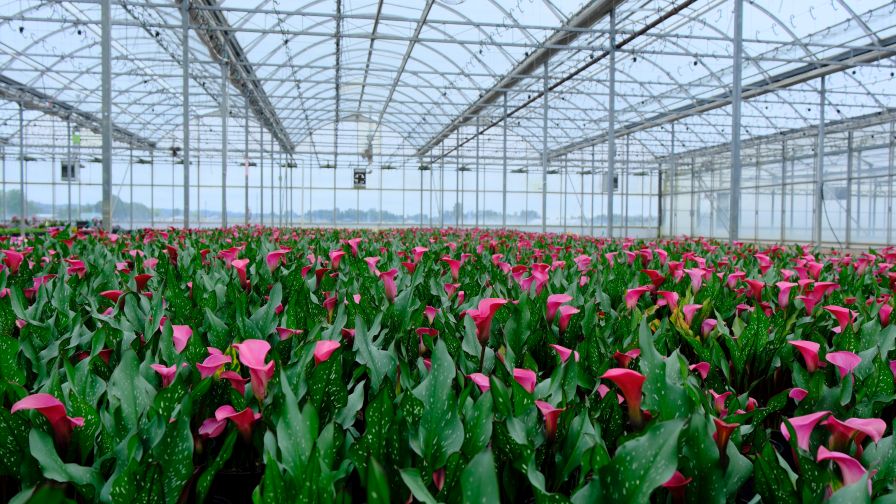
Smith Gardens uses new technology tools to analyze thousands of SKUs and coordinate product deliveries from multiple facilities. | Smith Gardens
Looking ahead, both Eric and Mark Smith say the company’s future will be defined by how it addresses three key trends.
Changing Consumer Expectations
“The next generation of gardeners won’t be ‘gardeners’ in the traditional sense. They’ll be digging in the soil less, and putting more plants on their porches and patios,” Eric Smith says. “We’ve adjusted by shifting to more ready-to-use containers, including flowers as well as vegetables and herbs.”
Data analysis comes into play not only in understanding what consumers are buying but also how they are shopping. It is also helping Smith Gardens identify new ways to improve efficiency.
“We’re doing more direct shipping to consumers through our customers’ websites,” Mark Smith says. “As we make this shift, we’re trying to drive more intelligence-based planning and direction, and it’s generated a sense of curiosity among our team. What used to be more physical roles are now creative and analytical roles.”
Data Optimization and Security
New technology tools mean Smith Gardens is now analyzing thousands of SKUs at once, delivering products from multiple facilities, and using that data to streamline its fulfillment system. However, that increase in reliance on technology has also raised security concerns.
“We’ve invested more in cybersecurity and risk management tools,” Eric Smith says. “The typical cost-benefit analysis we’ve used with automation doesn’t equate the same way when you’re talking about cybersecurity. It’s more of a long-term insurance investment.”
The Connection Between Genetics and Technology
Smith Gardens has maintained vibrant plant trial gardens for many years and uses input gathered from customers at those trials to drive product innovation.
One example is increased perennial production, which has long been a challenge given Smith Gardens’ far-north position at the 49th parallel. Improved supplemental lighting technology has made this much more cost-effective.
“We’re growing things that would not normally be grown at our location, which means we can now offer a local supply and quickly replenish orders,” Eric Smith says.
These investments in data-driven technology and team development are helping to shape the future of Smith Gardens.
“Mark and I have been able to focus on setting the long-term business direction for the company, and we have trust in our team to lead day-to-day operations and be creative in trying new things,” Eric Smith says. “That will be the most important part of our future success.”
Subscribe to eNewsletter
