



How to Manage Ergonomic Risks in Greenhouse Work
 November 14, 2025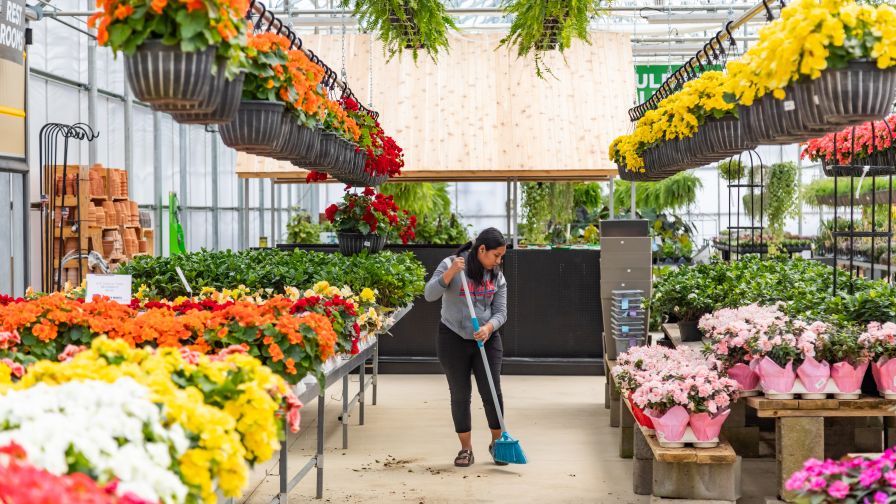
A worker cleaning the floor of a greenhouse full of flowers. | Timbuk Farms, Hortica
Greenhouse operations carry more than just traditional job hazards — repetitive motions, awkward postures, and heavy material handling add up to significant injury risk. In 2022, according to the Bureau of Labor Statistics, more than 250,000 back injuries resulted in days away from work.
The good news is that many ergonomic exposures can be mitigated through simple changes to processes and tasks, combined with a good safety training program. Here’s where owners and operators can make quick, measurable gains to help reduce workplace injuries.
Key Greenhouse Tasks That Contribute to Injuries — and How To Reduce Them
The following routine tasks can create big issues for workers. But small design choices can significantly reduce injury risk.
Planting and Transplanting
Primary risks: Repetitive tasks and long periods spent in bent or crouched positions.
Likely injuries: Lower-back strain; repetitive strain injuries (RSIs) to wrist, hand, and forearm.
How to work smarter:
- Raise work areas. Use waist-height benches or adjustable platforms to keep repetitive work in the safe lift zone, from the knees to the shoulders.
- Shorten reaches. Add turntables or cut-out benches so hands stay close to the body.
- Rotate tasks. Alternate fine-motor tasks with short movement breaks or different duties.
- Choose ergonomic tools. Select angled, cushioned-grip hand tools that keep wrists in a neutral position; keep blades sharp to help reduce required force.
- Install a hose trolley. A pulley-based hose trolley system that elevates watering equipment helps prevent strains, trips, and falls.
Watering and Irrigation Maintenance
Primary risks: Handling heavy hoses and containers; extended carries.
Likely injuries: Shoulder strain, forearm fatigue.
How to work smarter:
- Reduce load. Use lightweight hoses and quick-connect manifolds; install hose reels at convenient heights.
- Add wheels. Put water containers on dollies or carts; be sure to install larger wheels for movement across uneven surfaces.
- Plan and maintain paths. Keep routes clear and dry; standardize hose storage practices to help minimize trip hazards.
Spacing, Trimming, and Moving Product
Primary risks: Lifting trays and pots from floor level; frequent bending, stooping, and twisting while moving plants or trimming on the ground.
Likely injuries: Back strain, sprains, hernias.
How to work smarter:
- Reduce lift demands. Store heavier items low but off the floor — for instance, on low pallets — to avoid floor-level lifts.
- Use assist devices. Use carts, two-person lifts, and lift tables at packing lines.
- Stage for flow. Position trim stations and shipping areas in ways that minimize turns and long carries.
- Coach technique. Train workers to bend at the knees, keep loads close, and avoid twisting; simple, consistent coaching from supervisors matters.

Packing and Order Fulfillment
Primary risks: Prolonged standing, overhead or extended reaches, repetitive hand motions.
Likely injuries: Tendonitis, joint pain, lower-extremity fatigue.
How to work smarter:
- Make logical storage arrangements. Match bench height to task; keep frequently shipped items within forearm reach.
- Reduce steps. Standardize tool and material locations; use gravity chutes or conveyors for finished goods.
- Protect legs and feet. Provide anti-fatigue mats and cushioned insoles at fixed stations; encourage micro-breaks.
- Maintain safe surroundings. Keep floors clean and fulfillment areas free of debris by providing ample recycling, waste, and other sorting bins nearby.
- Consider technology upgrades. Depending upon your operation, upgrading or investing in automation may be useful to reduce repetitive tasks and enhance efficiency, such as for packaging and labeling for direct-to-consumer shipping.
Build a Proactive Safety Program
In addition to creating safe work areas, reducing ergonomic injuries includes developing a proactive safety program that defines roles, trains employees, and tracks results — shifting safety from reactive to preventive, and keeping employees safely working. These key elements help greenhouse operators move from reacting to incidents to prevention that helps keep employees productive and on the job.
- Create a written safety program. Define goals, responsibilities, inspection cadence, and corrective-action timelines. Use regular cleaning programs to reinforce safety and identify gaps.
- Empower staff. Appoint a safety lead who reports to leadership and chairs a cross-functional safety committee, and empower and recognize staff who take ownership of safety for themselves and customers, including self-reporting.
- Hire for fit and train for skill. Screen for ability to meet physical demands; teach safe lifting, tool use, and station setup during onboarding; implement the LEAD model — focused on Leadership, Engagement, Accountability, and Documentation — to guide daily safety practices.
- Standardize policies. Set expectations on mechanical aids, two-person lifts for loads over a certain weight or awkward shapes, and when to stop work and re-stage. Create and follow a regular schedule for re-training and safety meetings.
- Create visible reminders. Place safety reminders in common areas and work zones to keep safety top-of-mind throughout the day.
- Inspect what you expect. Do monthly ergonomics walks during normal operations; log findings, close the loop with fixes, and use the knowledge to inform future processes and training.
- Establish return-to-work. Pre-identify light-duty tasks to shorten disability duration.
- Leverage your insurer. Ask your agent or carrier about ergonomic assessments, supervisor training, and lifting resources you can begin using this quarter.
How Ergonomic Injuries Impact Your Insurance Costs
In addition to protecting your workforce, proactive ergonomic design plays a direct role in managing your workers’ compensation costs. Musculoskeletal injuries — such as strains, sprains, and repetitive strain injuries (RSIs) — are common contributors to both claim frequency and lost time.
Two primary factors influence your total cost of risk:
- Frequency: How often injuries occur.
- Severity: How long employees are off the job and how costly recovery becomes.
By reducing physical strain and coaching proper technique, you can limit both the occurrence and impact of these injuries.
Cost-Control Strategies to Implement Now
- Invest in preventive design. Adjustable benches, tilting tables, and carts often cost less than a single lost-time claim, and they can reduce long-term risk.
- Encourage early reporting. Prompt care after a workplace injury limits complications and supports faster return-to-work outcomes. Make sure employees know the importance of reporting injuries, so you can report claims when they occur.
- Use modified duty strategically. Provide transitional work that fits medical restrictions while keeping employees connected to the operation.
- Monitor injury trends. Track where injuries occur and which body parts are involved. Use this data to prioritize improvements and collaborate with your insurer on tailored prevention resources.
Workers’ Compensation: What Greenhouse Owners Should Know
Workers’ compensation provides medical and wage-replacement benefits for work-related injuries or illnesses. It’s typically required by state law and protects both your employees and your business.
Key points for owners:
- Coverage varies by state. Requirements, benefit levels, and administrative rules differ; multi-state operations should verify each location’s standards.
- Plan choice affects cash flow and risk. Guaranteed-cost plans offer predictable premiums; loss-sensitive and self-funded options introduce more variability but can reduce long-term cost if you manage risk well.
- Claims management matters. Early reporting, active communication with adjusters and providers, and a formal return-to-work program are proven levers to help reduce the total cost of risk.
- Partner with your agent/carrier. Ask about ergonomic assessments, supervisor training, claim trend reviews, and support with modified-duty roles.
Working Smarter Benefits Everyone
Ergonomics is not a luxury — it’s a practical strategy for sustaining productivity during peak seasons. while reducing risk and controlling costs. Start with high-strain task improvements, supervisor coaching, and insurance-supported assessments and planning. Small, targeted changes today can help prevent injuries — and avoid costly interruptions — when demand is highest.
Subscribe to eNewsletter