



How Tariffs May Affect the Greenhouse Manufacturing Market
 June 26, 2025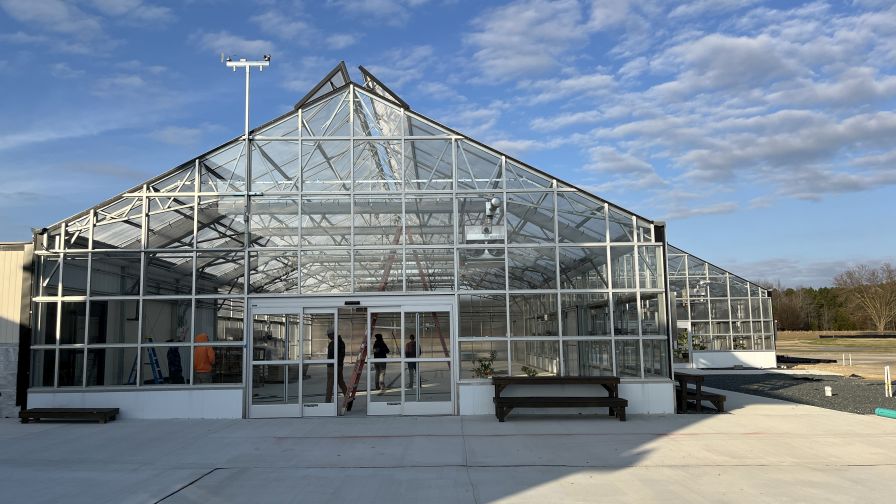
Photo: Wadsworth Controls
Greenhouse manufacturers and component suppliers face many of the same challenges — and opportunities — as growers. From economic pressures to shifting market demands, the forces shaping production also influence those designing and building the structures that support it.
We reached out to members of the National Greenhouse Manufacturers Association (NGMA) to get their perspectives on key industry issues — from the impact of tariffs on long-term planning to how supplier partnerships can create added value for growers. Here’s Part 6 covering the effects of tariffs on the industry at large.
Stay tuned for Part 7, and catch up with Parts 1, 2, 3, 4, and 5 if you missed them.
Mark Davis, CEO of Atlas Greenhouse: “It’s too early to tell. Initially, it appeared that we were headed for a sharp downturn as suppliers were beginning to send out notices of anticipated price increases. With the tariff pause in place and until we have more definitive information, it will be a wait-and-see issue. There are some of our products that have been affected but overall, business remains good.”
Dave Stoltzfus, President of Advancing Alternatives: “Tariffs will affect us, as they will affect everyone. Tariffs are not an isolated issue; everything we buy has international ties, and even if the components are assembled in the U.S., the components will be more expensive.”
Tim Lauer, Vice President and Production Manager at Albert J. Lauer: “This entire scenario has not entirely played out yet. There are increases in aluminum and steel and suppliers have raised prices on various inputs.”
Argus Controls: “Tariffs have the potential to lead to uncertainty and market retraction.”
Duane Van Alstine, Customer Solutions Manager at GGS Structures: “They will affect certain material and systems. Because we are Canadian, if we bring in material or systems from the U.S. for greenhouses built in Canada, we will be paying tariffs. If we are building in the U.S., systems and material originating in Canada will be tariffed.”
Paul Golden, Director of Sales–Commercial Growing at Prospiant: “Generally, we anticipate that the U.S. commodities (steel, aluminum, and polycarbonate) will increase by a modest amount. Glass out of China and roof extrusions out of Europe are going to be the biggest impacts.”
Matt Bonavita, Vice President of Sales at Sollum Technologies: “Tariffs on imported components may have an impact, but growers are still prioritizing long-term savings. With energy efficiency, rebates, and improved yields, the ROI on dynamic lighting remains strong, making it an attractive investment despite these challenges.”
John Juhler, Sales Manager at Vostermans Companies: “They will impact sales of higher quality products from Europe. It may bring the Chinese low-cost products up in cost and make them less attractive. Time will tell.”
Patricia Dean, CEO of Wadsworth Control Systems: “Tariffs on imported components and raw materials are increasing our costs. We work diligently to manage these increases internally to minimize the impact on our customers. However, ongoing tariffs could create pricing pressures, especially for products heavily reliant on metals and electronics. For larger projects, we proactively purchase materials at risk of tariff hikes ahead of time to lock in pricing, although with our small and efficient footprint, there are limits to how much pre-purchasing we can do.”
Subscribe to eNewsletter
