



Wenke/Sunbelt Greenhouses Expands Propagation Capacity
 May 28, 2026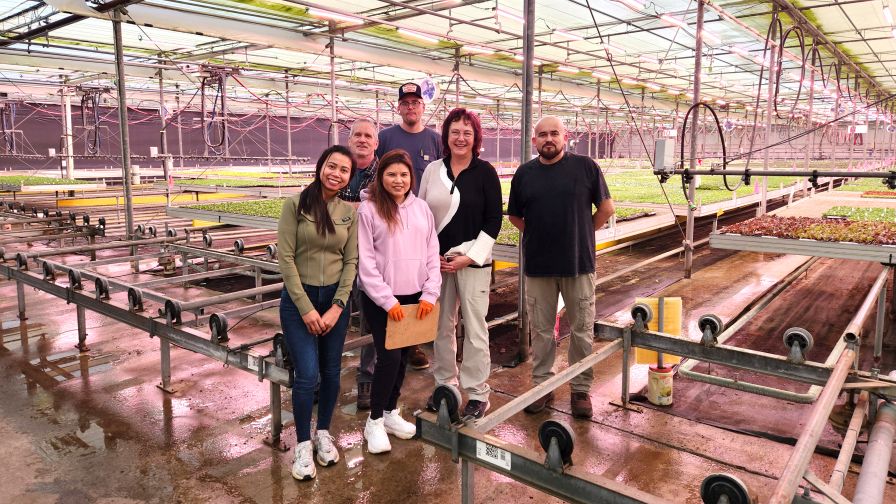
Lisa Ambrosio, co-owner of Wenke/ Sunbelt Greenhouses (center), is pictured with staff members (from left): Mischelle Gielow, head young plant grower; Mike Timmons, facility lead; Martha Blades, who oversees sticking, inventory, and shipping; Ben Cramer, lead young plant grower; and Omar Barboza, an experienced grower. | Wenke/Sunblet Greenhouses
In today’s ornamental plant industry, success often depends on whether a company chooses to specialize or diversify. Nearly 75 years old, Wenke/Sunbelt Greenhouses, ranked No. 17 on Greenhouse Grower’s 2026 Top 100 Growers list, has taken the diversification route. Headquartered in Kalamazoo, MI, the company operates production greenhouses in both Michigan and Georgia, along with a retail greenhouse in Kalamazoo.
“Retail is a small percentage of our overall business, less than 5%,” says co-owner Lisa Ambrosio. “But it is very important to us, and it’s what we’re known for in Kalamazoo. We also learn a lot from our retail store. In terms of sales dollars, though, it represents a relatively small portion of our overall sales.”
Multiple Markets
Wenke/Sunbelt Greenhouses produces finished crops in Michigan and Georgia for a range of retail customers. The 26 acres in Georgia are used primarily for annuals, but the operation also produces perennials, edible crops, and indoor plants.
“Our focus is on annuals in both Michigan and Georgia,” says Ambrosio. “Annuals make up the majority of our production, approximately 70%. We are also starting to do more with perennials. Our finished product is sold primarily to garden centers and landscapers, and a portion of Sunbelt’s finished plant business is also sold to Metrolina Greenhouses and Costco.”
At the company’s 12-acre Millennium facility in Kalamazoo, finished crops are produced for the Kalamazoo Flower Group in nearby Galesburg, MI.
“We are co-owners of the Kalamazoo Flower Group,” says Ambrosio. “The group consists of about 20 growers in the Kalamazoo area. We grow a portion of the product for the group, which sells to Walmart, Meijer, Lowe’s, and Menards. One of the benefits of being a member of the group is that it allows us to specialize instead of having to produce a full assortment of crops.”
Increased Focus on Starter Plants
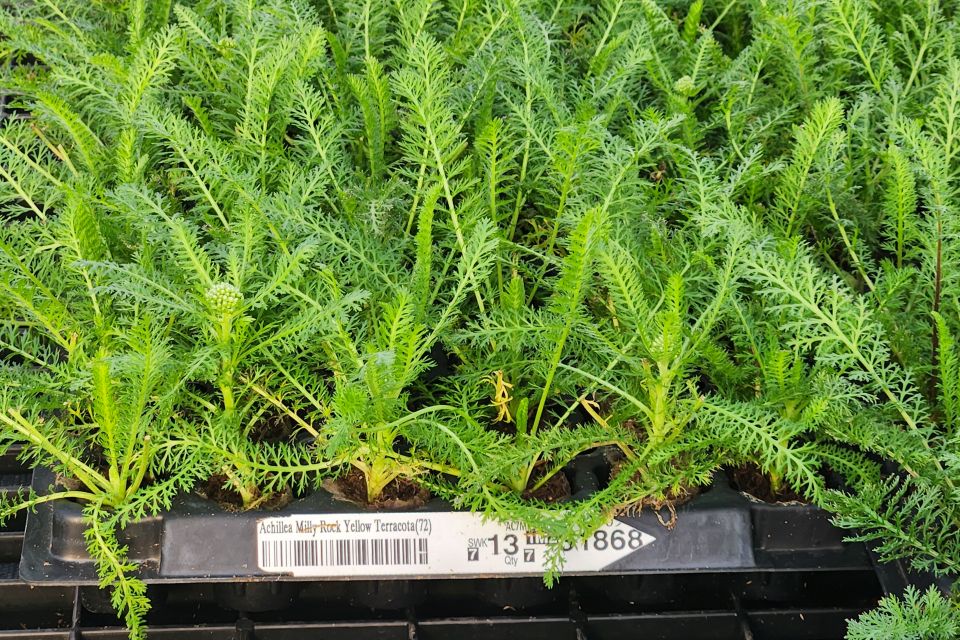
Although 75% of the company’s young plant perennial production is used internally, Wenke/Sunbelt Greenhouses sees an opportunity to expand sales to other growers. | Wenke/Sunblet Greenhouses
The company produces 95% of its own starter material. At its 10-acre Market 8 location in Michigan, Wenke/Sunbelt Greenhouses focuses on starter plants, including seedling plugs and vegetative liners. Those starter plants are either sold nationwide through brokers or used to produce finished containers at the company’s other locations in Michigan and Georgia.
“We are doing young plant and finished plant production at Sunbelt in Georgia,” Ambrosio says. “We have a 3-acre young plant range there dedicated to vegetative and tissue culture liner production. Sunbelt has also been a rooting station for Ball Seed and other brokers for many years. The vegetative liner production done in Georgia is sold through Ball to growers in the Southeast. That production space also switches over to finished crops, including fall crops and poinsettias.”
The company has also seen a gradual decrease in the amount of material it produces for finished bedding plant flats.
“Since we were doing so few bedding plant plugs at Sunbelt, we moved all of that production to Michigan two years ago,” she says. “We are now producing all of the starter seeded annuals and perennials for Georgia in Michigan.”
Adding Propagation Space
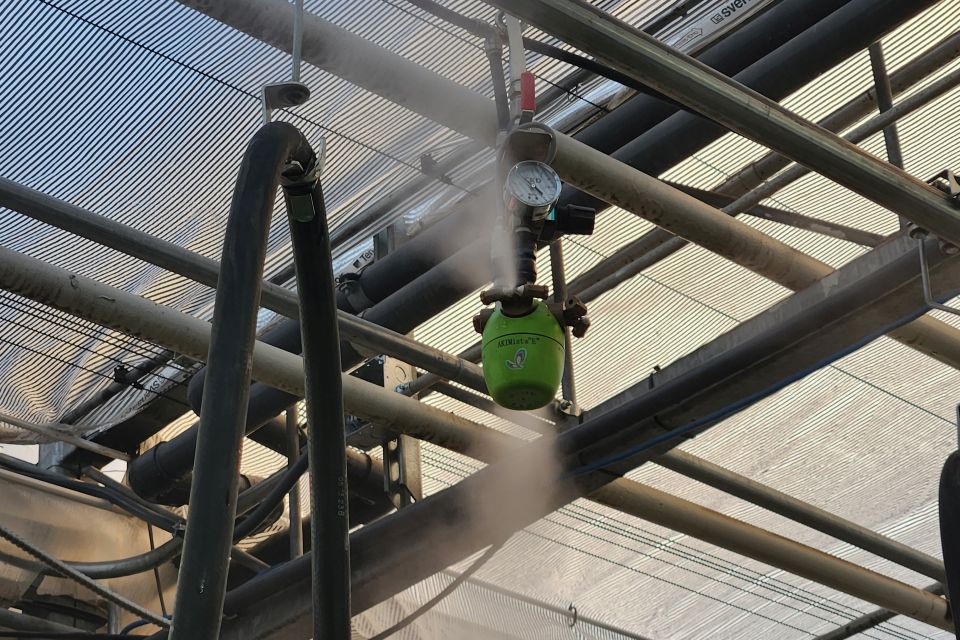
Wenke/Sunbelt Greenhouses has added a humidification system in both its propagation coolers and greenhouses. The biggest benefit has come in cutting propagation, where the system has improved rooting speed and reduced losses by 20%. | Wenke/Sunblet Greenhouses
Beginning in 2022, the company expanded its Market 8 facility by adding 4 acres of greenhouse space to its existing 6-acre operation.
“One of the reasons we added greenhouses in Michigan was because we had land available to build on,” Ambrosio says. “In Georgia, we are landlocked and don’t have room to expand that facility.”
The new Market 8 facility is being used to grow young plants, including annuals, vegetables, and herbs, some indoor plants, and perennials.
“Perennials are becoming a much bigger part of our production for finished plants and, as a result, a bigger part of our young plant production as well,” says Ambrosio. “We see an opportunity in perennial young plant production. About 75% of those plants are for our own use, but we are also selling them to other growers, and we hope to expand that part of the business. Perennials now account for about 10% of our production.”
Improving the Propagation Environment
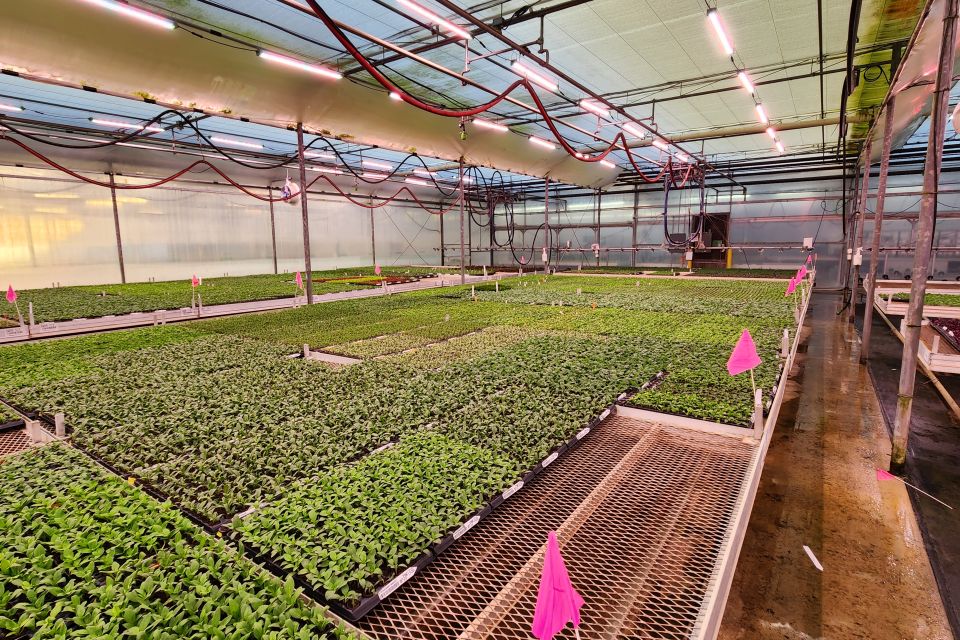
Installing LED grow lights in partnership with TotalGrow Lights has dramatically increased the amount of light available to the plants in the greenhouse, which is especially important during the final stages of plug and liner production. | Wenke/Sunblet Greenhouses
The most important upgrade Wenke made to its new young plant propagation facility was the addition of a humidification system.
“Some of the technical staff at Ball Seed suggested that we install a humidification system,” Ambrosio says. “Several growers producing for Ball were already using humidification for young plant propagation. We modeled our system after one at Walters Gardens, which is also located in Michigan. By far, humidification was the most important addition to the facility.”
Ambrosio says the humidification system is a more effective way to rehydrate vegetative cuttings than watering booms or nozzle sprays that deliver larger water droplets.
“Unrooted vegetative cuttings are shipped in boxes from Costa Rica and can be stressed by the time we receive them,” she says. “Once the cuttings arrive, we place them in a cooler with the humidification system so they can begin to rehydrate. That period can last anywhere from one hour to three days. The time in the cooler gives the cuttings a strong start. We also use the humidification system in the greenhouses. Plants in Michigan do not dry out as quickly, and not having to apply water directly allows us to keep them hydrated without saturating them.”
While humidification is used for both vegetative cuttings and seedling plugs, the biggest propagation improvement has come with the cuttings.
“We have seen faster rooting and a 20% reduction in losses using humidification,” Ambrosio says. “For some crops that previously took five weeks to root, we have been able to cut that time by a week.”
The company is also planning to incorporate more heated water into young plant propagation.
“Heating the water is not a major expense,” she says. “We had already been tempering the water, but we found that water temperature is even more important than we realized.”
Another addition to the propagation facility was the installation of LED grow lights.
“We dramatically increased the moles of light available to the plants by adding LED lights and building a greenhouse with an 18-foot roof, which provides substantially better light.”
By combining humidification, better water management, and increased light levels, Wenke/Sunbelt Greenhouses is building a propagation system designed to reduce losses, improve rooting, and support future growth in starter plant production.
Subscribe to eNewsletter