




Revolutionizing Plant Protection with Biological Solutions
RootShield PLUS+ offers growers protection from tough fungal diseases
It’s no secret that resistance lurks at every turn. From noxious weeds to fungal pathogens, today’s chemical control options are becoming increasingly limited. With the right program approach, fungal pathogen resistance challenges can be reduced and potentially even eliminated.
BioWorks harnesses the power of beneficial microbes to protect plants and enhance plant growth. Biopesticides provide some relief to traditional chemical options. Diseases are not resistant to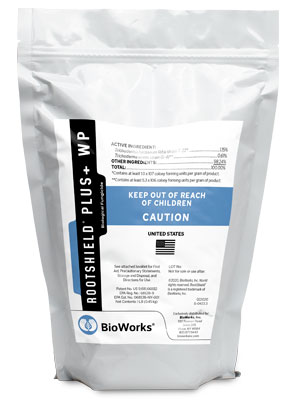 biopesticides and can be easily incorporated into any crop plan.
“The shift towards biologicals is driven by several factors,” says Michael Brownbridge, senior technical services manager for BioWorks. “Many chemical pesticides have lost their efficacy due to resistance. Diseases adapt, rendering traditional chemical treatments less effective over time. Biologicals, however, bring multiple modes of action that plant diseases are unlikely to develop resistance to. This makes them a reliable part of any plant protection program.”
BioWorks RootShield PLUS+ uses a patented combination of Trichoderma harzianum T-22 and Trichoderma virens G-41, which form a close association with plant roots. This relationship protects the roots from diseases and offers plant health benefits. These Trichoderma fungi produce metabolites that stimulate the plant’s defense mechanisms, helping it fend off diseases more effectively. It also enhances nutrient uptake by solubilizing nutrients in the soil and making them more accessible to the plant.
RootShield PLUS+ is effective against a broad spectrum of root diseases, including damping-off, root rot, crown rot, and wilt caused by species of Phytophthora, Pythium, Fusarium, Rhizoctonia, Cylindrocladium, Thielaviopsis, and other soilborne pathogens.
“One of the fascinating aspects of RootShield PLUS+‘s mechanism is its ability to ‘fence off’ pathogens, Brownbridge says.
Trichoderma fungi in RootShield PLUS+ colonize the root system, creating a protective barrier around the plant’s roots.
“This barrier acts like a physical and biochemical shield, preventing harmful pathogens from reaching the roots. The fungi compete with pathogenic organisms for space and nutrients, effectively outcompeting them and reducing their ability to cause disease.” Brownbridge adds. “The metabolites produced by Trichoderma can inhibit the growth of pathogens directly, further enhancing the protective effect. This multi-faceted approach ensures that the plant’s roots remain healthy and free from disease, leading to stronger and more resilient plants.”
Strong, resilient plants also make them more tolerant to transplanting and abiotic stresses, like heat and drought.
A program approach to control fungal pathogens
BioWorks has done extensive compatibility testing with chemical fungicides. Growers can add RootShield PLUS+ to their program without the risk of negative interactions. (View the compatibility list on the RootShield PLUS+ webpage by clicking here.)
“By combining the quick action of chemical treatments with the preventive benefits of biologicals, growers can achieve better disease control and longer-lasting protection,” Brownbridge says. “And as the industry moves towards more sustainable practices, products like RootShield PLUS+ will play a crucial role in ensuring both the health of our crops and the environment.”
Growers also have application options, including drench, pre-plant dip, or through greenhouse and field chemigation systems. BioWorks also offers RootShield PLUS+ as a granule option for growers to use in mix preparation and pot filling or for incorporating into planting beds by raking or tilling.
Brownbridge says growers should consult their crop advisor or a technical expert at BioWorks for guidance on incorporating RootShield PLUS+ into their growing systems.
RootShield PLUS+ works in a variety of crops, including ornamentals, vegetables, herbs, bulbs, fruits, nuts, trees, shrubs, tobacco, strawberries, cannabis, and more. For more information, visit the BioWorks RootShield webpage by clicking here.
Checkout the BioWorks Upcoming Webinar Series here.