



A Guide to Wood Substrates: Western U.S. Tree Species
 March 24, 2026
 Despite the wide diversity of conifer species across North America, commercial wood substrates are produced from relatively few species, primarily sourced in the eastern U.S. Expanding the use of western species could improve supply efficiency and enable more regional substrate production.
Expanding Wood Substrate Options Beyond Eastern Species
Much of the industry’s current substrate production relies on loblolly pine (Pinus taeda) sourced in the southeastern U.S., where its performance and processing characteristics are well established. Evaluating regionally available species, particularly in the western U.S., could help broaden substrate supply and improve regional accessibility.
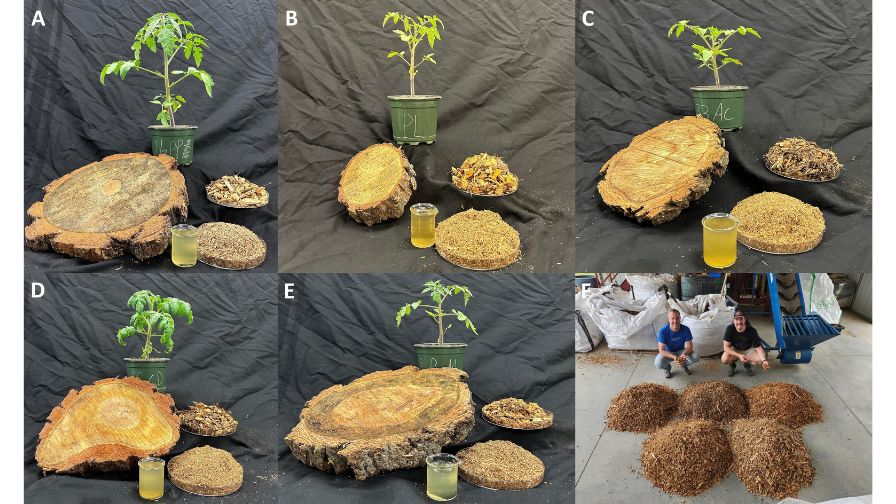
Figure 1: West coast conifer species evaluated as substrates (A) Pinus ponderosa, (B) Pinus lambertiana, (C) Abies concolor, (D) Calocedrus decrurrens, (E) Pseudotsuga menziesii, and (F) wood chips of all five species. | Brian Jackson, Jack Bobo
Expanding wood substrate production using western conifers could reduce transportation costs, support regional substrate manufacturing, and create productive uses for wildfire-damaged, beetle-killed, and thinned timber.
Western forests contain abundant biomass from thinning operations, wildfire damage, and insect-related mortality, representing a significant potential resource for substrate production.
Evaluating Western Conifer Species for Substrate Use
To evaluate the feasibility of using western tree species for wood substrate production, NC State researchers collaborated with Jeff Greef, founder of Plumas Wood Fiber and a volunteer with the Plumas Fire Safe Council in Plumas County, CA. Research trials began in 2022 to assess the potential of commonly available West Coast conifer species.
Five species — Ponderosa pine (Pinus ponderosa), sugar pine (Pinus lambertiana), white fir (Abies concolor), incense cedar (Calocedrus decurrens), and Douglas fir (Pseudotsuga menziesii) — were harvested, chipped, and processed individually and as a blended mixture to simulate real-world biomass sourcing conditions (Fig. 1).
Research led by Dr. Jack Bobo, a Ph.D. student at the time, included phytotoxicity bioassays, plant growth trials, and laboratory analyses of substrate properties over time.
Initial phytotoxicity screenings using freshly processed materials showed significant reductions in tomato growth across all five species. However, after seven weeks of aging under open-air storage conditions, growth reductions were substantially reduced, and after 15 weeks, no growth reductions were observed. These results demonstrate the importance of aging hammer-milled wood substrates to allow phytotoxic compounds to dissipate before use in plant production.
Substrate Processing and Plant Growth Performance
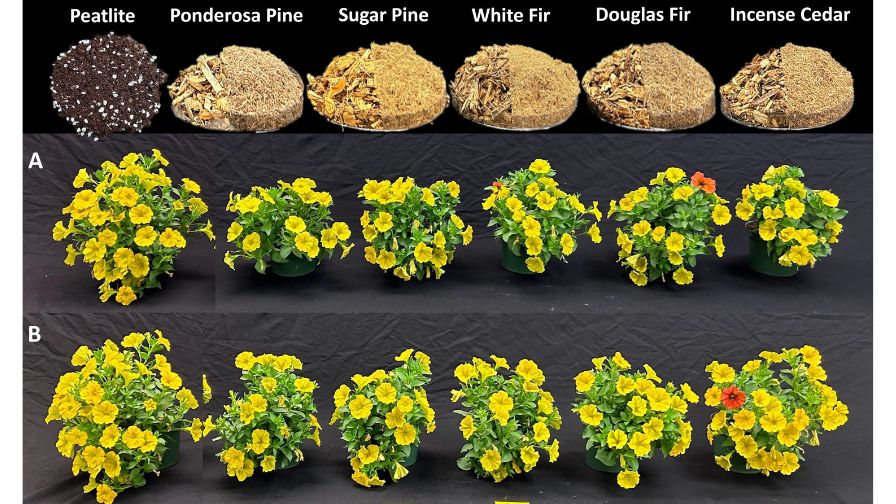
Figure 2: Petchoas grown in peat amended with A. 25% and B. 50% sixteen-week aged hammer-milled wood from five western U.S. conifer species. | Brian Jackson, Jack Bobo
Processing characteristics and physical properties of the five conifer species were highly consistent, indicating all species could be processed using the same methods and incorporated into peat-based substrate formulations without significant differences in performance.
Plant growth trials evaluated substrate performance across species and amendment rates. In one trial conducted seven weeks after processing, petchoas grown in substrates containing 25% or 50% wood fiber blended with peat showed minor reductions in dry weight, but overall plant quality remained good, with no visual abnormalities, nutrient deficiencies, or signs of plant stress (Fig. 2).
Trials using aged wood fiber showed no growth or visual differences among species, confirming western conifers can perform effectively as substrate components (Fig. 3).
Western Conifers Expand Regional Wood Substrate Opportunities
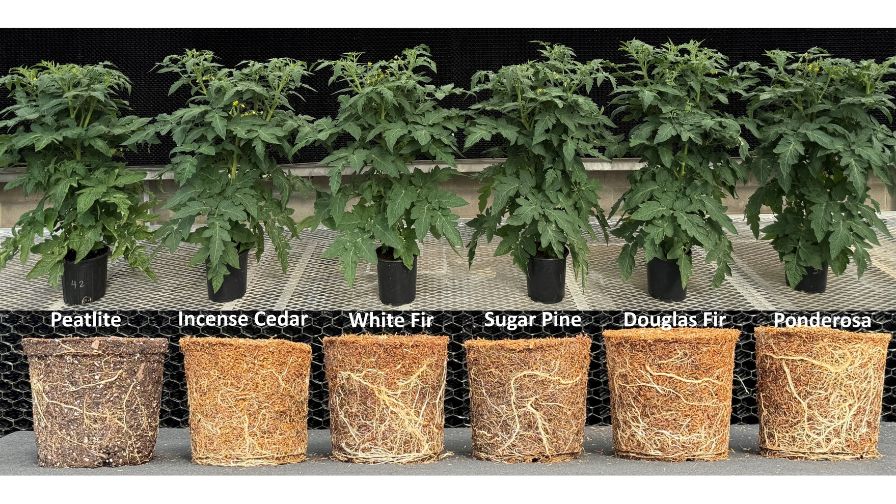
Figure 3: Tomatoes grown in peatlite and five hammer-milled substrates made from western conifer species. | Brian Jackson, Jack Bobo
The successful evaluation of these western conifer species expands the range of viable raw materials available for engineered wood substrate production. These findings support the potential for regional substrate sourcing in areas that have historically relied on materials produced in the eastern U.S.
Additional research and commercial-scale implementation will continue to refine processing and production practices.

Make sure to check out Parts 1, 2, 3, and 4 in this series covering wood substrates, and stay tuned for the final Part 6!
Subscribe to eNewsletter