



The 2026 CEAg World Industry Report on Greenhouse Produce is Here
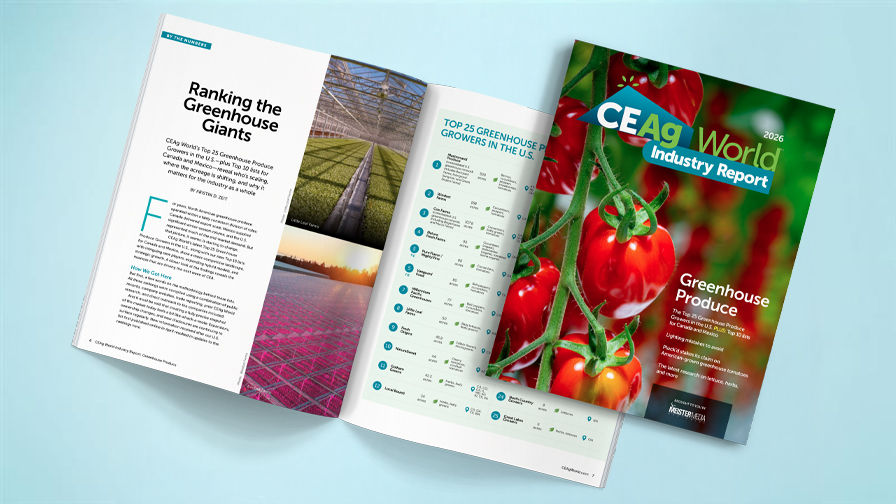
Photo: CEAg World
CEAg World’s 2026 Industry Report: Greenhouse Produce, which includes a ranking of the 25 largest greenhouse produce operations, puts the spotlight on fully indoor controlled environment agriculture (CEA) operations and the people, research, and market forces moving the sector forward. To download the full report, click here.
Compiling a definitive ranking of North America’s largest greenhouse produce growers is not for the faint of heart. Even with today’s turbo-charged research tools and a well-stocked contact list, the pace of change in the greenhouse industry kept us on our toes.
For one thing, many of the continent’s largest greenhouse businesses are privately held. Unlike some other sectors of agriculture, operators often disclose little publicly about acreage, ownership structures, expansion timelines, or production status. These operations can also span multiple subsidiaries, brands, or partnerships.
At the same time, the industry is shifting rapidly, with regularly announced acquisitions, consolidations, expansions, closures, and ownership changes. You may notice that the U.S. Top 25 list in this issue differs slightly from what CEAg World originally posted online just two months ago (though that list has now been updated). That’s thanks to some companies’ outreach to update numbers after the fact and, in one case, an operator’s surprisingly polite email informing us they’d been running a 31-acre outfit under the radar for decades. Are there more greenhouse produce growers out there like that? Almost certainly. (Do I want them/you to reach out to let me know? Yes, please.)
The rise of multinational greenhouse platforms adds another layer of complexity. Operators such as Mastronardi Produce, NatureSweet, Nature Fresh Farms, Cox Farms, and Wholesum increasingly function as integrated North American supply businesses rather than companies easily tied to a single country. Production may occur in one country, marketing in another, and ownership or distribution structures across several more.
Even defining what qualifies as a “greenhouse” operation is becoming less straightforward. Today’s rankings required decisions around hybrid vertical-greenhouse systems, lower-tech protected agriculture, active versus inactive production acreage, and more.
So, in a way, the challenge of ranking North America’s greenhouse leaders is not unlike the current state of the industry itself: fragmented, fast-moving, increasingly cross-border, and still figuring out what modern CEA looks like at scale.
I learned a lot compiling this list, and as CEAg World continues to have conversations with leaders at both the established and up-and-coming greenhouse giants, we’ll continue to share their lessons and insights.
For the latest reporting and analysis, subscribe to the CEAg World newsletter at CEAgWorld.com/subscribe. And don’t miss the CEAg World Conference and Expo this fall (Nov. 10-11, Charlotte-Concord, NC), where attendees can connect directly with many of these growers to exchange ideas, compare strategies, and work through shared challenges. Growers attend free — for more details, go to CEAgWorld.com/events.
To download the full Greenhouse Produce report or any of CEAg World Industry Reports, click here.
Subscribe to eNewsletter