



How Spring Creek Growers Built a Fast-Growing Texas Native Plant Program
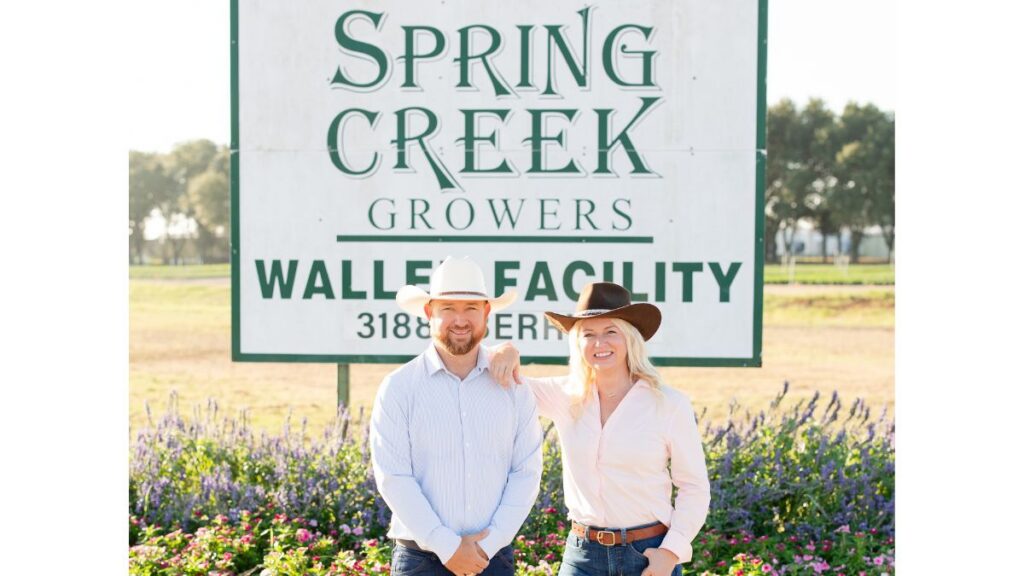
Lauren Kirchner, President and Owner, and Evan Jones, Co-Owner, Chief Operations Officer and Head Grower, lead Greenhouse Grower’s 2026 Operation of the Year. | JW Baugh Photography
When Lauren Kirchner, President and Owner at Spring Creek Growers, visits a store carrying plants from the family’s Waller, TX, operation, she does not announce who she is. She shops, watches, and notices which plants catch someone’s eye and which ones make their way into a cart. Every so often, she approaches someone carrying one of Spring Creek’s plants.
“Where did you find that? That is so beautiful!”
For Kirchner, the exchange is a chance to hear something more candid than a sales report could ever provide.
“I want to know who’s buying the plants,” she says. “I want to know how they’re experiencing our plants. I want to know how they define success with our plants.”
What customers respond to has helped shape a native plant program that has grown from a handful of selections into the operation’s second-largest crop category.
Kirchner and her brother, Evan Jones, Co-Owner, Chief Operations Officer, and Head Grower, have also looked beyond the greenhouse as the program has expanded, paying attention to the plants growing naturally around them and working with organizations focused on Texas native plants and prairie conservation.
Kirchner describes the operation as having an almost “aggressive need to observe everything.”
The business has grown from roughly 30 employees several years ago to nearly 100 today, with about 500,000 square feet of growing space across its 60-acre Waller property.
Building a Native Program
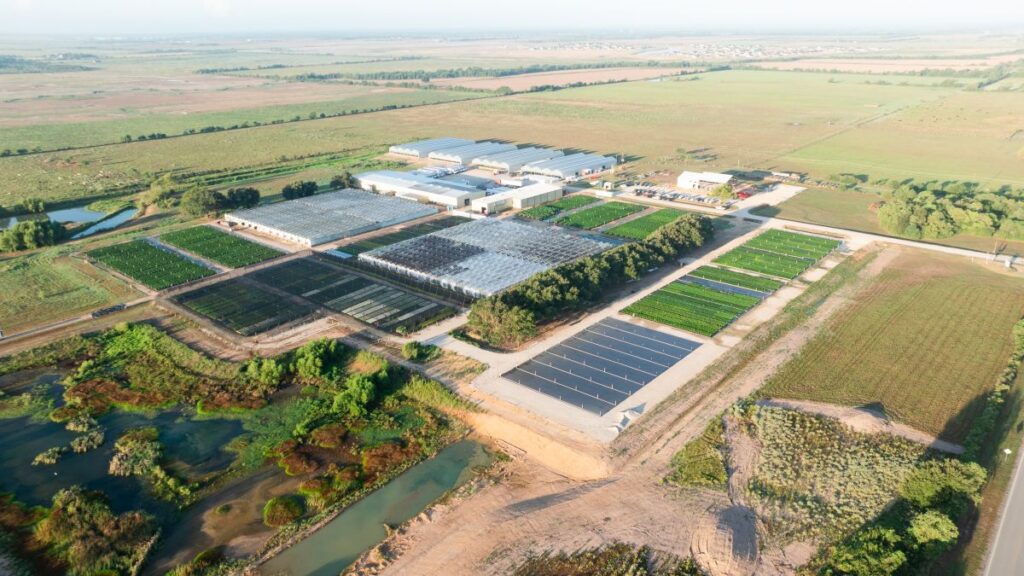
Spring Creek operates about 500,000 square feet of growing space on its 60-acre Waller, TX, property. | JW Baugh Photography
Several years ago, Texas grocery chain H-E-B, the operation’s largest customer, asked for a larger push into Texas natives. Spring Creek Growers was already growing a small number of native crops, but it had not developed or marketed them as a major program.
Within four years, natives became its second-largest program behind annuals. The assortment grew from about eight to 10 selections in the first year to roughly 50 to 60 today.
The team did have some experience to build from. Texas bluebonnets (Lupinus texensis) had been in production for years, and Kirchner and Jones’ father had pushed the crop forward long before the broader native program took shape.
The team struggled for years with germination, uniformity, and yield before developing what Jones calls a “secret recipe,” including seed pretreatment that improved consistency. The crop also required the team to rethink how much care a native plant actually needs.
“Less is more,” Jones says. “Nature is just so resilient.”
Kirchner and Jones expect that demand to continue. They point to pressure on Texas water resources and rapid development across the state, where native prairies and other undeveloped land continue to give way to new communities. For Spring Creek, the native program is as much about helping customers choose plants suited to those conditions as it is about adding another crop category.
Commercial production, however, has required plenty of trial and error. For some of the species Spring Creek grows, established greenhouse-production information is limited. Jones and the growing team have tested techniques such as vernalization and adjusted production as they see how each crop responds.
“Some of this is not in a textbook, not on paper,” Jones says. At commercial scale, he adds, “These are big experiments.”
Even determining what belongs in a Texas native program requires care. Kirchner and Jones say they have labeled one or two plants as native in the past and later learned they were wrong. They corrected the designation. The state’s many ecoregions add another consideration because a plant native to one part of Texas may not be appropriate for every market Spring Creek serves.
Learning From Local Partners
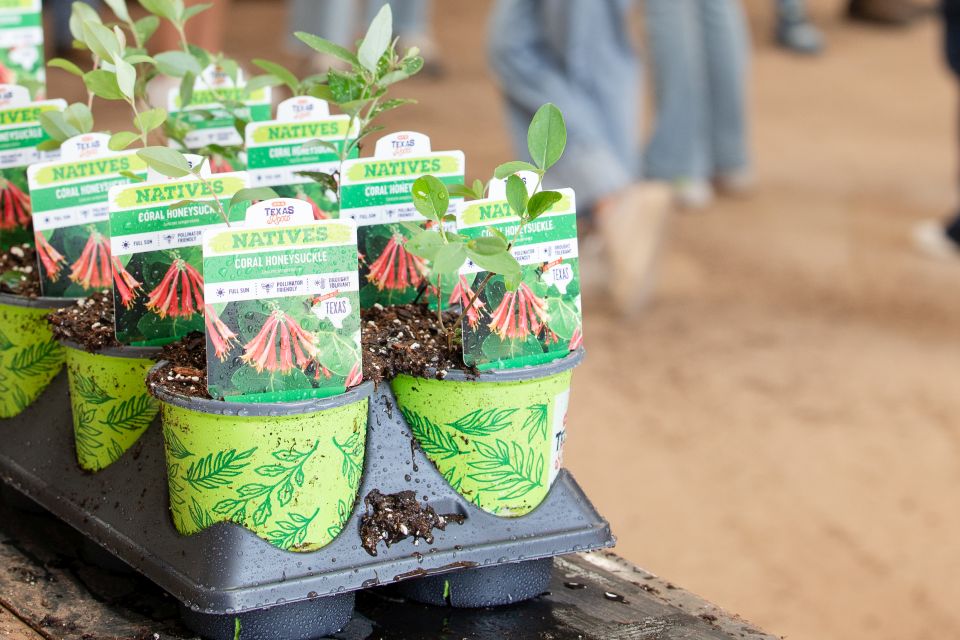
Visual tags help shoppers see how plants will look at maturity and understand their ecological role in the landscape. | JW Baugh Photography
The Native Plant Society of Texas has become an important resource for the program. The organization brings knowledge of native ecology, bloom timing, and an understanding of regional differences, while Spring Creek brings experience producing and distributing plants commercially to roughly 250 stores across the state.
Kirchner also wanted employees to understand the plants beyond their production requirements. The Native Plant Society helped lead an all-day training for Spring Creek staff, and Kirchner worked with the organization on a test and certificates for the team.
“If Spring Creek is going to be a leader in Texas-grown native plants, we need to be fully educated on what that entails,” she says.
However, native plants can also present a different challenge at retail. They may reach stores without flowers or the uniform appearance customers are used to seeing in crops such as pansies or violas. Spring Creek uses larger, highly visual tags to show what the mature plant will look like and explain its role in the landscape, whether that’s providing food for pollinators, serving as a host plant, or providing habitat for birds and other wildlife.
“The native aspect of these plants is that they have a reason for being here,” Jones says.
About a mile from the greenhouse, the Coastal Prairie Conservancy protects roughly 10,000 acres of prairie. Spring Creek provides plants for the conservancy’s native plant sales, sponsors events, and sends employees to the site to learn more about the species growing naturally in the Katy Prairie.
During one training walk, rattlesnake master (Eryngium yuccifolium) and American basketflower (Centaurea americana) caught the team’s attention. By the end of the walk, the conversation had already turned to whether either could be brought into production.
Following the Plant Beyond the Greenhouse
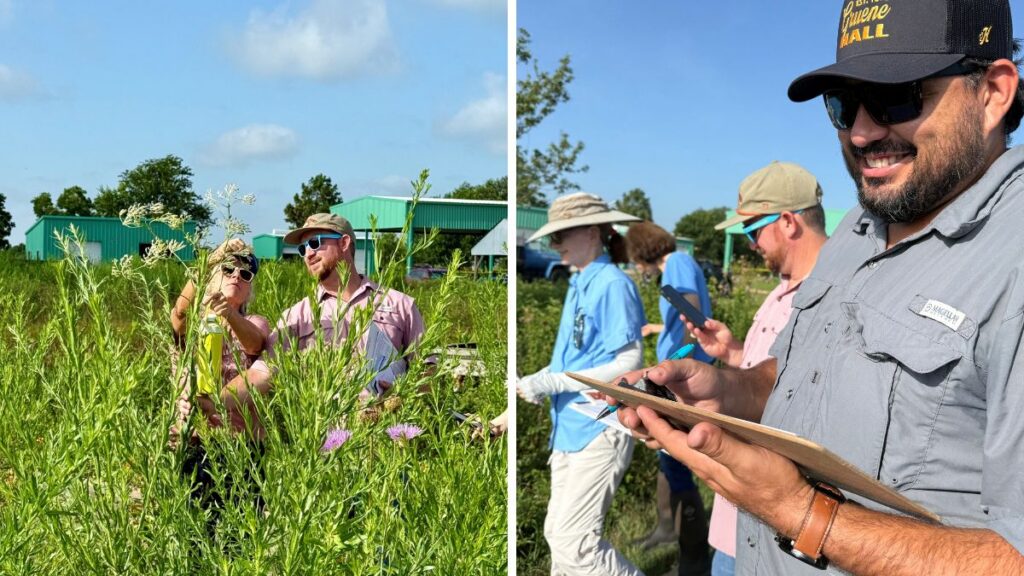
Spring Creek employees study native species and record observations during a training day at the nearby Coastal Prairie Conservancy. | Spring Creek Growers
Spring Creek also supplies SiteOne Landscape Supply and direct commercial landscape customers. Plants used in commercial landscapes can become familiar to consumers at shopping centers, neighborhood entrances, and other public spaces before they encounter them again at retail.
Kirchner still likes seeing what happens after those plants leave the greenhouse.
“There is not a better feeling than when I’m shopping for groceries, and you just see one of our plants in that basket,” she says. “It took a lot of hard work, and just to see that full circle is just why we do it.”
Still Surprised
When Spring Creek Growers was named a Greenhouse Grower Operation of the Year finalist in 2024, Kirchner and Jones were excited just to be included. Two years later, they arrived at the Greenhouse Grower Evening of Excellence at Cultivate with no expectation that their name would be called and chose seats toward the back of the room.
Kirchner remembers joking that they would be sitting there with a second beer by the time the winner was announced. No one had prepared a speech, and when Spring Creek was named the 2026 Operation of the Year, she says her “mouth just dropped open.”
“I can’t thank our team enough,” Kirchner says. “It’s really meaningful for our team.”
Subscribe to eNewsletter