




Native Perennial Introductions Built for Better Performance
Native plants are nothing new to home gardeners, but interest in pollinator support and wildlife habitat is bringing a wider range of species and selections to retail. A plant that performs well in the landscape can still be difficult to produce commercially. Propagation, disease pressure, finish time, and container presentation can determine whether it succeeds.
Breeders and plant introducers have to consider those demands alongside the traits gardeners will notice. They also need to know what a new selection offers that existing plants do not. “If we don’t have a good reason for introducing it, then why introduce it?” says Angela Treadwell-Palmer, founder and co-owner of Plants Nouveau.
When a Problem Becomes a Plant
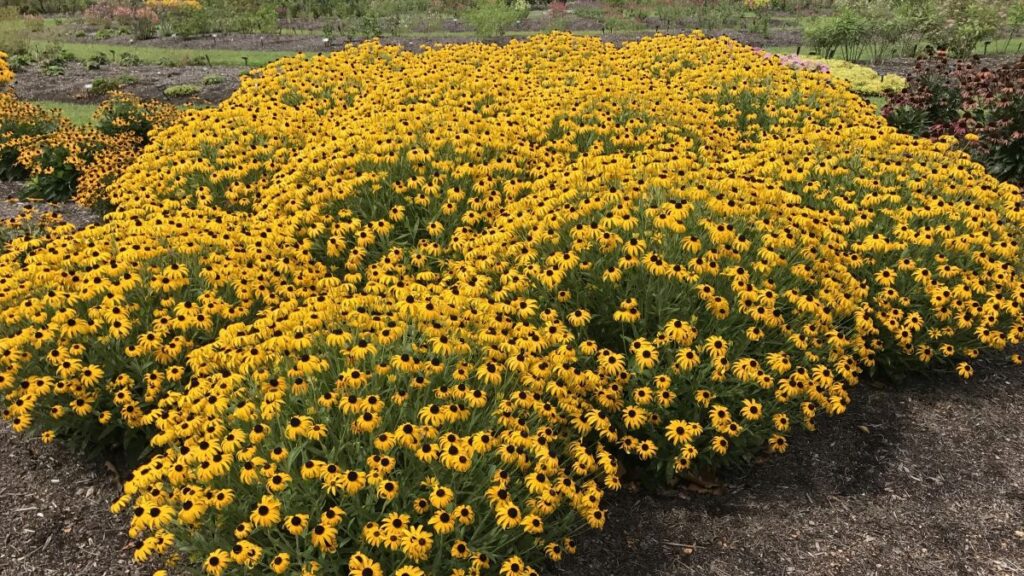
Bred by Brent Horvath in response to Septoria leaf spot on ‘Goldsturm’, Rudbeckia ‘American Gold Rush’ combines disease resistance with a compact, rounded habit. | Intrinsic Perennial Gardens
Septoria leaf spot had become so severe on Rudbeckia ‘Goldsturm’ that Brent Horvath, President of Intrinsic Perennial Gardens, says he could no longer finish it for sale. He bred Rudbeckia ‘American Gold Rush’ as an alternative. Along with disease resistance, its rounded habit makes it easy to propagate, grow, and sell.
Rudbeckia fulgida ‘Dahlonega’ Mega Millions was also introduced as an alternative to ‘Goldsturm’. It was selected after one plant remained clean in a planting affected by Septoria. Treadwell-Palmer says it reaches about 30 inches, stays relatively contained, and produces abundant flowers.
Horvath selected Monarda bradburiana ‘Midnight Oil’ for disease resistance, as well. He says lower disease pressure improves propagation and helps produce more uniform plants. An added bonus is its unique foliage, which emerges chocolate-purple before maturing to deep green.
Walters Gardens also screens native perennials for disease resistance. Hans Hansen, Director of New Plant Development, looks for powdery mildew in selections of Monarda, Phlox, Helenium, Heliopsis, and Vernonia.
“Just because a plant is native doesn’t mean it has greater disease resistance than an exotic species,” Hansen says.
Selecting Beyond the Flower
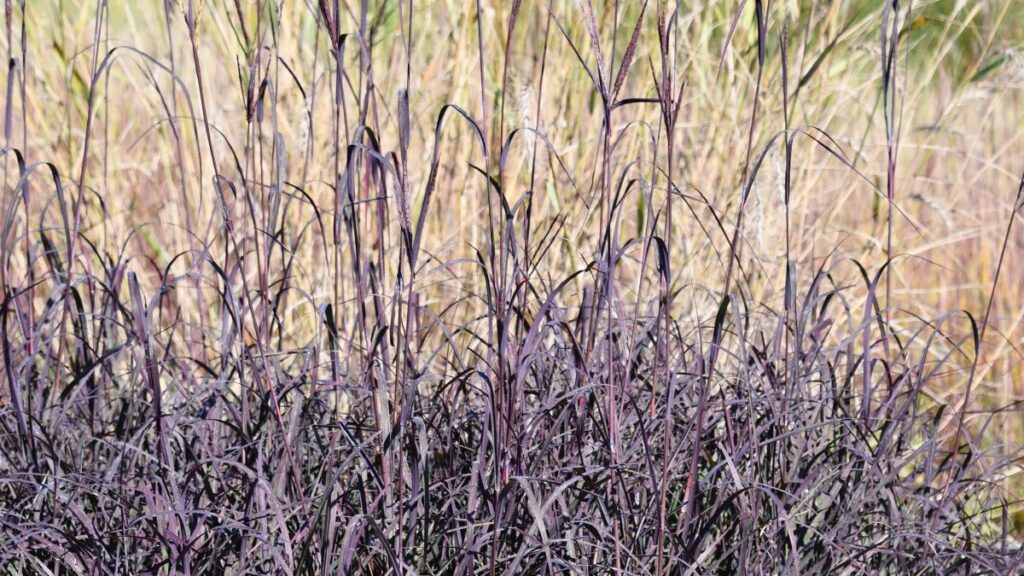
Andropogon gerardii ‘Blackhawks’, the 2026 PPA Perennial Plant of the Year reaches 5 to 6 feet tall. Its foliage deepens from green and purple to nearly black. | Intrinsic Perennial Gardens
As more nurseries began buying finished plants from wholesalers, compact habits became valuable for shipping and retail display. Smaller plants fit more efficiently on trucks, and flowering plants that look proportional to their containers present well at garden centers.
Hansen now sees growing interest in perennials that reach 3 to 4 feet and give gardens more variation in height.
Treadwell-Palmer sees a limit to how compact a selection should be. She favors plants that look good and ship well in flower in a 1-gallon container, then grow larger in the landscape. If a plant is too short, propagators may struggle to take enough cuttings.
Andropogon gerardii ‘Blackhawks’ first caught Horvath’s attention for its unusually dark foliage. “It was easily darker than any other seedling at the time,” he says.
The 2026 Perennial Plant Association (PPA) Perennial Plant of the Year, reaches 5 to 6 feet, compared with the 7 feet or more Horvath commonly sees in Midwestern big bluestem ecotypes. Its foliage deepens from green and purple to nearly black. Moderate vigor allowed him to build stock within two years, first through division and later through tissue culture.
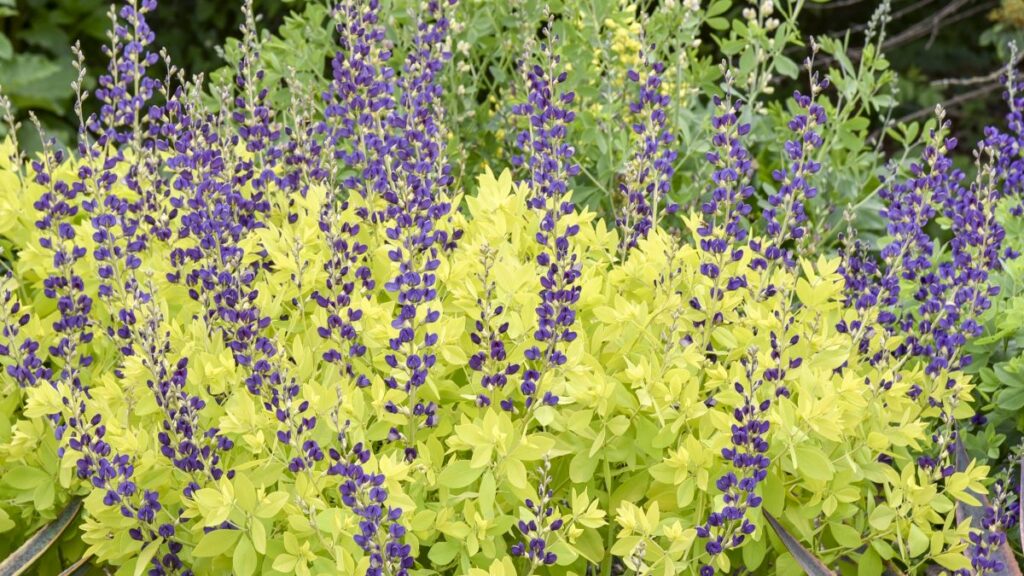
Baptisia ‘Golden Anniversary’ pairs golden foliage with violet-blue flowers on a rounded plant that reaches 30 to 36 inches tall. | Walters Gardens, Inc.
Horvath has also selected grasses for foliage color. Sporobolus heterolepis ‘Golden Needles’ brings gold foliage to prairie dropseed, while Schizachyrium ‘Little Red Fox’ combines shades of blue, green, red, purple, and silver.
“These are naturally easy to grow, but they are much more ornamental,” Horvath says.
At Walters Gardens, Baptisia hybrids have expanded the genus’s range of flower colors and habits. ‘Golden Anniversary’ pairs golden foliage with violet-blue flowers on a rounded plant that reaches 30 to 36 inches. Growers starting with Grade #1 bare root can finish it in roughly eight to 12 weeks.
Stem strength matters regardless of a plant’s color or size. “No one wants a plant that flops over,” Hansen says. He also notes that breeders often favor May bloomers, which reach garden centers during peak spring traffic.
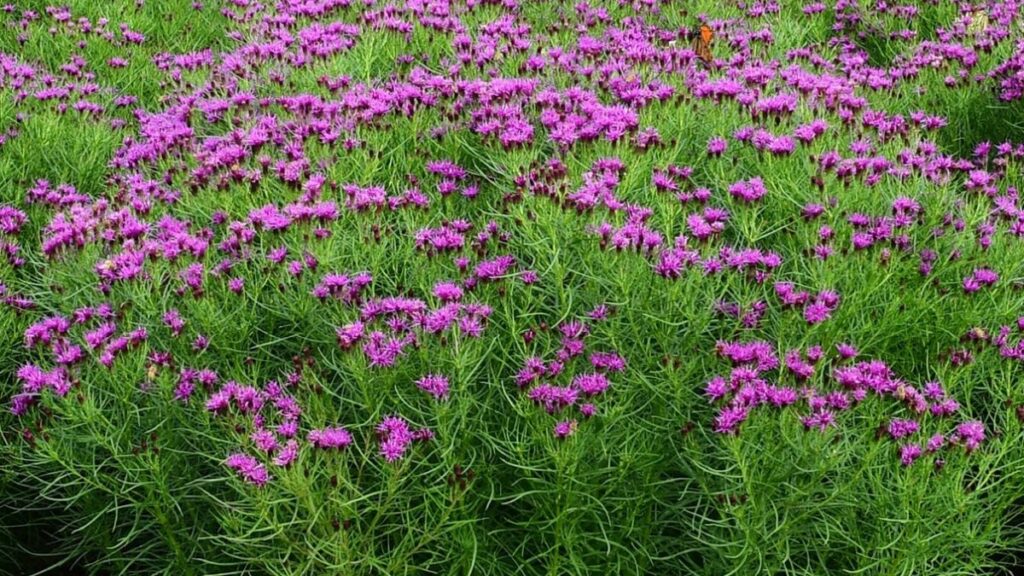
Vernonia ‘Summer’s End’ produces deep-purple flowers in September on upright, vase-shaped plants about 3½ feet tall. | Plants Nouveau
Vernonia ‘Summer’s End’ offers a later bloom window, producing deep-purple flowers in September. The Chicago Botanic Garden hybrid, represented by Plants Nouveau, reaches about 3½ feet with an upright, vase-shaped habit. Treadwell-Palmer says it produces little seed compared with New York ironweed (V. noveboracensis), making it easier to manage in smaller gardens.
Giving Shoppers a Reason to Look
Native plants can be harder to market at retail because their value is not always immediately obvious to shoppers. Distinctive selections can help create an entry point by giving retailers a clear trait to talk about and consumers something easy to recognize.
Treadwell-Palmer points to Scutellaria ‘Bumblebee Blues’, selected from a naturally occurring cross between S. ovata and S. serrata. It produces abundant cobalt-blue flowers on a plant that reaches 18 to 24 inches tall.
She recommends displaying it alongside other skullcaps, including straight species, so shoppers can compare flower color and habit. Seeing the plants grouped together in a display or on the shelf can help shoppers understand what sets each one apart and where it might fit in the garden.
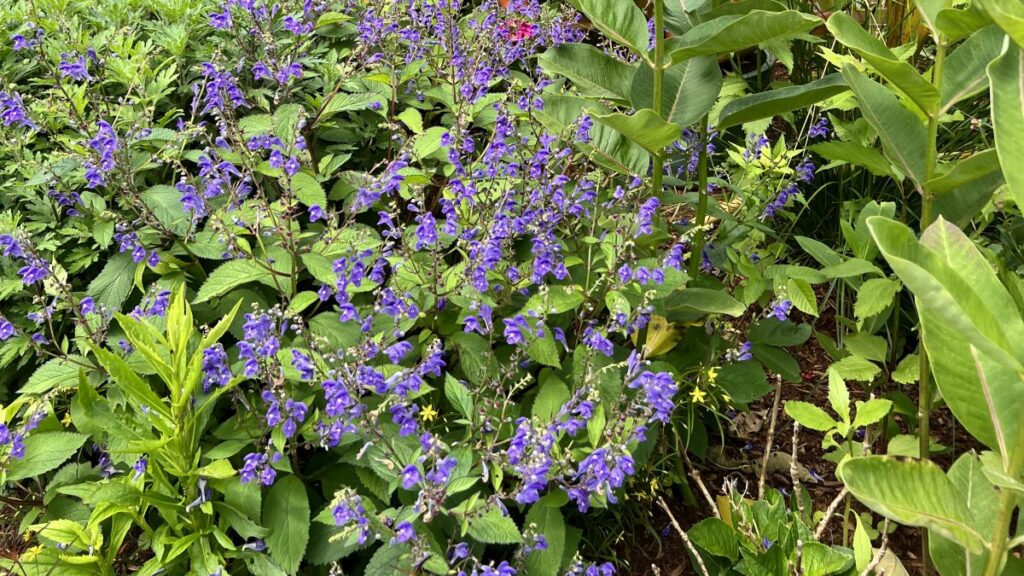
Scutellaria ‘Bumblebee Blues’ produces abundant cobalt-blue flowers on a compact plant that reaches 18 to 24 inches tall. | Plants Nouveau
Subscribe to eNewsletter