The spotted lanternfly feeds on important agricultural commodities, including grape vines, fruit trees, nursery plants, and hardwood timber.
Heat stress isn’t simply droopy leaves; it can show up as things like stunted growth, leaf drop, leaf scald, and failure to flower.
Greenhouse strawberry crops are especially sensitive to thrips, which can cause severe plant damage and lead to unmarketable fruit.
Learn how scientists are keeping up with industry concerns and using education and communication to deliver new and better biological tools for growers.
Personal protective equipment (PPE) is one of the most effective — and necessary — tools when your team handles pesticides.
The Water for Food Global Forum takes place in October and tackles issues related to achieving global water and food security.
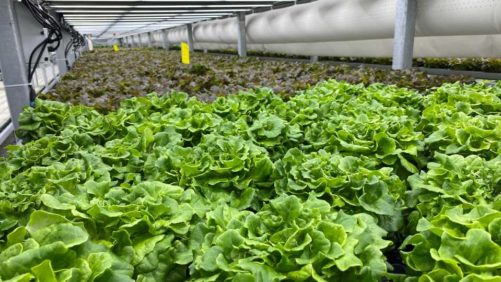
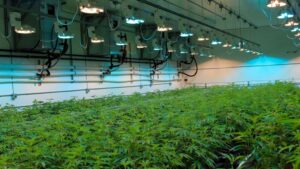
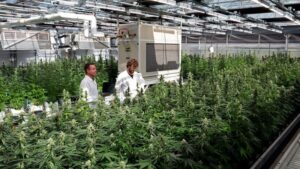
Great Lakes Growers has produced a video highlighting the similarities and differences between greenhouse and indoor vegetable production.
In an upcoming webinar, Michigan State University’s Erik Runkle will focus on the effects of the photon flux density and spectrum at regulating lettuce when grown hydroponically in vertical layers.
There are several factors to consider when planning new facilities, and for an existing structure, there are operational and efficiency streamlining concerns.
In an American Floral Endowment webinar held earlier this year, North Carolina State University’s Brian Jackson looked at new components that growers should consider.
Growers across the U.S. share their perspectives on the best fit for biologicals in greenhouse vegetables.
Even with disease symptoms present, it can be difficult to nail down which pathogen is the culprit (and which fungicide will work), without a DNA test.
Every crop grown in a controlled environment presents a unique set of challenges, and biological tools are increasingly part of that solution.