Management Meet the New Faces at Eason and Star Roses and Plants By Eason Horticultural Resources (EHR) | Star Roses and Plants|October 21, 2026
Steps for Identifying Tomato Spotted Wilt Virus (TSWV) in Marigolds By Greenhouse Grower staff|June 17, 2024 Tomato spotted wilt virus (TSWV) is difficult to differentiate from other infections. Here’s how to identify and manage it in marigolds.
Protecting Your Chrysanthemum Crops from Thrips Parvispinus By ONfloriculture|June 10, 2024 Here’s a look at the best practices for the prevention of Thrips parvispinus proliferation in chrysanthemums and other crops.
Making the Biological Control Agents of Natural Enemies More Effective By Wageningen University and Research|June 6, 2024 The Greenhouse Horticulture and Flower Bulbs division is investigating opportunities for the application of new biological control agents.
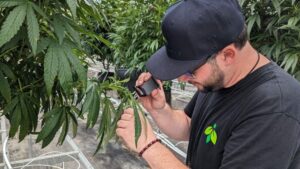
Video of the Week: Detecting Mites and Thrips Through Plant Washing By Nick Matysik|May 24, 2024 The Vineland Research and Innovation Centre and OMAFRA look at the accurate detection of small thrips and mites through plant washing.
Society of American Florists Offers Guidance on New Pesticide Handling Rules By Society of American Florists|May 22, 2024 The Society of American Florists claim that the EPA isn’t taking into account the impact new rules will have on the floriculture industry.
American Floral Endowment Announces 2024-2025 Research Projects By American Floral Endowment|May 10, 2024 To align with its mission, the AFE has revealed its slate of funding for new and continuing 2024-2025 research projects.
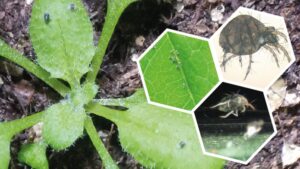
Plant Drought Response Hormone Found to Block Spider Mites By University of Cambridge - Sainsbury Laboratory|May 8, 2024 Recent findings from the Sainsbury Laboratory of Cambridge have found a plant drought-survival mechanism to be useful as pest control.
Video of the Week: How Biocontrol Failures Happen By Nick Matysik|April 24, 2024 Dr. Rose Buitenhuis of the Vineland Research and Innovation Centre discusses the factors that contribute to biocontrol program failure in this week’s video.
Complimentary Mites Protect the New Line of Monrovia Mandevilla By Greenhouse Grower staff|April 24, 2024 Monrovia is adding a beneficial insect sachet defense system of ‘cucumeris’ mites to orders of new Mandevilla plants.
How to Address the Growing Threat of Thrips Parvispinus By Michael Martin, AmericanHort|April 23, 2024 The ability to control the growing spread and associated problems of Thrips parvispinus has been a top priority for the HRI.
The 2024 MSU Greenhouse Disease and Insect Management Guide By Nick Matysik|April 12, 2024 Michigan State University Extension has updated its disease and insect management control guides for the 2024 greenhouse season.
USDA-APHIS Revising How It Updates Pest Quarantines; Here’s What it Means for You By USDA|June 17, 2022 Public comment on the proposed action, which is designed to streamline the process while still protecting plant health, is open through Aug. 15.
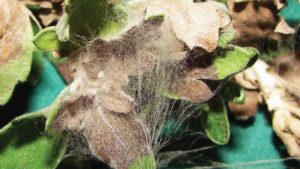
How to Overcome Spider Mites in Roses By Lisbeth Riis|June 16, 2020 This three-step formula of biological control can go a long way in managing spider mites, a threat to rose growers around the world.