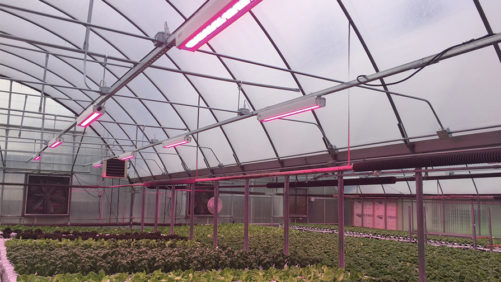
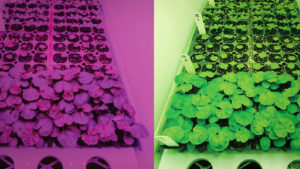
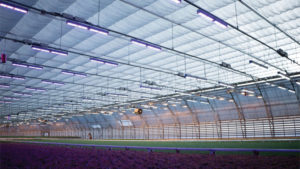
While greenhouse growers are starting to understand the yield, uniformity, and quality benefits of broad-spectrum lighting, they still face challenges in technology adoption. Fortunately, manufacturers have been quick to respond.
Cost, uncertainty, and a fear of the unknown are just some of the reasons growers are reluctant to switch to LEDs. However, there may be a change in thinking on the horizon.
The Greenhouse Lighting and Systems Engineering (GLASE) consortium is designed to bring growers, researchers, suppliers, and other stakeholders together to create a hub for new technology development and implementation.
With help from a lighting supplier, University of Florida researchers are exploring how the photosynthetic spectrum relates to an often overlooked element of cultivation: water-use efficiency.
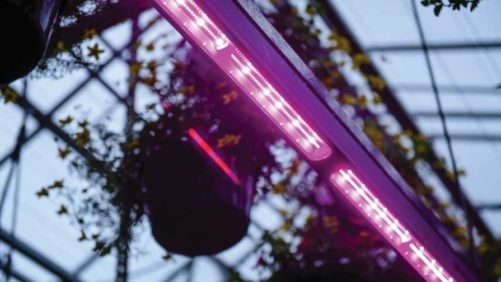
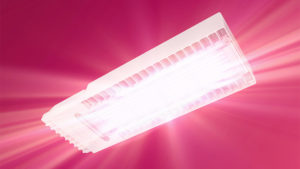
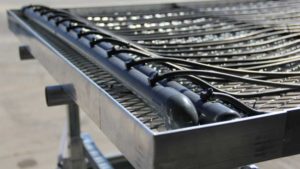
Signify recently introduced the concept for its new LED toplighting compact system, which allows growers to switch lighting systems using existing infrastructure.
Dramm Corp. has developed a white paper that outlines control methods for biofilm, which is present in every greenhouse irrigation system and can harbor plant pathogens.