


People too often draw a distinct line between woody and herbaceous plants, one I’m not sure needs to exist. Some taxa are described as semi-woody, while others ordinarily produce woody growth but function like perennials in colder climates because they die back in winter. Some shrubs that don’t succumb to winter dieback are still cut to the ground each spring to tame their size, with Sambucus nigra (common elder) cultivars coming to mind as an archetypal example.
1 of 5
1 of 5
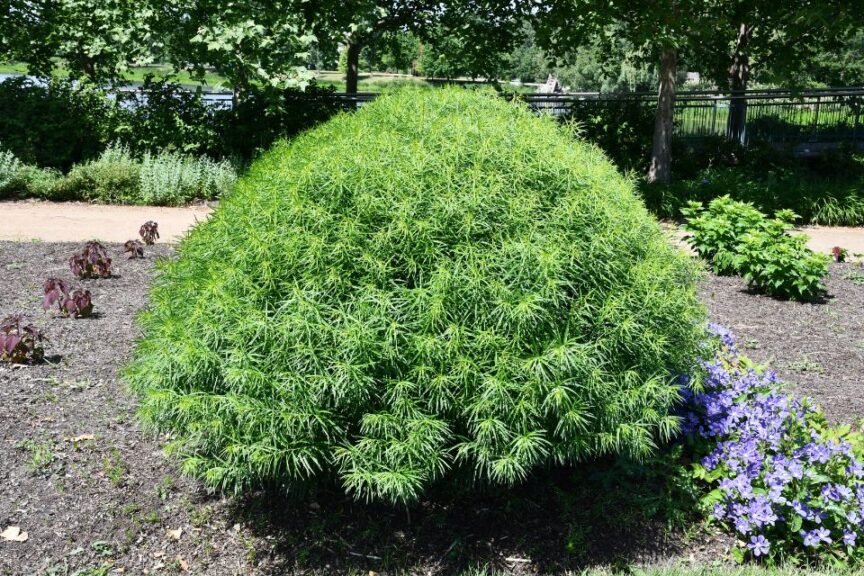
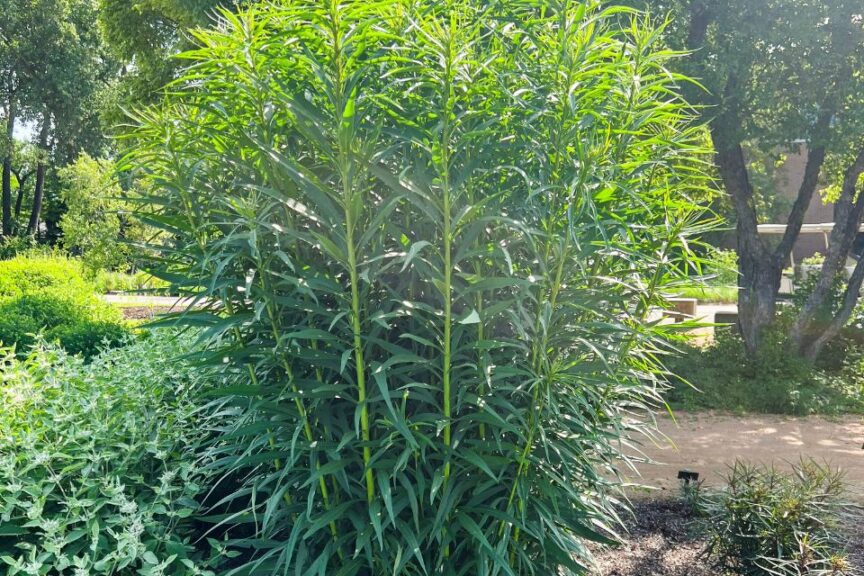
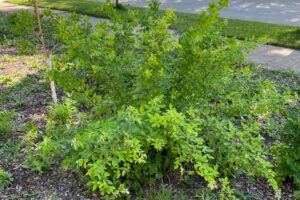
Amsonia ‘Blue Behemoth’
Full disclosure: ‘Blue Behemoth’ was released through our breeding program and is the first cultivar I named. But while I may be biased, its merits are undeniable.
“Behemoth” felt like an apt descriptor, as this cultivar is far larger than all other bluestars, reaching 5 feet tall and 9 feet wide. It blooms from May to June and is already several feet tall by that time, growing further during summer. Its leaves turn pale yellow in fall and do not regularly persist through winter, but stems can be left up to provide twigginess like that of a woody shrub.
All images courtesy of Justin Lombardoni
2 of 5
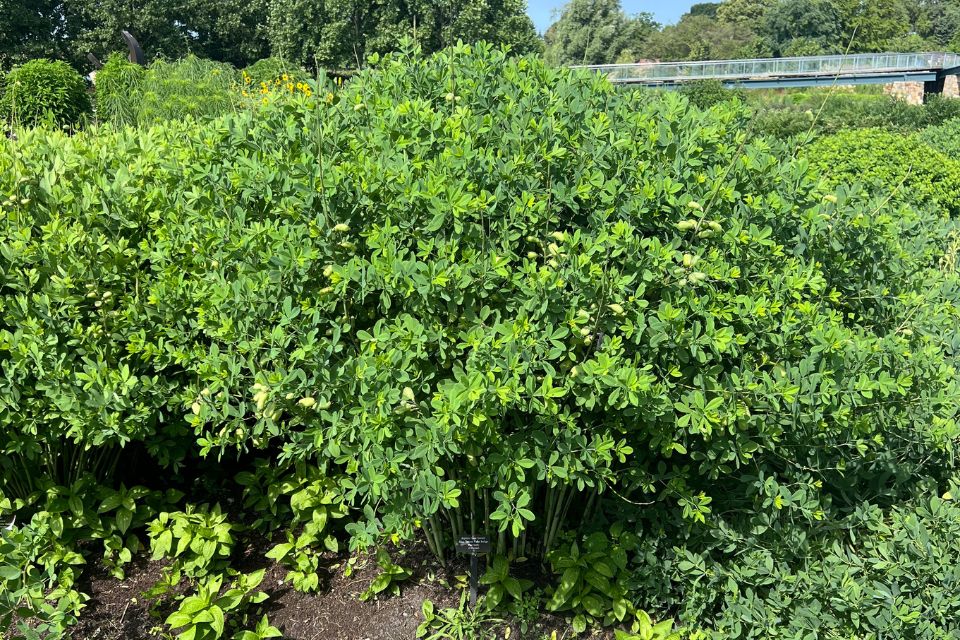
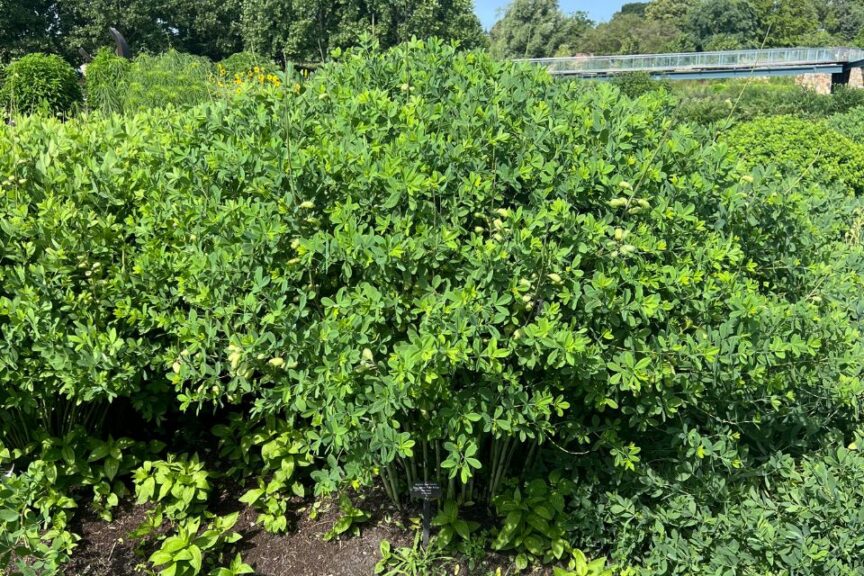
Baptisia ‘Blue Towers’
Growing to roughly 5 feet tall and 6 feet wide, ‘Blue Towers’ is larger than most false indigos. Despite its size, it has a composed habit with highly erect inflorescences from May to June.
The spent inflorescences are largely transparent afterward if seed pods do not persist. Like all baptisias, this cultivar does not provide much fall or winter interest. The stems and leaves turn dark brown at the first hard frost and break away from the ground soon after.
3 of 5
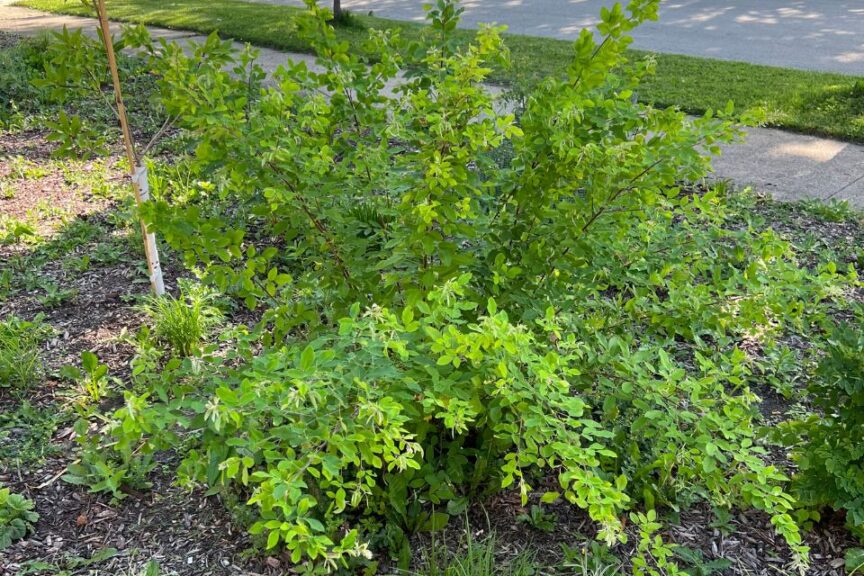
Lespedeza thunbergii ‘Samidare’
Although ‘Samidare’ develops semi-woody growth, it dies back to the ground each winter in our climate. Regardless of climate, it can be cut back to keep it from developing into an unruly bush.
‘Samidare’ is the only cultivar highlighted here with a pendulous habit, which combines nicely with the obovate foliage common among plants in the pea family, Fabaceae. ‘Samidare’ reaches 5 feet tall and wide and bears many purple-pink flowers in late summer. If this cultivar is tough to source, ‘Gibraltar’ is another great option.
4 of 5
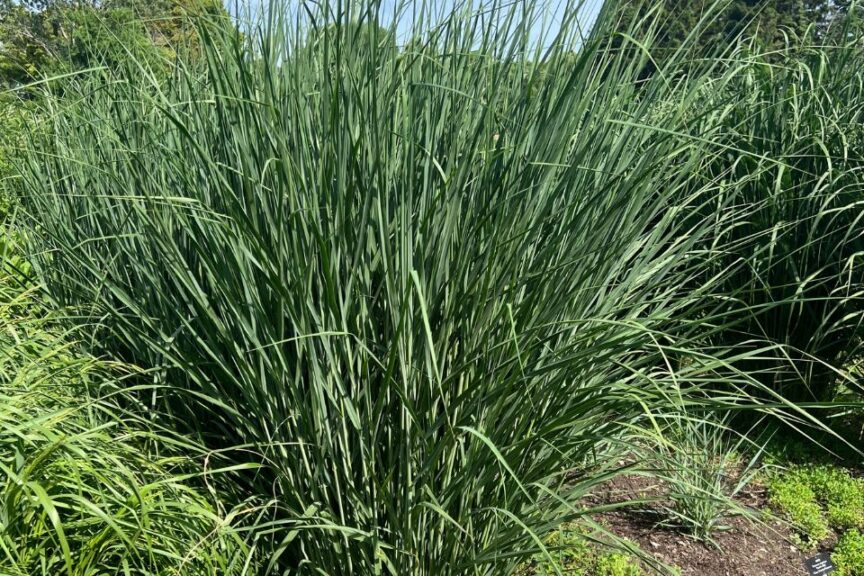
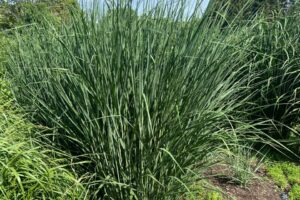
Panicum virgatum ‘Cloud Nine’
As a warm-season grass, this switchgrass is slower to emerge than the other plants on this list. Fortunately, ‘Cloud Nine’ is an exceedingly eager cultivar that quickly approaches its final size of 7 feet tall and 3 feet wide in early summer.
The foliage begins blue-gray and turns gold-beige in fall, topped by pink-tinged panicles from midsummer onward. As far as perennials go, this has among the best winter displays, as the persistent foliage provides texture that bare stems do not.
5 of 5
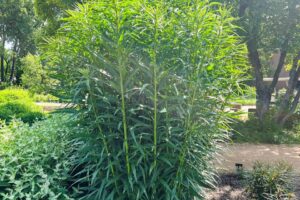
Vernonia ‘Over My Head’
A monster of an ironweed true to its name, ‘Over My Head’ grows to 8 feet tall and 9 feet wide. Much like ‘Cloud Nine’, it reaches over half its final size by early summer despite blooming from late summer to fall.
The flowers are the typical purple of the genus, and while pollinators will enjoy them, they’ll be too high in the air for most people to appreciate. If ‘Over My Head’ is hard to source, V. gigantea ‘Jonesboro Giant’ is an older, much larger alternative that can reach up to 15 feet tall!
During a recent meeting, a local grower who only sells trees asked me why I enjoy working with “weeds” — his amusingly dismissive, blanket term for perennials. This inspired me to write about the perennials that best mimic woody shrubs to blur the line between them, at least in the context of size and garden design.
To begin, I’ll admit there are two shrub traits perennials have no hope of replicating during winter: evergreen foliage, like that of junipers, and interesting stems and bark, like those of Cornus sericea ‘Cardinal’ and Betula nigra ‘Little King’ Fox Valley, respectively. These provide far more winter interest than the shriveled brown stems typical of perennials, although some perennials buck this trend. For example, the persistent silvery calyces of Pycnanthemum tenuifolium (narrowleaf mountain mint) hold appeal in winter. During the growing season, though, the line between shrubs and perennials can be more easily blurred.
What exactly does a perennial need to do to function like a shrub during the growing season? First and foremost, it should grow vigorously and do so early in the season. Leafing out from woody stems already several feet above ground gives shrubs a head start, and not all perennials can swiftly close the resulting gap. A perennial that reaches the size of a shrub — we’ll set the minimum at 4 feet tall — in late summer, only to go dormant a few months later, would simulate a shrub for only around a quarter of the year.
If dense enough, perennials can also replace shrubs as hedges or screens that divide areas or provide privacy. Depending on the situation, the fact that perennials can only do this for part of the year can be seen as a benefit or a drawback.
If privacy is needed only when enjoying the outdoors during summer, perennials could be preferable. During winter, snow can be piled on these perennial hedges — along a driveway, for example — without ruining their performance the following summer. If privacy is desired year-round, though, no perennial can rival the performance of evergreens like Thuja ‘Junior Giant’.
The cultivars described throughout the article are candidates to replace shrubs in certain situations. The pictures were taken on July 1, illustrating that these perennials have put on significant growth by the beginning of summer, regardless of whether they bloomed in spring or will do so later in summer or fall.
015Wannabe Shrubs: Perennials that Mimic Their Woody Counterparts

Subscribe to eNewsletter
Justin Lombardoni is the ornamental plant breeder at the Chicago Botanic Garden. His program focuses on introducing herbaceous perennial cultivars, primarily through interspecific hybridization. He also works closely with the Garden’s plant evaluation program, utilizing its expertise and germplasm to further breeding efforts. See all author stories here.