


6 Gold Medal Plant Award Winners from the Pennsylvania Horticultural Society
The Pennsylvania Horticultural Society (PHS) has announced its 2026 Gold Medal Plant winners, a list of standout plants now available at garden retailers across the region. Established in 1979, the Gold Medal Plant program celebrates easy-to-grow plants selected for their durability and ability to thrive in Mid-Atlantic conditions. Selections are based on criteria including ease of cultivation, multiple seasons of interest, commercial availability, regional suitability, and value to wildlife.
View all
The Gold Medal Plant Program, launched in 1979, helps gardeners make confident planting choices. Each year, a panel of horticulturists, growers, and garden experts evaluates both new and time-tested varieties, selecting plants that perform well across a range of conditions and offer real value in the landscape. Since the program’s inception, PHS has named more than 150 Gold Medal Plants. Including this year’s winners, all plants are indicated for their hardiness in Zones 4 to 8 on the USDA’s Hardiness Zone Map, making them ideal choices for the Mid-Atlantic region.
“The PHS Gold Medal Plant program provides gardeners with trusted plant recommendations that are both reliable and visually compelling,” says Andrew Bunting, Vice President of Horticulture at PHS. “This year’s selections offer strong seasonal interest, adaptability across a range of garden conditions, and meaningful ecological benefits, making them well-suited for gardens throughout the Mid-Atlantic region.”
To learn more about this year’s Gold Medal Plants, or to view previous years’ winners in PHS’s online database, please visit: phsonline.org/for-gardeners/gold-medal-plants.
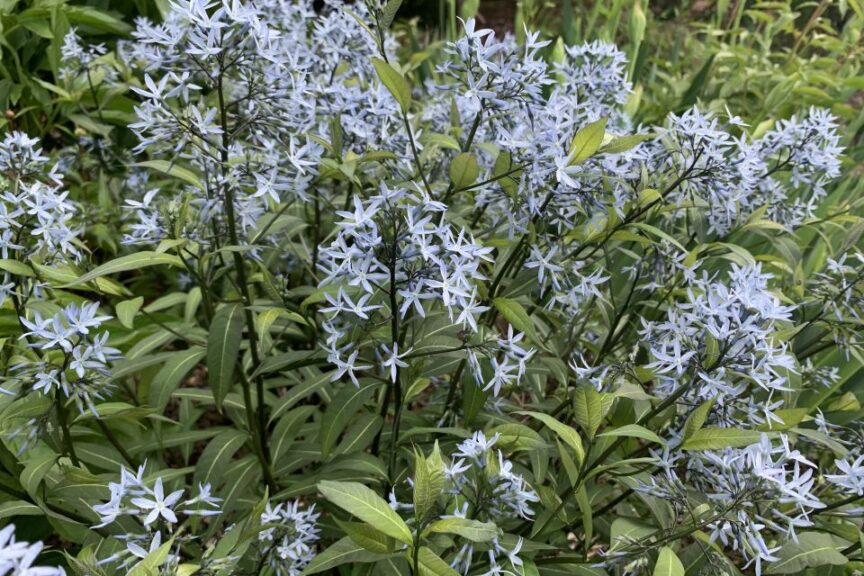
Bluestar Amsonia tabernaemontana ‘Storm Cloud’
Amsonia tabernaemontana ‘Storm Cloud’, commonly known as bluestar, is a native perennial that is one of the first Amsonia to emerge and bloom in the spring. It produces deep inky-purple stems followed by darker-than-usual blue flowers. Its summer foliage eventually loses most of its darker tones but remains attractive through fall when it occasionally develops a yellow color. This reliable, deer-resistant plant forms a dense, clumping mound almost like a small shrub, and is suitable for smaller gardens. This species can also take a little more shade and moisture than others while remaining adaptable to full sun and drier soils as well.
It typically reaches a height of 24–30 inches and a width of 36–42 inches and is hardy in Zones 4 through 8.
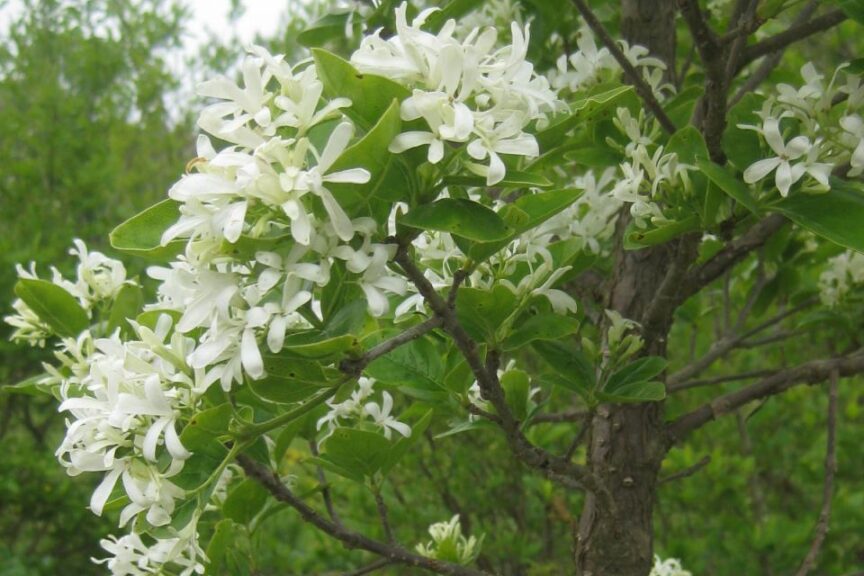
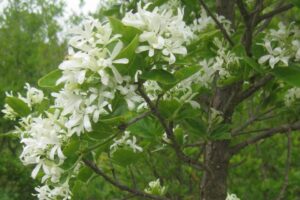
Chinese fringetree Chionanthus retusus ‘Tokyo Tower’
Chionanthus retusus ‘Tokyo Tower’ is a small to medium-sized upright tree with an abundance of fluffy white flowers in the spring. In the fall, the flowers mature into blueberry-like fruit and dark-green foliage, which turns bright yellow. It is suitable for small gardens and is noted for its upright and fastigiate habit. It can also be used as a street tree since it is tolerant of urban conditions.
It grows 12–15 feet tall and 4–6 feet wide and is hardy in Zones 5 through 9.
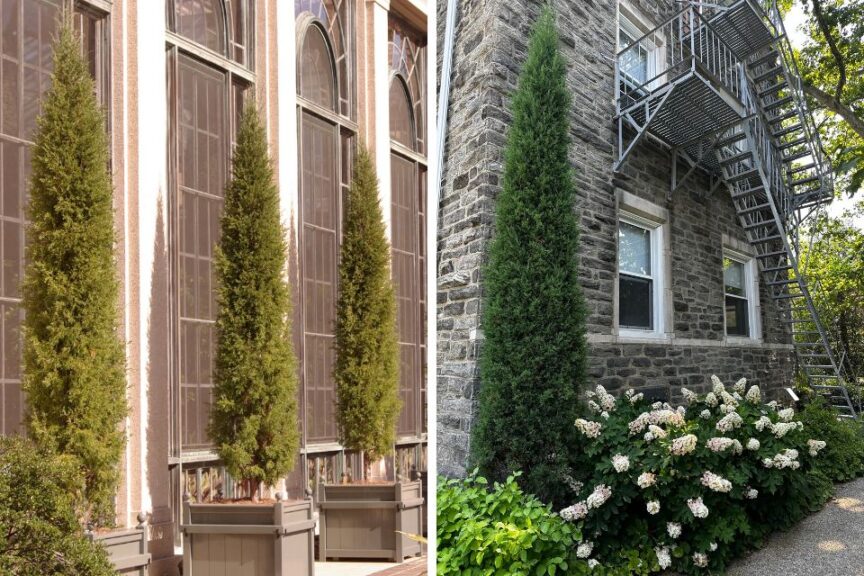
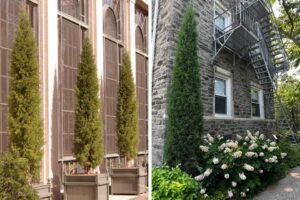
Eastern red cedar Juniperus virginiana ‘Taylor’
Juniperus virginiana ‘Taylor’ is a native tree commonly known as Eastern red-cedar. It is a popular choice for landscapes needing a tall, slender, evergreen screen or accent, especially in situations where space is limited. ‘Taylor’ is known for its drought tolerance and resistance to deer, making it a relatively low-maintenance option.
It can grow to be 15–25 feet tall and 4 feet wide and is hardy in Zones 4 through 8.
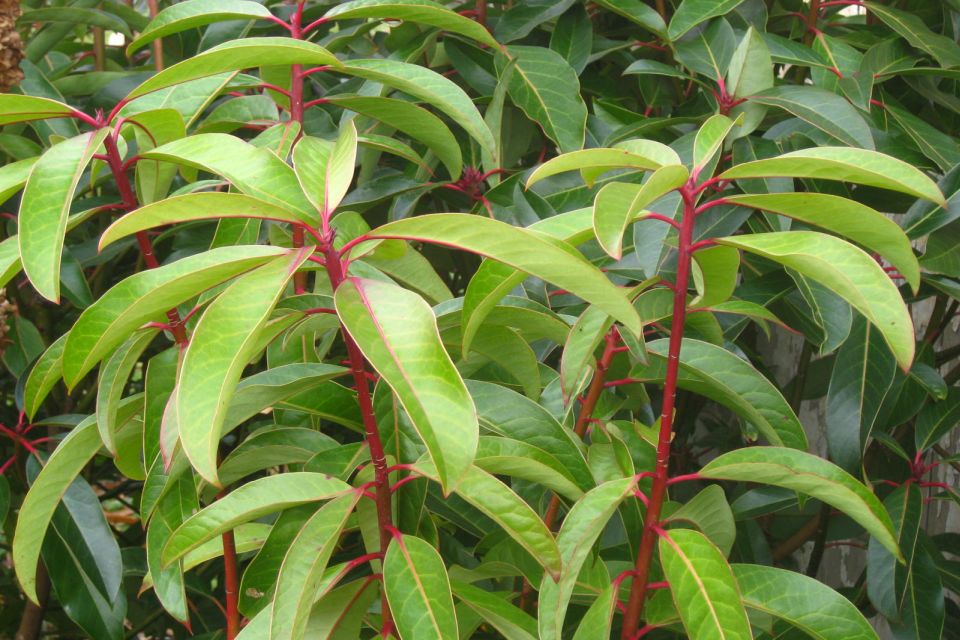
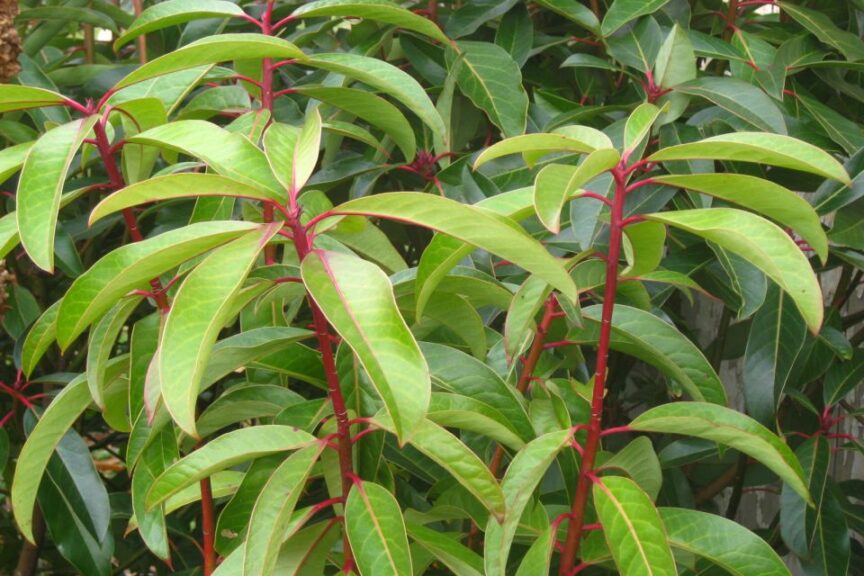
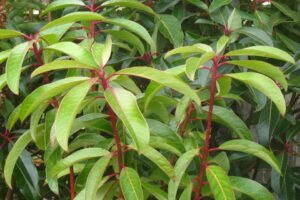
False daphne Daphniphyllum macropodum
Daphniphyllum macropodum, also known as false Daphne, has shiny green leaves with attractive pink petioles, the stems that attach the leaves to the main branch. It is a broad-leaved evergreen shrub that tolerates sun and shade, especially dry shade. It exhibits considerable resistance to deer.
It typically grows to be 15–25 feet tall and is hardy in Zones 6 through 9.
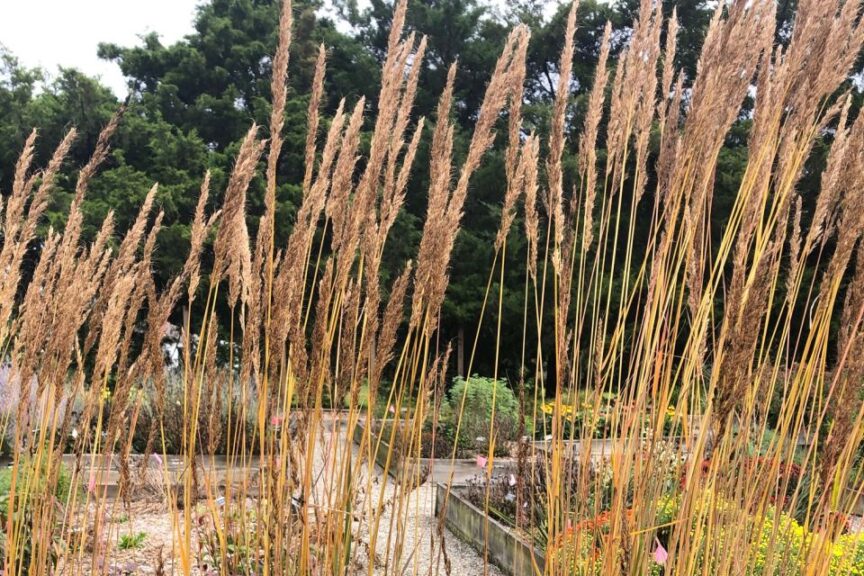
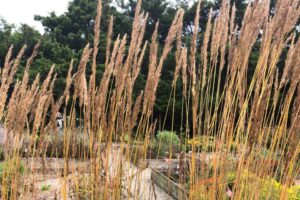
Indian grass Sorghastrum nutans Golden Sunset™
Sorghastrum nutans Golden Sunset™ is commonly called Indian grass. This native grass has olive-green foliage and golden yellow flowers that attract butterflies. It is a very vigorous grass and works well when interplanted with native perennials and other native grasses. It is deer-resistant, and its blue-green summer foliage transitions to shades of yellow-orange and golden tan as autumn arrives.
It grows to be 4–6 feet tall and 3 feet wide and is hardy in Zones 3 through 9.
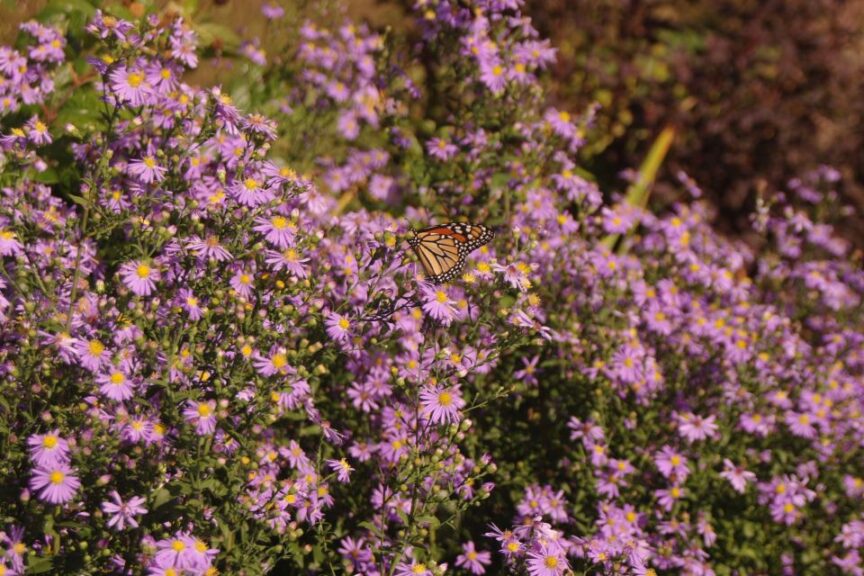
Smooth aster Symphyotrichum laeve ‘Bluebird’
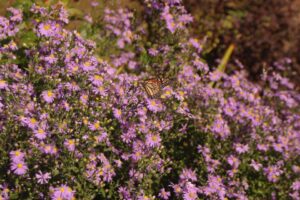
Symphyotrichum laeve ‘Bluebird’, smooth aster, is an herbaceous perennial in the aster family that is native to central and eastern U.S. It features late-season blooms that attract many pollinators and is covered in daisy-like purplish-blue flowers from September to late fall. This aster is easy to grow in well-drained average garden soil using full sun to partial shade. It is drought-tolerant once established and can be used in perennial borders, a pollinator garden, or naturalized areas.
‘Bluebird’ can grow to be 3–4 feet tall and 24 inches wide and is hardy in Zones 4 through 8.
Subscribe to eNewsletter