



What Growers Really Want from Garden Mums Now
Garden mums still hold a powerful place in fall programs, but the standards for what makes a mum worth growing continue to rise. Growers are looking for more than strong color. They need genetics that perform in production, ship well, hold up at retail, and continue to satisfy consumers after purchase.
In the April 2026 issue of Greenhouse Grower® Magazine, breeders shared how garden mum development is being shaped by earlier and later selling windows, stronger shelf life, improved series uniformity, bicolor demand, and better outdoor performance. But grower feedback adds another important layer to the conversation: What actually makes a mum worth putting in the field?
Tim Cahill, owner of Cahill Family Greenhouses in Missouri, has been working with Ball Seed mums since 2010. His business is a second-generation wholesale greenhouse that will celebrate its 50th year in business next year. Cahill Family Greenhouses also sells retail one day a week in season.
Cahill’s connection to the Ball mum program started with a mum seedling trial. Over time, he became more involved in the trialing side of the program, including caring for trial stock plants throughout the year and harvesting and shipping trial mum cuttings to trial sites across the U.S. He also grows one of Ball’s largest mum trials in Missouri.
A Grower’s Eye on Mum Selection
Cahill says the current Ball mum team has become more focused in recent years on what it wants from new introductions. “When evaluating a mum for potential introduction, there are several things we look for,” Cahill says.
Color is one of them, but not in the simplest sense. Bright, vibrant color still matters, but so does the way that color ages. “All mums will fade over time,” Cahill says. “We want what we call a good fade, not an ugly fade.”
Cahill says the team looks for mums with a nice, even shape, flexible stems, and a structure that is not brittle. Ease of production is another major factor. “If it has any disease issues or special needs in production, it is automatically kicked out,” he says.
That matters because growers are already managing tight schedules, labor pressure, weather swings, and shipping demands. A mum may look beautiful in a trial, but if it adds complexity or risk in production, it becomes harder to justify.
Cahill says his own grower perspective plays an important role when walking the trial field.
“One of the things I am always thinking when selecting new introductions is, ‘Would I want this in my field to sell and ship?’” he says. “When walking the trial field, I will see a mum and think, ‘I wish I had a bunch of these to sell.’”
Bicolors Are Changing the Conversation
Traditional mum colors still matter. Yellow, red, orange, purple, and other clearly defined fall colors remain the foundation of the category. Cahill says that historically, color clarity was a firm rule in garden mum introductions.
“When I first started with trials, colors had to be well defined,” Cahill says. “If it wasn’t yellow, red, purple, and so on, it was automatically rejected.”
Cahill says growers understand why defined colors matter, especially when filling specific retail orders. If a customer orders 800 yellow mums, for example, a variety that looks orange in the bud stage can create confusion before it fully opens.
But consumer demand is also changing.
“I think bicolors are becoming more and more in demand for the simple reason that a lot of customers want something new,” Cahill says. “We want something that we haven’t seen before and that catches our eye.”
That does not mean solid colors are going away. Cahill says solid colors will always be the backbone of the mum market. But bicolors and more distinctive forms are helping create new excitement at retail, especially when shoppers are looking for something that feels fresh, premium, or different from what they bought the year before.
Series Still Matter
While novelty is important, Cahill says one of the biggest priorities for growers is the development of mum families.
Series and families help growers schedule crops more efficiently, create more uniform programs, and build stronger retail displays. When multiple colors in a series share similar timing, habit, and production requirements, they become easier to grow and easier to sell.
“One of the big things growers want, and one thing Ball mums is focused on, is mum families,” Cahill says.
Growers want varieties that can stand alone, but they also need genetics that fit into larger programs. A single standout color may earn attention, but a well-matched family can help streamline production and create stronger merchandising opportunities.
Four Ball Mums to Watch
Cahill highlighted several Ball Seed mums that he sees as especially promising for upcoming seasons.
Chrysanthemum morifolium Axios Series
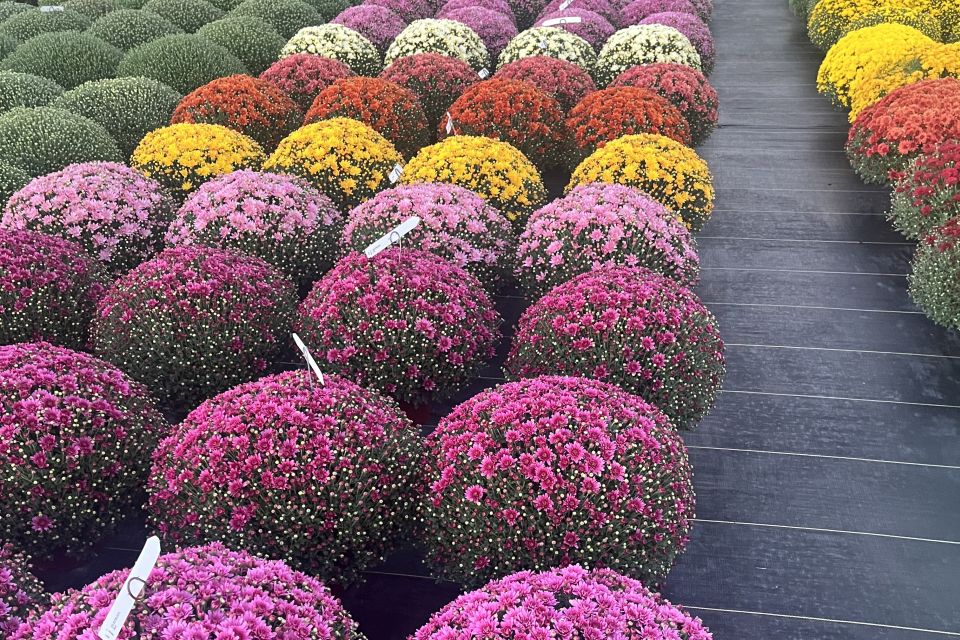
Chrysanthemum morifolium Axios Series. | Tim Cahill
Cahill says the Axios series got its start in Missouri and includes seven colors. He sees it as one of the most promising Ball mum families because of its refined habit, strong color range, and usefulness for growers shipping during peak season.
“Axios has what I feel is the perfect habit for growers for shipping,” he says.
The series has a late September bloom time, which Cahill says allows it to hit the peak shipping window. He believes Axios has the potential to become a top seller for Ball mums because of its combination of plant habit, color, and timing.
Chrysanthemum x morifolium Astral White
Cahill describes Astral White as an early option with strong grower value. While he says it is not a perfect mum, he pushed for its introduction because of its potential as a “money maker” for growers.
“It is super early, and will really size up and make a nice round plant,” Cahill says.
He says growers can usually begin shipping Astral White the last week of August and into the beginning of September. That early timing is unusual for a mum that can still build a strong plant, and Cahill says large growers have given the variety strong feedback.
Chrysanthemum x morifolium Sweet Potato Pie Bronze
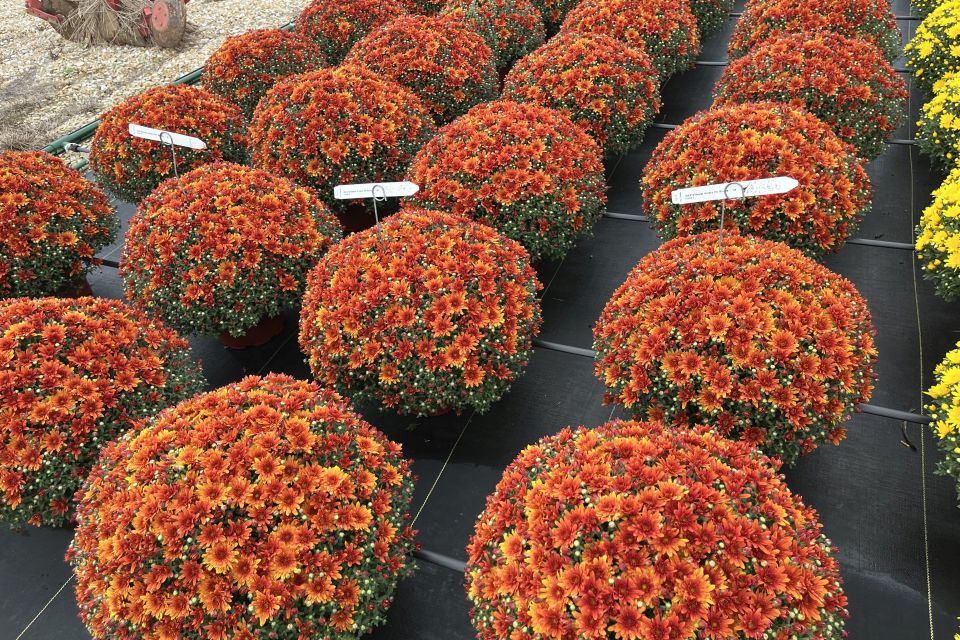
Chrysanthemum x morifolium Sweet Potato Pie Bronze. | Tim Cahill
Sweet Potato Pie Bronze stands out to Cahill for its habit and color. “I love this one,” he says. “It has a perfect habit, beautiful bronze/orange color, and is a grower’s friend.”
Cahill says some mums simply make people stop and look while walking the trial field. Sweet Potato Pie Bronze is one of those varieties.
Chrysanthemum x morifolium Metrona Bronze
Cahill also points to Metrona Bronze as a standout for growers looking for something different. “When asked by growers what new mums they should try, I always tell them to try Metrona,” he says.
He describes it as a unique color on a strong plant, with a bloom color combination that makes it memorable. Cahill says he has grown Metrona Bronze in 14-inch pots with strong results.
What a Winning Mum Needs to Do
A winning mum needs to have strong color, but it also needs to fade well. It needs a habit that works for shipping, a structure that is flexible rather than brittle, and enough production reliability that growers are not fighting it all season. It should fit the market window it is meant for, whether that means early color, peak-season shipping, or a later fall finish.
And it needs to offer something that catches the consumer’s eye.
As the garden mum category continues to evolve, the most valuable genetics will likely be those that balance both sides of the equation: practical for growers and exciting for retail. Color may still draw shoppers in, but performance is what keeps the category moving forward.
Subscribe to eNewsletter