



A Guide to Wood Substrates: North American Products and Producers
 November 13, 2025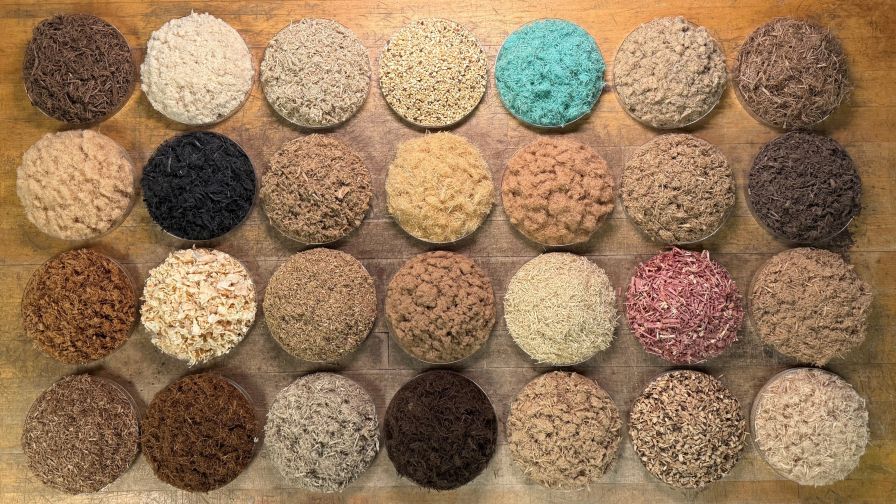
Figure 1: 28 engineered wood components from 10 countries, representing six manufacturing methods and eight tree species. | Brian Jackson
“Holzfaser” (wood fiber) is the first German word I can remember learning, and, admittedly, it remains one of the only! Back in graduate school, while studying wood fiber, I had the opportunity to visit Germany in March 2007 with my Ph.D. advisor, Dr. Robert Wright of Virginia Tech. During that trip, we toured a wood fiber factory that, at the time, was one of only a handful operating in the world.
Fast forward 10 years: I took a six-month sabbatical in 2017 with the goal of learning the history of wood fiber substrates and visiting every known or accessible production facility. At that time, my research concluded that there were less than 10 active wood fiber processing plants known to be in operation at that time. Fast forward again to 2025, and that number now easily exceeds 100. These facilities span 25 countries across four continents, with the vast majority located in Europe.
Today, there are more engineered wood products on the market than ever before, and more coming online every year. Figure 1 shows several of these products on the market, with Toresa from 2007 appearing in the top left corner as a reference sample (no longer commercialized) from our substrate repository at North Carolina State University.
Global Research Focus on Peat Alternatives
While attending the International Society for Horticultural Science Growing Media Symposium in Freising, Germany, in September 2025, I noted that of the 128 presentations given (poster and oral) over the five-day event, 106, or about 83%, focused on peat-reduction practices and alternative substrates. Of those, more than 75% specifically mentioned wood fiber in their research. Despite many unknown and necessary adjustments to growing-management strategies, wood products have become, and will remain, a vital player in the future of soilless growing media.
Early Investigations and Industry Growth
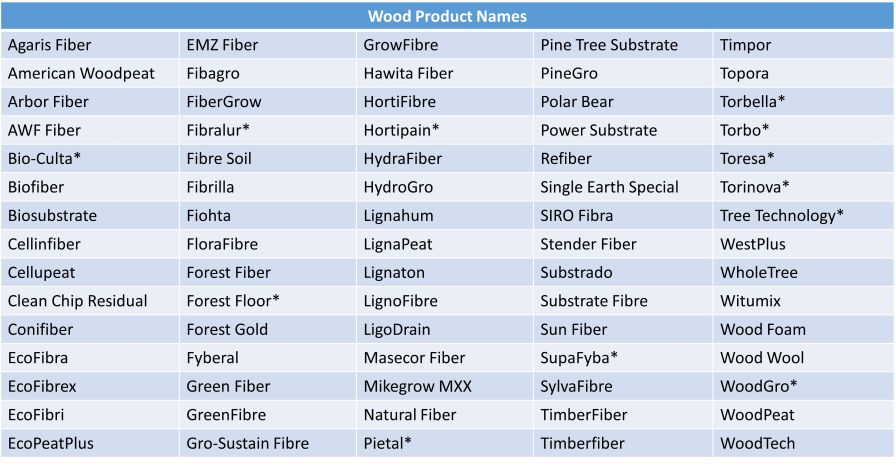
Figure 2: Names of wood substrate components documented over the past 45 years. Asterisks indicate products are no longer believed to be in commercialization or use. | Brian Jackson
Processed wood components were first studied in the U.S. back in 1986, but nearly 20 years passed before the topic reemerged in research circles in 2004. The research in the U.S. was focused exclusively on using hammer mills to create wood products from southern Pinus species. Several terms, or names, were coined for these materials — Pine Tree Substrate (PTS), Wholetree, WoodGro, and Clean Chip Residual (CCR) — but all referred to hammer milled products with slight variations in wood feedstock.
However, researchers in the U.S. were not the first to explore or commercialize wood substrates. That distinction belongs to European scientists, who began producing wood fiber for use in growing media in the late 1970s.
Since then, more than 100 researched or commercially produced wood products have been documented in scientific literature, at industry meetings, on company websites, or in marketing materials. Seventy-five of them are shown in Figure 2.
How Engineered Wood Products Are Made and Modified
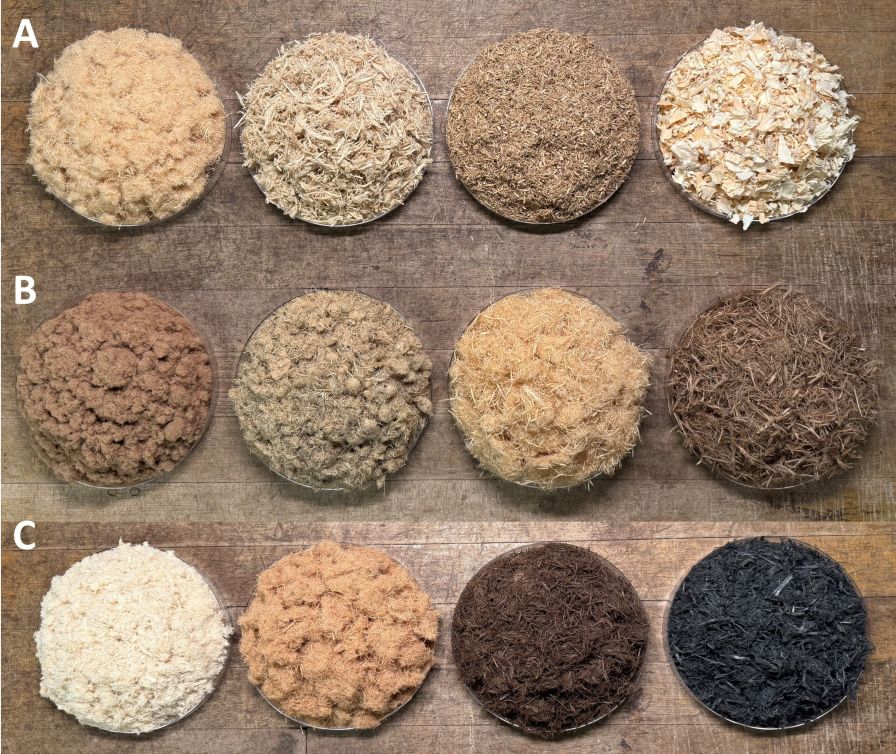
Figure 3: Examples of engineered wood products: A) Materials produced by four manufacturing methods; B) Fiber sizes created with disc-refining technologies; C) Natural and dyed fiber colors. | Brian Jackson
Engineered wood products can be produced using a variety of machinery types and technologies. The most common systems used today include disc refiners (pressurized or unpressurized), extruders, hammer mills, or flakers (Figure 3A). Other approaches, such as retruders, bio extruders, pressafiners, and atmospheric steam explosion, are also used, though less frequently.
Each of the four primary processing methods can be adjusted to produce various fiber sizes and structures (Figure 3B), giving manufacturers flexibility in developing different substrate formulations and performance profiles. Many producers also choose to color or dye their wood fibers, so they appear more “soil-like” when blended with peat or other materials to make mixes (Figure 3C).
Beyond processing techniques, wood fiber can also be, and often is, modified in numerous ways to enhance its physical, chemical, nutritional, biological, or aesthetics properties. These modifications, or preconditioning steps, may occur either before or after processing and can include coloring or dyeing, thermal and hydrothermal treatments, fermentation, digestion, aging, ammoxidation, nitrogen impregnation, surface coatings, and carbonization.
Producers, Products, and Market Innovation in North America
Profile Products (HydraFiber) was the first major supplier of engineered (pressurized disc-refined) wood fiber to reach the market in 2012-2013 (Figure 4). The company now operates two production facilities, one in North Carolina and another in Georgia, and offers a range of fiber sizes as well as wood-to-bark blends.
PR Russell, based in New Hampshire, began producing extruded wood fiber in 2023 using Premier Tech’s wood processing technology. LTS Industrial (TimberFiber) in Texas also came online in 2023, offering three grades of wood fiber produced with Promeco bio-extrusion technology. Complete Resource Management (American Woodpeat), located in Georgia, is currently commissioning the first twin-screw Bevis extruder to operate in North America.
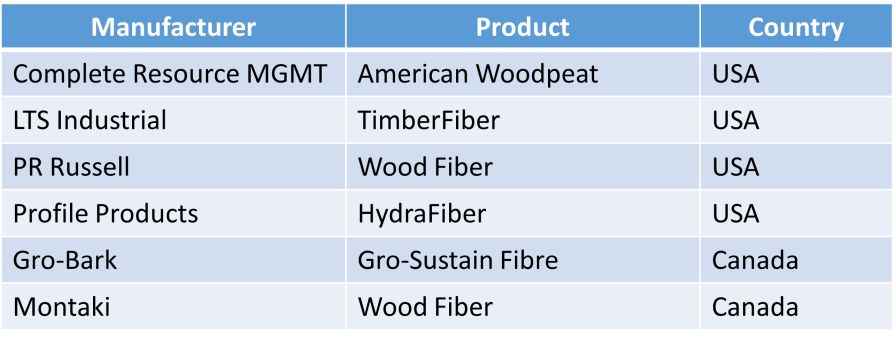
Figure 4: Examples of North American wood fiber producers and suppliers. | Brian Jackson
In Canada, Gro-bark (Gro-Sustain® Fibre) in Ontario produces extruded wood fiber for its own products and customers, while Montaki International in Quebec supplies wood fiber sourced from Finland, according to company information.
Some North American wood fiber suppliers have the capacity to produce more than 300,000 cubic yards of fiber annually per facility, and several are certified through OMRI or state- and province-specific programs. A few products on the market, or still in R&D, have been granted patents, but that has not, and hopefully will never, slow the pace of innovation. Continued product development is leading to more substrate options for growers each year.
Other noteworthy producers include Lignapeat (California), which uses redwood tree fiber, and Power Substrate (Alberta, Canada), which markets wood fiber derived from deadwood in burned forests. (I have no first-hand information from these last two).
Many other North American growing media companies also source wood fiber and offer substrates with 20-40% wood amendments. These include:
In addition, several well-established European companies supply mixes with wood fiber to U.S. growers, including:
Not shown in the figures are the growers in the U.S. who produce their own wood substrate materials, such as Young’s Plant Farm (Auburn, AL, since 2009) and American Color (Orange, VA, since 2017), both of which operate hammer mill processing equipment on-site. While engineered wood fiber products remain the focus due to their consistency and reproducibility, many growers still utilize sawdust and other wood fragments sourced from sawmills.
Continuing the Conversation
I am certain I have missed mentioning some of the wood substrate products or producers active in North America, but not by intent. I also offer no product or company endorsement for any listed here. Research consistently shows that no single wood substrate is “better” than another; each is simply different, and with proper management, all can perform successfully.

The next article in this series will take a closer look at the manufacturing methods behind wood fiber production, exploring the pros and cons of various materials, their characteristics, and their ease of use, along with additional products and producers from outside North America.
Stay tuned for Parts 2, 3, 4, 5, and 6!
Subscribe to eNewsletter
