


Spring Clean Your Financials for a Future Horticulture Business Transition
 April 18, 2026
 “This can’t be right” is the last thing any business owner wants to hear when an advisor or a potential buyer is reviewing the books. Yet, it happens more often than it should.
We’ve seen retailers where revenue and expenses fluctuated wildly over four years, while inventory somehow stayed the same. We’ve encountered financials that were confusing, inconsistent, or simply made up with no basis in reality. The reality is that clean, organized financial statements are a buyer’s first impression of your business’s health, and a strong, defensible record of pre-tax profits can significantly increase business value.
The concept of spring cleaning dates back to ancient cultural and religious traditions. Clearing out the old to welcome new beginnings and prosperity, especially after a long winter. Those same traditions apply today in every growing season. Annual preparation and reset make everything else possible.
However, when was the last time you gave your financials the same level of attention?
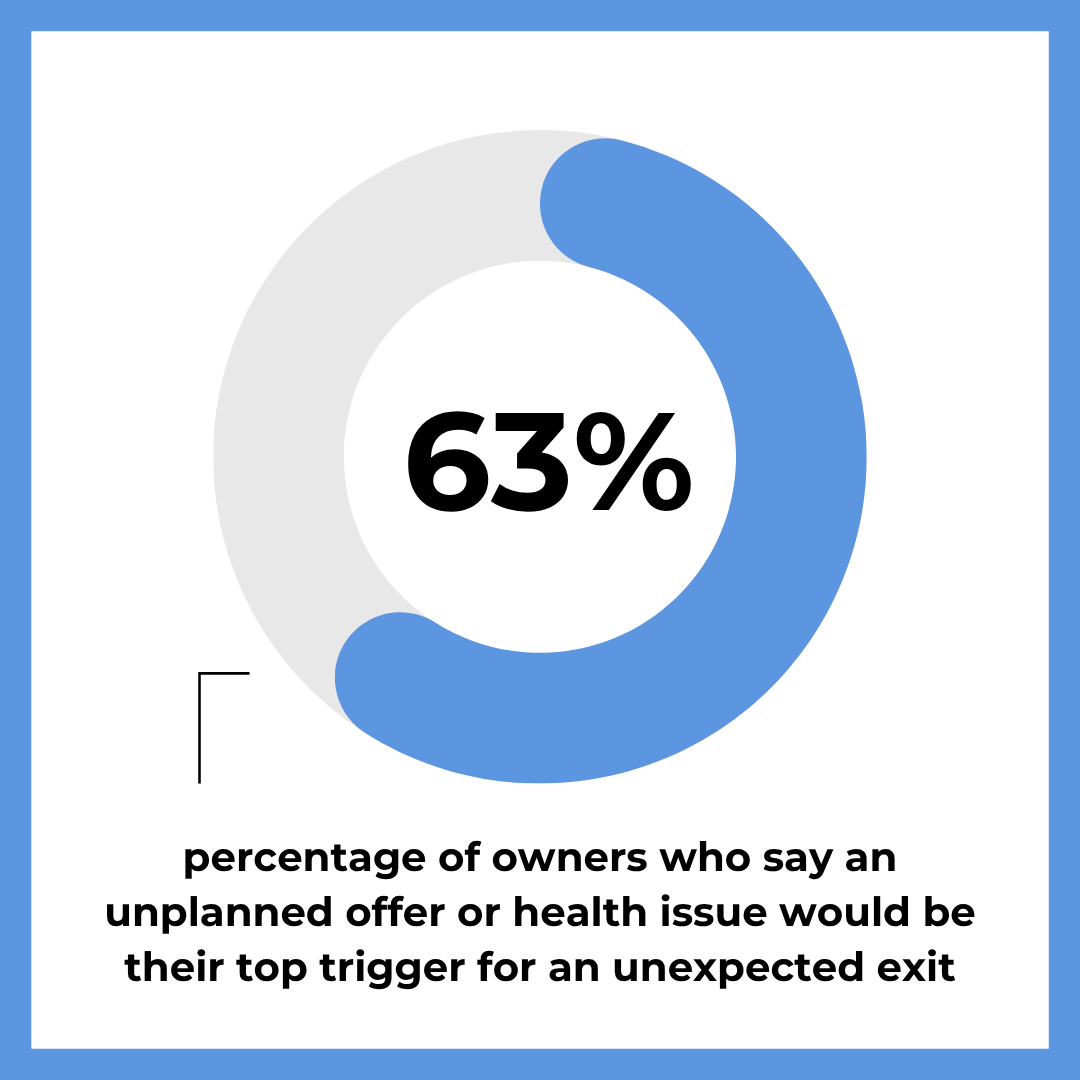
63% of owners say an unplanned offer or health issue would be their top trigger for an unexpected exit. | PivotPoint Business Solutions
If a buyer knocked on your door this afternoon, or a health crisis forced your hand, could you produce clean, defensible financial records on short notice?
According to the 2025 State of Succession and Exit Planning in the Horticulture Industry survey by BEST-PivotPoint Business Solutions, 63% of owners say an unplanned offer or health issue would be their top trigger for an unexpected exit. Yet 47% have neither a current valuation nor a land appraisal. You wouldn’t plant without testing your equipment, soil, and inputs, and you shouldn’t plan your exit without testing your numbers.
The State of Financial Readiness: A Reality Check
The survey revealed a clear disconnect between profitability and preparedness.
While 49% of owners report three-year average pre-tax profits above 10%, financial readiness is at 6 out of 10, unchanged year over year. The performance is there, but the documentation isn’t.
Additional findings include:
- 55% say they’ve calculated a minimum purchase price, yet 61% still don’t have a firm estimate of their business’s actual value. You can’t define a financial finish line without knowing your starting point.
- 42% have no plan to bridge the gap between business value and retirement goals.
- 52% have no exit strategy at all, and only 9% say they are prepared to exit today.

52% have no exit strategy at all, and only 9% say they are prepared to exit today. | PivotPoint Business Solutions
Strong production and beautiful plant material don’t matter if you can’t get it to market. In the same way, strong profits don’t matter if you can’t prove them, especially during due diligence.
Once an offer is accepted, a buyer typically conducts 30–60 days (sometimes up to 90) of financial and operational due diligence to validate what they’ve been shown. Ideally, this is the stage where the buyer’s mindset shifts from “Should I buy this business?” to “How do we get this closed?” Once that threshold is passed, a deal is negotiated, and agreements are drafted and finalized.
However, the opposite can also happen. If financials are not seen as defensible or “clean,” perceived risk rises quickly, and the buyer may discount the price, renegotiate, or walk away altogether.
Business value is calculated based on:
- Tangibles (financials and cash flow) often representing 25–30% of value, and
- Intangibles (human, customer, structural, and social capital), which may account for 70–75% of value.
If a buyer can’t get past the tangibles or can’t “make the numbers work,” the intangibles may never enter the conversation.
What Clean Financials Actually Mean and Why It Matters
Clean financials are more than just filing taxes on time. They are audit-ready, transparent, and defensible. This includes:
- Organized and reconciled financial statements
- Consistent reporting and explainable variances
- Clear separation of personal and business expenses
- Documented revenue trends and cost structures
- Reliable financial technology
- Alignment between tax returns and internal reporting
Preparing for a valuation, transition, or sale often reveals gaps. That is why we frequently recommend a CPA-led financial review or audit before the process begins. Strong pre-tax profits increase value only when the records support the story.
Your Financial Spring Cleaning Checklist
Here are practical steps you can start today to clean or confirm your financials for a thorough review:
- Obtain a current business valuation. Only 39% of owners responding to the survey had one, and just 36.5% had a land appraisal. The valuation process prepares you for future due diligence.
- Reconcile and organize three to five years of financial statements (P&L, balance sheet, cash flow) so they are lender- and buyer-ready.
- Separate personal and business expenses. Not doing so is a common red flag that erodes buyer confidence.
- Update your estate plan. According to our survey, 34% of owners still don’t have one. Your financials and estate plan must work together.
- Calculate your Freedom Point — the number you need from a sale to fund the life you want after exit. Only 14% of owners name a financial advisor as a key partner, yet this role is essential in defining that number.
- Digitize, secure, and back up your financial records. Apply the same discipline used for SOPs to your financial documentation. Cloud-based, encrypted, organized, and accessible records allow your advisory team and buyers to access validated information quickly. A secure “Dropbox” or “Vault” is an excellent place to start.
- Build financial continuity into your business continuity plan. 76.9% of owners say their business would suffer if they were out of action for three months. If you’re suddenly sidelined, make sure your leadership team can confidently respond to due diligence requests and present accurate, validated numbers.
Clean Financials Enable a Better Exit
Your CPA plays a vital role, and 31% of owners name them as their most trusted advisor, up 6% year over year. They protect your financial position, ensure clean books, and keep the foundation solid. But no single advisor can do this alone.
A financial advisor defines your Freedom Point, making sure you have enough resources to live comfortably after you exit. An attorney protects the structure. A Certified Exit Planning Advisor (CEPA) quarterbacks the effort so the pieces align.
There are encouraging signs across the industry. Owner-centricity is decreasing. Business readiness has improved from 3 to 5 out of 10. More owners are taking vacations (up from 15% to 28%), indicating stronger teams and systems.
Yet, financial readiness has not moved.
This is the year to change that.
Spring cleaning isn’t glamorous, but it makes everything else possible. Your financials are the root system of your exit plan. If they’re tangled, shallow, or neglected, nothing above ground will hold.
Start with a valuation. Engage your advisory bench. Give your financials the spring cleaning they deserve because “by chance” might come sooner than you think.
Get the Survey

2025 State of Succession and Exit Planning in the Horticulture Industry Report QR Code
View and download your complimentary digital copy of the 2025 State of Succession and Exit Planning in the Horticulture Industry report by clicking HERE or scanning the QR code above.
Also, ask us about the new complimentary PeerReview, a customized report that compares your responses to the full 2025 survey data. It shows where you’re ahead, where there’s room to grow, and what steps others are taking to prepare for transition.
Subscribe to eNewsletter