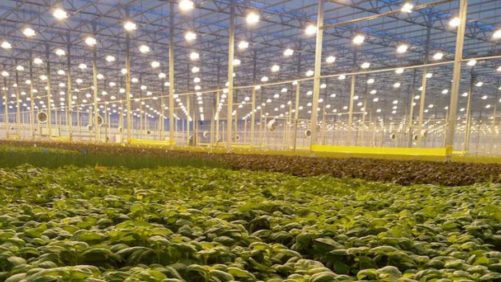
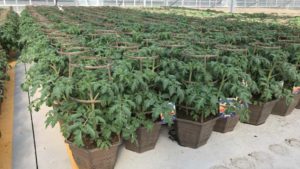
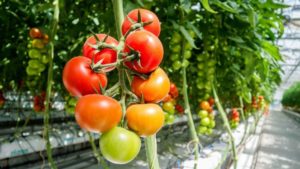
A group of Dutch horticulture companies recently developed an exploratory study on the market potential and investment opportunities for high-tech greenhouses in the U.S.
If you or your business currently grows, or are interested in growing, cucumbers in a controlled environment, here’s why you should take this short survey.
Part two of our series on food safety outlines why greenhouse lettuce growers should make food safety a priority, rather than dismissing it as unique to field-grown crops.
Bacterial spot can be devastating to fresh tomatoes, which is why University of Florida scientists want to understand how the pathogen that causes the disease spreads and evolves.
A common greenhouse fungicide can now be used for control of pythium, phythophthora, and downy mildew on certain greenhouse-grown vegetables and herbs transplants.
Anything you can do up front to prevent diseases from getting a foothold gives you an advantage in keeping your greenhouse tomato plants healthy and productive.
The collaboration between Bayer and Prospera is designed to help growers sustainably meet increasing global needs through innovative digital solutions.
The research team at Fluence by Osram is hosting a webinar on how you can use light to produce higher-quality and higher-yielding cucumbers year-round.
This past week, government officials from the state of Kentucky and the Netherlands finalized an agreement to create an ag tech hub in the region, starting with the opening of a new greenhouse vegetable operation this fall.
Find out who won and how the team translated research and knowledge into positive results, and what the greenhouse tomato industry can learn from the challenge.
Growers who watch for the first signs of trouble and create a biological release schedule to meet this first generation will have the best chance at control.