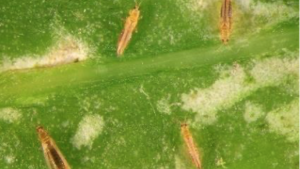
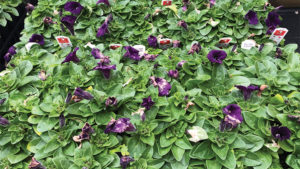
American Floral Endowment’s new thrips and botrytis online research library includes webinars, fact sheets, and articles on the latest research and implementation strategies.
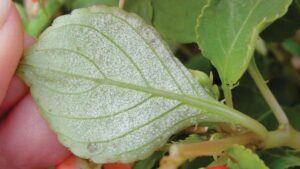
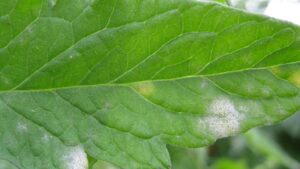
The potassium-phosphite fungicide-bactericide combo in Spärra delivers optimum control of downy mildew, powdery mildew, and other diseases in greenhouse ornamentals and other crops.
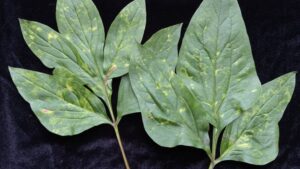
Tobacco rattle virus has a wide host range that includes peony and other plants, and symptoms can vary according to host plant and environmental conditions.
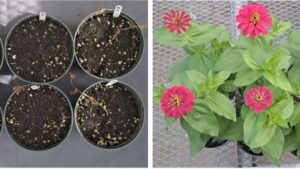
Research funded by the American Flower Endowment and the Association of Specialty Cut Flower Growers is evaluating the suitability of anaerobic soil disinfestation for soilborne disease management.
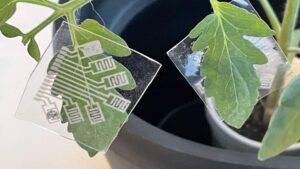
Researchers at North Carolina State University have developed an electronic plant patch that can be applied to leaves to monitor for different pathogens and stresses.
Fusarium spores and hyphae can survive on contaminated tools, benches, pots, trays, and in soil, and when it comes to control measures, it’s important to accurately ID plant diseases.
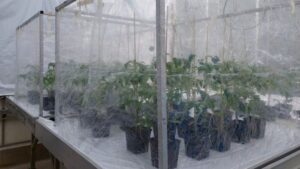
Thanks to joint efforts by the IR-4 Project and the Canadian Pest Management Centre, the EPA has published a final rule approving new uses of pyriofenone on greenhouse tomatoes and peppers.
Nanobodies, a tiny piece of the antibody cells found in the camelid animal family, might interfere with just about any cellular organism, including bacteria and viruses.