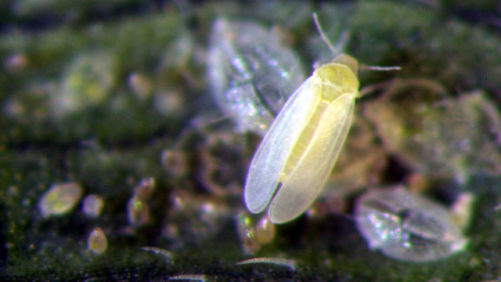
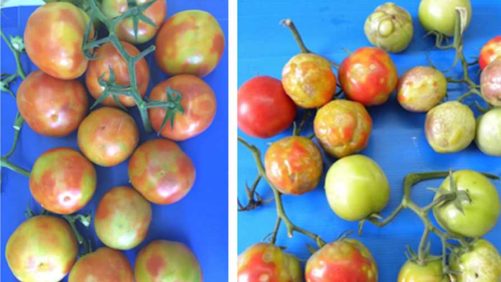
The tomato brown rugose fruit virus poses a threat to greenhouse tomato production. Hear what experts in the United Kingdom have to say about how to stop it.
The funding will be used to examine ways to prevent the introduction or spread of invasive plant pests and diseases that threaten U.S. agriculture and the environment.
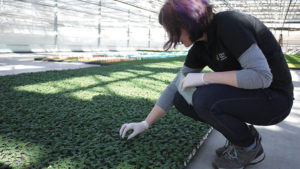
All growers deal with the possibility of damaging disease issues in the greenhouse. Here’s how Pleasant View Gardens makes sure its greenhouse crops stay disease-free.
Three New England universities are collaborating on a weekly webinar program covering topics such as pest management, making the most of growing media, and more.
Certis USA recently introduced Carb-O-Nator, a new broad-spectrum foliar fungicide that works on contact to control powdery mildew, Alternaria, Anthracnose, Botrytis, Septoria leaf spot, and other diseases.
e-Gro, an online clearing house for alerts about greenhouse disease, insect, environmental, physiological, and nutritional disorders, recently posted two new propagation-related webinars on YouTube.
CropKing in Lodi, OH, recently began using a new beneficial fungus in its fight against Botrytis in its greenhouse tomatoes. So far, the results have been promising.